Tudhoe & Spennymoor Local History Society
In Jan 1900, 25 years after the sanitation discussion in the Northern Echo, there still seems need for improvement.
Spennymoor Urban District Council Medical officer’s report for end of 1899 and Durham County Council Health Committee’s meeting on 24th January 1900.
The Medical officer’s monthly report showed a birth rate of 44.4 per thousand per annum and a death rate of 20.8. There were six cases of zymotic disease, and 30 were reported under the Infectious Diseases Act, mostly scarlatina. Only one case of enteric fever was notified during the month. The doctor reported in detail on the incidence of this disease in 1899, showing that, between 11th September and 18th December 1899, 22 cases had been notified, six being fatal. The cases represented 14 houses, and were scattered over a wide area. The houses possessed conveniences, all but one, ashpit privies, no case having been reported from houses provided with water closets, and there was apparently no connection with the drinking water, which was supplied by the Weardale and Shildon Water Company, nor with the milk supply, which was from many sources.
The report went on to state:-In the Ferryhill and Tudhoe Wards I attribute the outbreak, in part at least, to the street-making work which has been done in these wards; although it must be noted at the same time that during the months of January, February and March cases occurred in Ridley’s Buildings, Post Office Street, Hume Street and Burnett Street (Ferryhill Ward), and in Bessemer Terrace, Weardale and Salvin Streets (Tudhoe Ward). In June the sewer was taken up in Parkin Street, behind the dwelling where the fatal case occurred, and from that time onwards to the present date street making operations have been in progress. This has necessitated the breaking up and removal of soil which, during a long course of years, had become impregnated with sewage and filth, and at the same time sewers which were found to be in a very bad state, both as regards construction and condition, were renewed. In Spennymoor Ward I can only attribute it to nuisances connected with the privy and open ashpit system still very largely in evidence.
In September last Dr Hill personally enquired into some of the cases that had occurred, and in several streets found either the yards dirty and badly paved or else badly constructed and insanitary out-offices. In Edward, Stratton and Jackson Streets especially these defects were noticeable, and the UDC should take active steps to have them removed.
At the quarterly meeting of Durham County Council on 24th January 1900 there was a discussion on the sanitary condition of the Bishop Auckland Urban District and the prevalence of enteric fever there.
Mr J J Dodd (County Councillor for Spennymoor) said he would like to call attention to the infant mortality rate, which had been during the past quarter 272 per 1,000 births in the county, while at Tow Law it reached the appalling total of 423 per 1,000 births. He queried if a leaflet on the management and feeding of babies had been issued.
He also said Attention should also be called to the question of infant insurance. There was not a baby born in the county that was not insured from birth, and even before birth. (Laughter). He did not wish to make a charge against the people, but they knew there was cruelty to children. He thought there should be legislation regulating the insurance of children.
John Wilson MP objected to Mr Dodds insinuating that the infant mortality was largely attributable to the cupidity of the parents. It was due to other causes, among which he instanced the state of the houses in which the people had to live in some of the colliery districts. He denied that the figures quoted by Mr Dodds proved that the people for the sake of a few pounds were so murderous as to take the lives of their children, and called upon Mr Dodds to prove his statement or withdraw it.
Mr Dodds said he carefully guarded himself against making a general charge against the people of the county. He merely wished to call attention to the question of infant mortality and that of infant insurance. He agreed that parental regard in the county was equal to what it was elsewhere.
The Chairman said he could not sympathise with any suggestion that the people in this county insured the lives of their children in order to get money by doing so, and he did not think Mr Dodds thought so. It was deplorable so many children died, but the reason for it was quite plain. He continued with an example about the water supply at Hawthorn Village.
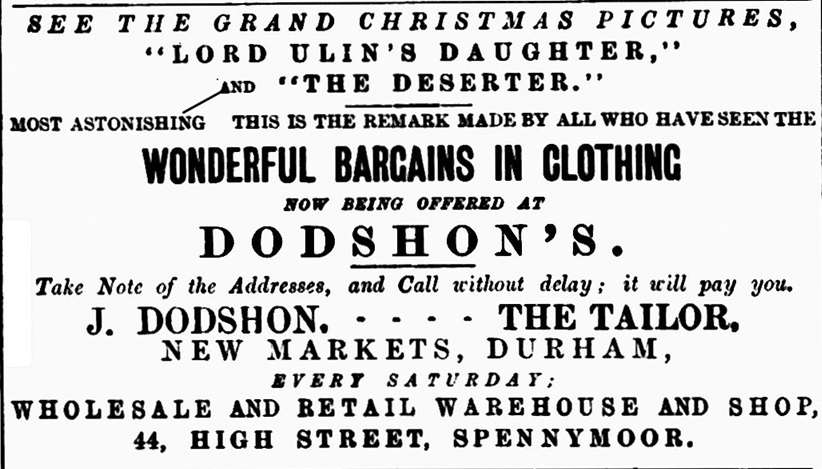
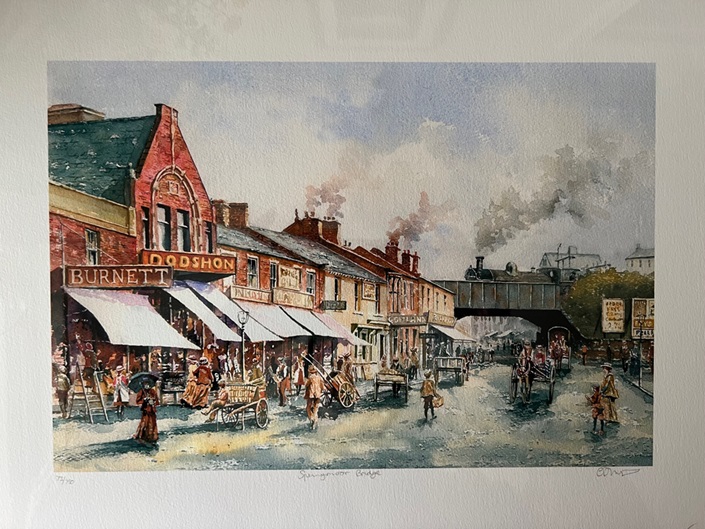
Advertisement for Dodshon’s Tailors, 44 High Street, Spennymoor.
(5th Jan 1900 Durham County Advertiser)
Joseph Dodshon (b1834 Bishop Auckland) married Elizabeth Wilkinson (b1831 South Shields) in 1861 and they were living at 44 High Street, Spennymoor in 1871 with their four children, Thomas Wilkinson (b1862), Mary Elizabeth (b1863), Joseph Henry (b1868), and Frederick George (b1870), all born in Spennymoor.
In 1881/91 they live at Belle Vue Terrace with another son Ernest Wilkinson (b1873). All the family are working in the business.
Joseph Dodshon died in 1901 and his son Thomas Wilkinson Dodshon continued the business with his wife Jessie Varley and children, Mary Elizabeth (b1894), Jessie(b1897) , Charles Joseph (b1898) and Thomas Wilkinson (b1904).
In 1901 they live at 17 Clyde Terrace and in 1911 at 6 St Paul’s Gardens. Thomas dies in 1917 when they are living at 9 The Avenue, Durham. In 1921 Jessie and the family are living at 54 Crossgate, Durham where Mary is a music teacher, Charles works for a draper’s company in Sunderland and Thomas is an electrician for a company in Saddler Street, Durham.
Auckland Police Court At the Auckland Petty Sessions, today, John Kitto was bound over to keep the peace for threatening Sarah Williams at Spennymoor, and was also ordered to pay 8s for using bad language.
Charles Whiteman, innkeeper, of Middlestone Moor, was fined £2 for supplying boys under sixteen years of age with drink. Evidence was given that one boy, named Hogarth, aged 15, was served with five whiskies on Christmas Eve, and another boy named Fisher got a small whisky and a gill of beer.
Thomas Coulson was fined 7s for using bad language at Hunwick.
Richard Redshaw was fined 10s for driving without lights at Spennymoor.
Violence at Ferryhill – an Exemplary Penalty A sturdily-built and respectably-attired fellow named Mark Dobson was charged with being drunk at Ferryhill Station and assaulting N.E.R. police-officer Bell on Saturday night.
The case against defendant was that when refused a dog ticket by the booking clerk he created a disturbance that brought Bell upon the scene. The latter heard defendant using threatening language, and when he went up to him he turned round and struck the officer in the face, knocked him against a wall, and damaged his uniform. The assistance of PC Rounsley had to be called in before defendant was taken to Spennymoor and there locked up. The bench inflicted a fine of £5 and costs, or one month in default, the Chairman (Sir William Eden) stating they were determined to make an example in the case that a stop might be put to such sort of blackguardism and assaults upon the police. (8th Jan 1900 Daily Gazette for Middlesbrough, 9th Jan 1900 Northern Echo)
History of Spennymoor - Mr J.J. Dodd’s Re-Issue County Councillor J J Dodd, of West Hartlepool and Spennymoor, has just re-issued in a cheap edition his “History of the Urban District of Spennymoor, with occasional references to Kirk Merrington, Middlestone, Westerton, Byers Green, Page bank, Croxdale, and Ferryhill.” The edition before us, which is published at the small price of 2s, is a credit to both author and printer.
Mr Dodd writes in a very racy style, every page being interesting, whilst the illustration and letterpress, which is easy for the eye, are all that could be desired. Mr Dodd not only traces the history of Spennymoor itself which is only a modern town, but deals with the original parishes.
One very interesting chapter tells the story of “The Battle of Neville’s Cross”, near Durham, and another deals with the story of the murder at Brass’s Farm by Andrew Mills. Despite the fact that this cruel murder occurred in 1683, the story is well known, and is often revived by parents to their children. We are told in the volume before us that he was gibbeted near to Ferryhill.
Old time customs such as the “sword-dance” and “guising” or “mumming”, are fully explained. These customs which were so popular a few years ago, are fast dying out. The history of the formation of Tudhoe Ironworks by the Weardale Iron and Coal Co. Limited, which has recently been reconstructed, is told, as well as the history of the Merrington Lane Iron Works, started by Messrs Coulson, and known as “Dry Bread Works”, in consequence of the loss of time.
The sad explosion at Tudhoe Colliery on April 18th, 1882, with the number of its victims and the bravery of the explorers, is graphically told. The book is a veritable encyclopaedia for Spennymoor and the surrounding district. (11th Jan 1900 Hartlepool Northern Daily Mail)
To read History of Spennymoor online click on the link Online copy in various formats.
Raines Coachbuilder - Butcher’s Cart For Sale, suitable for hawking; Flat Cart, suit bottler; and smart Handcart, suit grocer. For particulars apply Raine, Coachbuilder, Spennymoor. (15th Jan 1900 Daily Gazette for Middlesbrough)
Herbert Raine (b1868 Egglestone) was the son of John Raine (b1834) and Mary (b1836) who lived in Egglestone. In 1871/81 John was a lead smelter, in 1891 he was a mineral water manufacturer with his sons John and Thomas Gardner working with him. Herbert was a blacksmith.
In 1893 Herbert started a blacksmith business in Tudhoe Grange, in 1901 he is living at 20 King Street, Spennymoor with his sister Martha (b1875). He married Annie Wilson (b1879 Kirby in Cleveland) in 1901 and is advertising his business as “Shoeing & general smith, agricultural implement & machine repairer, builder's iron work, gates & palisading & wheelwright in general” (Kelly’s Directory 1902). In 1911 the family live at 27 Durham Road with four children, Arthur, Edith Mary, William and Annie Elizabeth.
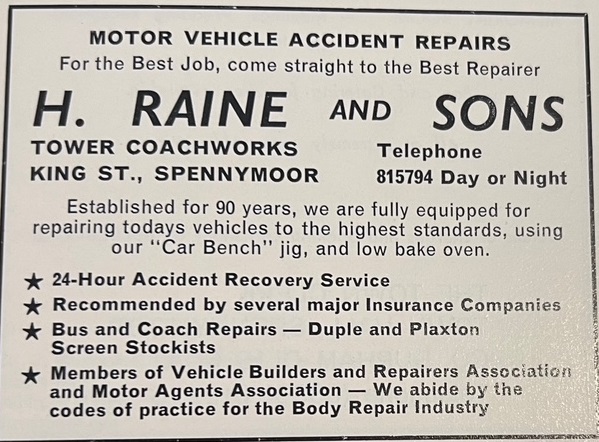
In 1921 they are at 78 Durham Road with two more children Margery Ellen and Joan Etta. The business is at Low Grange Road, advertised as “Coachbuilders”, Herbert’s son Arthur is a carriage builder and wood worker. By 1967 they have moved into the Tower Coach Works, King Street, Spennymoor, which was originally the brewery which closed in 1902. They advertise as “Coach Builders & Engineers”. The business expanded as motor body builders for vans, lorries and buses and accident repairs. They produced mobile shops and brightly painted ice cream vans and were well known for their quality craftsmanship in Spennymoor.
In 1939 Herbert has retired and is living with Annie, Arthur, William and Margery at The Croft, North Close, Arthur and William are both managers at the works. Williams’ grandsons continued the business until they retired and it closed in 2001, the works were demolished in 2002/3.
Raine's Adverts from Spennymoor Town Council Official Guides - 1947 1967 1974 1982
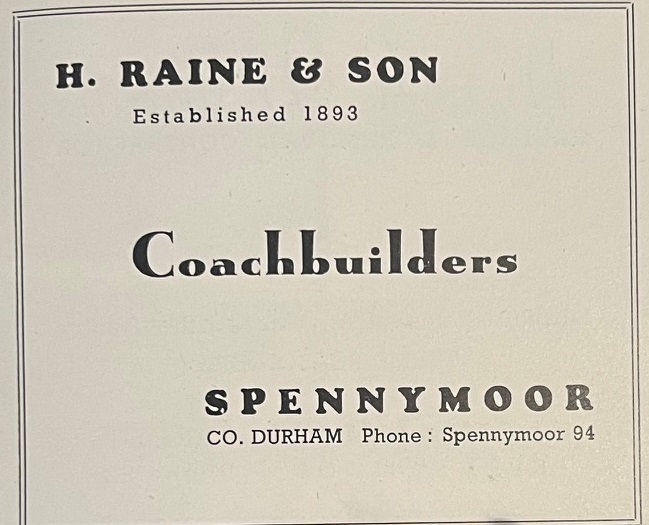
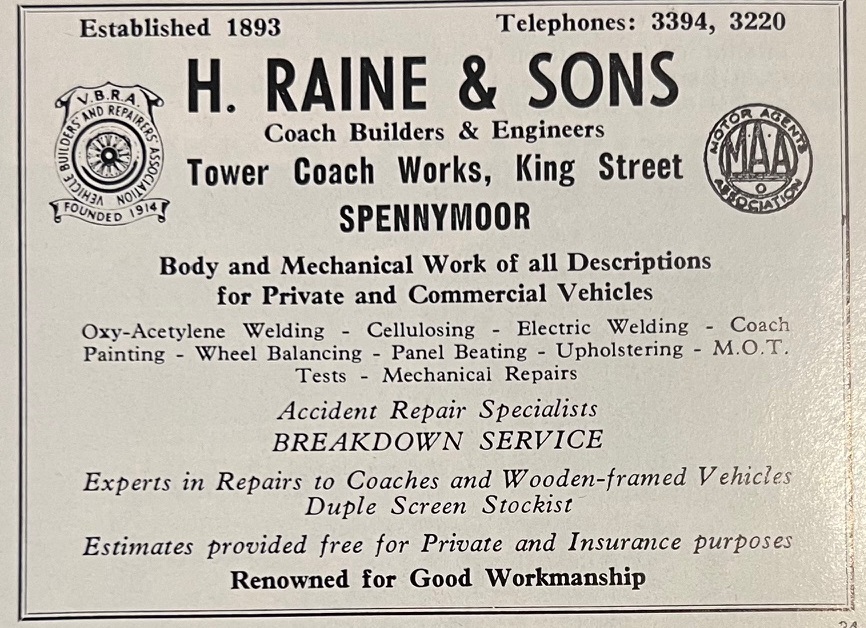
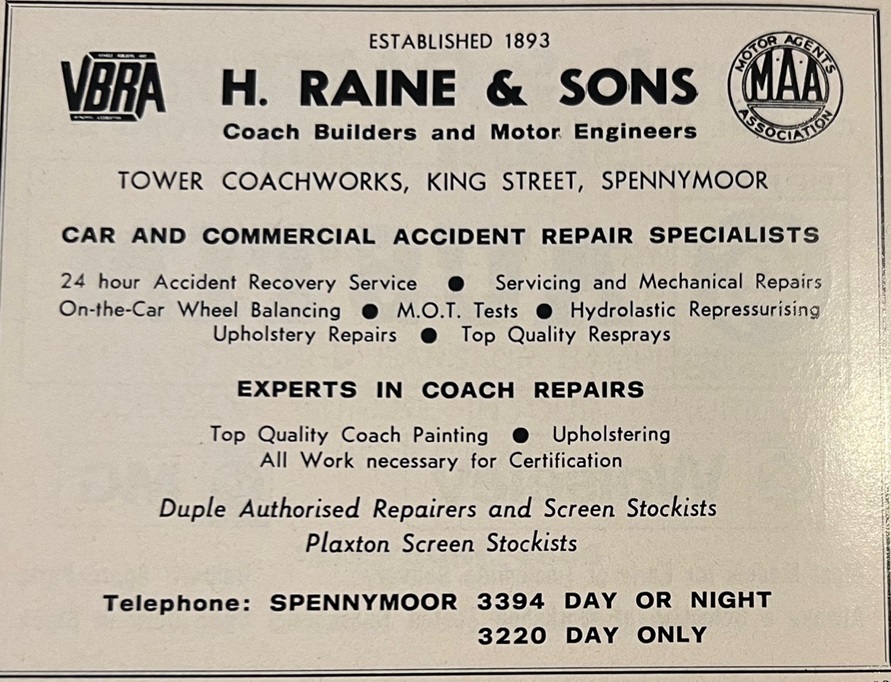
Click on the link to view a list of items built by Raines.
Jobs and Oak Trees
Wanted, Strong LAD(16) for farm work, able to milk.-Apply, Welsh, Farmer, Mount Pleasant, Spennymoor. (18th Jan 1900 North Star Darlington)
TO TIMBER MERCHANTS and CABINET MAKERS-For Sale 40 Oak Trees, lying felled on the Whitworth Estate, Spennymoor. Conditions of purchase can be obtained on application to P. Stephens Esq. Whitworth Estates Office, Spennymoor, who will receive tenders up to 4th February, but does not bind himself to accept the highest or any tender. T Heron Whitworth Park, will point out the timber, which, though short, is of great age and remarkable hardness of grain. (20th Jan 1900 Newcastle Daily Chronicle)
Gardener wanted, good outdoor, quick, and industrious, attend to poultry; house and coals provided.-State wages, age, and all particulars, by letter. R Duncombe Shafto, Esq., Whitworth Hall, Spennymoor. (26th Jan 1900 Yorkshire Post and Leeds Intelligencer)
Lecture at Spennymoor on The Transvaal Under the auspices of the Spennymoor Conservative Association a lecture was given in the Town Hall on Wednesday by Mr H S Neale on the Transvaal. Mr Percy Stephens JP presided, and said that everybody was concerned about the war in South Africa. Our soldiers were not only fighting a well armed enemy but they had the great difficulties of the country to contend against.
As a country we had had a rude awakening, and we had had to pay for our lack of knowledge. He was glad to know that the country was unanimous, and having put our hands to the plough we must see that the work was carried to a successful issue. In a crisis like the present it was a grand illustration of the loyalty of our colonies to see them ending their troops to the aid of the mother country. Liberals and Conservatives alike had sunk their private opinions in the endeavour it preserve the Empire. We had the greatest Empire that had ever existed in the world’s history. (Applause) It rested with ourselves whether we were going to remain the greatest Empire. As long as we had troops coming from all parts of the Empire we had nothing to fear. (Hear, hear)
Mr Neale then commences with his lecture, which he illustrated with numerous limelight views. The photos of Generals White, Baden-Powell, Buller, etc. were loudly cheered but those of Kruger and Joubert met with emphatic manifestations of disapprobation. In the course of the lecture Mr Neale said that Jameson had a greater excuse for his raid than Mr Kruger had in invading our territory.
The 10th Hussars had boasted before leaving England that they would be the first to enter Pretoria. This has unfortunately come too true. They had entered Pretoria as the first prisoners. Mr Neale concluded by reciting in a most effective manner Kipling’s poem “The Absent-minded Beggar”. There was a capital attendance, and a collection was taken in aid of the reservists’ fund, which amounted to £2 10s. On the motion of Dr Watkin, seconded by Mr W Green, a hearty vote of thanks was accorded to Mr Neale for his lecture.
(19th Jan 1900 Northern Echo)
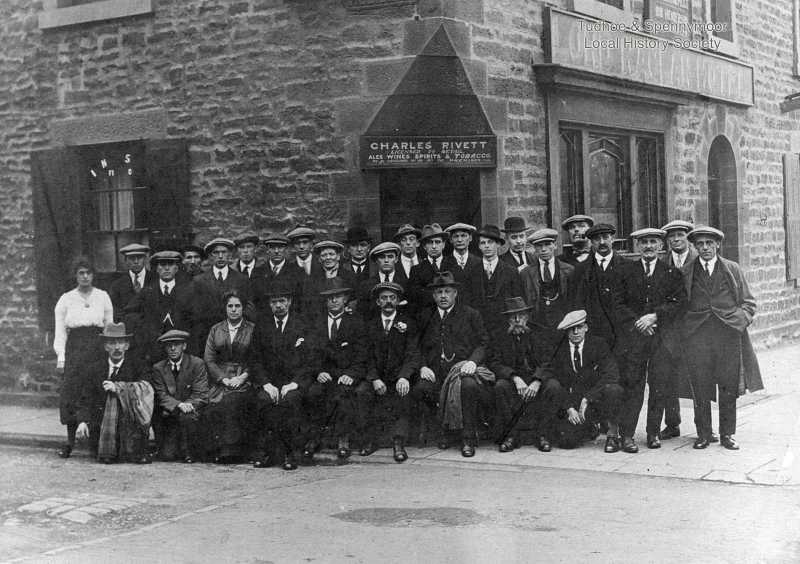
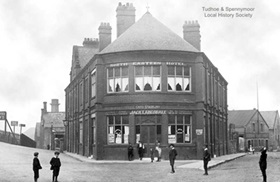 Auckland Police Court – Spennymoor Licensing Case Yesterday, at Bishop Auckland, Geo. Henderson, of Spennymoor, was charged with being found on licensed premises during prohibited hours.
Sergt. Newton stated that on the 7th inst, he observed a light in the window of the North-Eastern Hotel, and saw the defendant, along with the landlord of the house, with glasses before them. This was at 12.30am. He saw defendant pay for drinks once round.
For the defence evidence was adduced that the defendant had engaged a bed for the night, and what drink was supplied to him after eleven o’clock was not at any cost to himself. Cross-examined by Supt. Snaith defendant admitted that his own residence was only four hundred yards from the hostelry, and that he did not engage the bed until after eleven o’clock. The Bench imposed a fine of 20s and costs.
Hy. Titman, landlord of the house, was summoned for having kept open during prohibited hours. Mr Proud, who was entrusted with the defence, said the evidence was identical with that adduced. He added that the defendant had been in the house for 26 years, had hitherto borne a good character as a landlord, and suggested the case might be met by the payment of costs.
The Bench agreed to this course, the Chairman remarking that he hoped the landlord would take warning from the case. (23rd Jan 1900 Northern Echo)
Henry Titman was manager at The North-Eastern between 1899-1901.
Technical Instruction at Spennymoor Yesterday, a large audience was present in the Town Hall, Spennymoor, on the occasion of the distribution of certificates to the successful students in the recent Technical Instruction Examinations. Dr Anderson presided, and the certificates were presented by the Chairman of the Urban Council (Mr T Black, JP).
Mr Black congratulated the students on their success, and spoke of the great need of a Technical Institute for Spennymoor. He particularly noticed the great successes in the ambulance, mining and machine construction, and drawing classes.
After the presentation of the certificates a grand entertainment was held, presided over by Mr Chisholm (schoolmaster). Songs were contributed by Messrs Baines, Brown and Harrell, recitations by Mr Berriman and Master Brown. Miss Atkinson and Mr G W Rippon were accompanists. (24th Jan 1900 Daily Gazette for Middlesbrough)
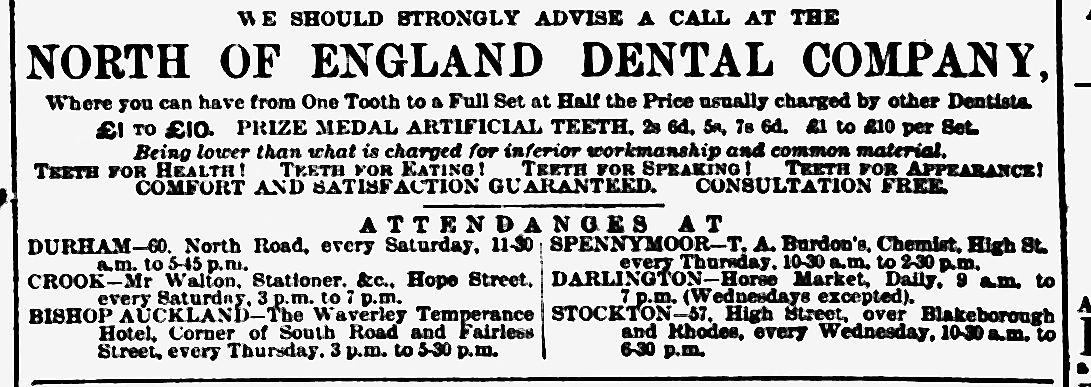
North of England Dental Company Mobile Dental Company visiting Spennymoor at T. A. Burdon’s Chemist, High St. every Thursday, 10.30am to 2.30pm. (2nd February 1900 Durham County Advertiser)
Tudhoe School Board Election The members elected are:-
Provost Watson
William D William Dakers, colliery manager
Thomas Black, works manager
John Coldwell, auctioneer
Hope Scott, presbyterian minister
Matthew Lawson, miner
John Rogerson, stores manager
William Nicholson, engineman
Peter Hughes, clergyman
William Keers, miner
Daniel McKinley, primitive methodist minister
Charles Lumsden, Wesleyan minister
William Outhwaite, steelworker
Not elected:-Birchall miner, Patterson miner, Pearson insurance agent, Fleming accountant, Dodd solicitor, Reavley newsagent, Farthing chemist, and Robson deputy overman. (1st February 1900 Sunderland Daily Echo)
Tudhoe School Board - Mr John Rogerson Elected Chairman, the respected manager of the Spennymoor Branch of the Bishop Auckland Co-operative Stores, has been unanimously elected chairman of the Tudhoe (U.D.) School Board. Mr Rogerson is a man of many parts. He is a local preacher in the Primitive Methodist denomination. For nine consecutive years he has been a member of the Tudhoe School Board, and has taken a keen interest in all educational matters. He has made himself acquainted with all that is essential for the discharge of the duties of a chairman of a School Board. As a public man he has a good record. As a Guardian of Bishop Auckland Union he has done excellent work. As chairman of the Board of Guardians he was never once absent from a meeting during his term of office. The Tudhoe School Board district is a very wide one. There are nearly 5,000 children on the roll books. It may be noticed that due honour was paid to Provost Watson in appointing him vice-chairman. Provost Watson has been a member of the Board ever since its formation in 1877, and for a number of years was its respected chairman. He was placed at the head of the poll in the recent election. Mr T Black, J.P., the retiring chairman, has fulfilled the duties of chairman during the past six years with great credit to himself and every member of the Board, as well as every teacher of the staff. (22nd February 1900 Daily Gazette for Middlesbrough)
John Rogerson (1850(Hunwick)-1911) married Jane Moore (1846(Cannyhill)-1921) in 1872. In 1881 they are living at 16 Lower Tenters Street, Bishop Auckland where John is secretary to YMCA, cashier to Co-operative Society and they have a daughter Amelia Jane (b1874). In 1891 they are at Beaumont Terrace where John is manager of Spennymoor Co-operative Stores and they have a second daughter Alethea Ada (b1881). The family remain in Beaumont Terrace until 1911 when John dies suddenly on 24th August 1911. John and Jane had driven to Bradbury to see some cattle and John took ill shortly after they left and they had to return to the farm but he died in a very short time. He had worked for the Co-op for 42 years, the last 29 as manager of Spennymoor Co-op. He took a keen interest in public affairs: Tudhoe School Board where he was chairman until the passing of the Education Bill in 1902 when he said the Board was “snuffed out”. He was one of the first co-opted members of Durham County Education Committee, served on the Bishop Auckland Board of Guardians representing Spennymoor, a local preacher for Primitive Methodist Church and supporter of the Liberal party. (25th August 1911 Durham_Chronicle)
Tudhoe Ford
For fully two years the Spennymoor Urban Council have been trying to get some improvements carried out at Tudhoe Ford. The County Council were first approached, but after surveying the scene they refused to have anything to do with it. It was, however, recognized to be the most dangerous ford on the River Wear, and the Spennymoor authority would not let the matter drop. It was then that the Durham Rural Council were communicated with. After negotiations a joint deputation was appointed to visit and present a report. The result is that the Durham Rural Council have refused to have anything to do with the project. The only way out is for the Spennymoor Urban Council to do the whole work of improvement at their cost. (6th February 1900 Daily Gazette for Middlesbrough.)
Spennymoor Urban District Council deserve every credit for their determination not to be silenced by the authorities of the Durham Rural Council with regard to making the Tudhoe Ford passable. Deputations from the Spennymoor Urban District Council have met time after time to induce the rural authorities to repair their portion of the ford. The latest obstacle put in the way is that the cost is too great. Their Surveyor has prepared an estimate, which he says will be £551 18s 5d for the opening and protecting of the ford. In addition to that the Urban Council have been informed that the Rural Highways Committee have decided to take no further steps. At the last meeting of the Urban Council several members expressed the opinion that the estimate was exaggerated, because they had had a much lower estimate of the cost from their own surveyor. It was thought that the rural authorities were putting this obstacle in the way, and that the matter would end. However, Spennymoor people are determined not to allow anyone to rob them of their rights, and they are going to take steps to force the other side to make good their portion of the ford. This is one of the most ancient fords in the county, and should be maintained at all costs. (27th February 1900 Daily Gazette for Middlesbrough.)
Mr Knox at the UDC meeting: We are a public body, and sent here to look to public interests; yet the Chairman suggests that we take no further interest in the Tudhoe Ford. It can be opened at a much less cost than the estimate given. This includes, as I take it, the making of roads thereto.(2nd March 1900 Durham County Advertiser)
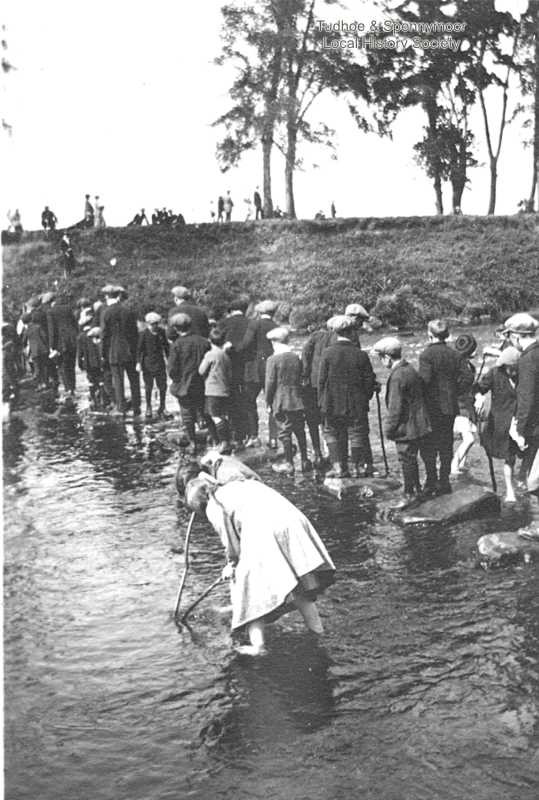
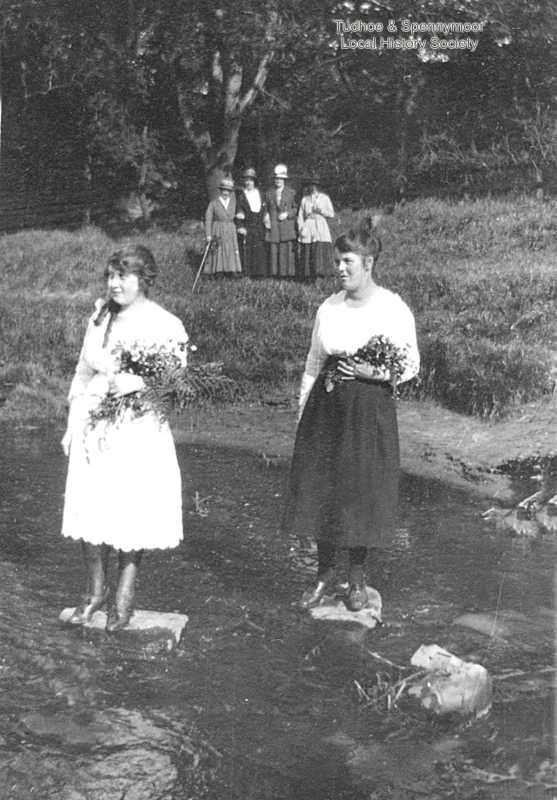
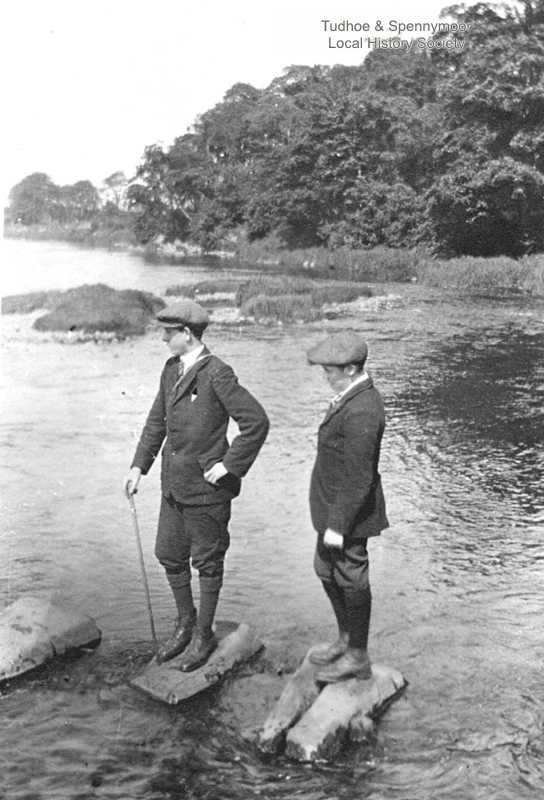
The condition of the Ford had been discussed for many years and there were several deaths. In 1864 Rev Salvin suggested posts were erected to indicate when the ford was dangerous. The ford couldn’t be closed as it was the way to Brancepeth Church, however there were already discussions to build a church on the Tudhoe side of the river.
In 1884 there were discussions about building a new bridge over the Wear, Willington wanted one at Todhills, Spennymoor at Page Bank and Tudhoe at Tudhoe Ford, the Highways committee disapproved of the Tudhoe bridge and thought the Page Bank bridge a better suggestion. In 1896 after requests from Spennymoor Urban District Council the Surveyor reported there was an accumulation of a large quantity of sand and rubbish at the entrance from the Brancepeth side of the river and the ford was impassable. It was suggested that it wasn’t wise to encourage use of the road as there was quicksand in the river at the ford, it was dangerous to anyone not well acquainted with the place.
In July 1898 the ford and stepping stones were still under consideration, Spennymoor asked Durham Rural Council to help but they refused. SUDC sent a formal complaint under section 10 of the Highways and Locomotives Act 1878 for the failure of DRDC to maintain and repair the highway from and including Tudhoe Ford in the bed of the river Wear near the stepping stones to the village of Brancepeth. The County Surveyor was to report.
In December 1898 Durham Highway Committee discussed the ford saying it had been moved higher up the river as there was a deep hole ten feet below the level of the old ford. The clerk confirmed they were responsible to repair the ford but the decision was to wait for DCC to communicate with them. In April 1899 Spennymoor’s surveyor estimated the cost as £60-£70. As the greater portion of the Spennynoor Council’s side was passable they resolved to give three months notice to Durham RDC to have the other portion made passable. In May 1899 a committee was appointed to meet DRDC. The meeting was arranged for November 1899 which led to the decision in February 1900.
In a very long advertisement for Mother Seigel’s Syrup, one of the people reviewing the product and claiming he was cured was George Ferry from 24, Rogerson’s Terrace, Croxdale. He wrote:
RIGHT AFTER DINNER “For many years I was a martyr to liver complaint and indigestion. I had a bad taste in the mouth and little appetite. After meals I was always uncomfortable. A sharp pain took me under the heart and I was troubled with palpitation.”
“I usually felt dreadfully tired and heavy. At night my sleep was disturbed and insufficient: I felt little better for going to bed. No treatment helped me until I began using Mother Seigel’s Syrup. In a few weeks that cured me, and I am now an altogether different man.” Signed George Ferry, 24, Rogerson’s Terrace, Croxdale, Durham, August 16 1899.
The advert concludes: The men and women who can eat a full and hearty meal and then sit in comfort and peace while digestion silently does its splendid work are not as numerous as they ought to be, but with every bottle of Mother Seigel’s Syrup sent to the right place one man will be added to the number. (10th February 1900 Weston Mercury)
George Ferry was born in 1848 at Shotton Colliery, he married Jane Ann Ayre (b1852 Gilesgate) in 1870 and they were living in Low Spennymoor in 1871. They had six children Sarah (b1872 Low Spennymoor), Margaret (b1877 West Cornforth), Thomas (b1879 Shotton Colliery), Elizabeth (b1881 Wingate), Maria (b1891 Croxdale), and Willie (b1895 Croxdale). George died in 1907.
Industrial School Fine At Auckland Police Court John Perry/Parry, labourer, was summoned to support his son, who was in an industrial school, and has been since 1897. He paid 1s a week towards the lad’s support until 24th of June last, when payment ceased, and he had not paid anything since.
Defendant said he had completely lost the sight of his left eye, and this had prevented him getting employment because of the Compensation Act. He worked for Spennymoor Urban Council for five years, but twelve months ago he was discharged. A couple of weeks ago, however, he got employment under the Council. He added that the loss of his eyesight was due to a splinter from a bullet. The magistrates made an order for him to contribute 1s weekly. (12th February 1900 Daily Gazette for Middlesbrough, 13th February 1900 Northern Echo)
John Perry and Catherine Sands, children Susannah, Thomas, Mary, John, Frederick.
John Perry (b1850 Staffordshire) married Catherine Sands (b1852 Scotland) in 1868. In 1871 they are living at George Street Spennymoor with a daughter Susannah (b1868 Spennymoor, baptised 1/11/1868 St Charles, RC Church Tudhoe) and son Thomas (b1871 Bishop Auckland). John is an ironworker, sadly Thomas died in 1872.
In 1881 they are at Elvet, Durham with another daughter Mary ( b1873 Spennymoor) and son John (b September 1875 Spennymoor) who is blind.
In 1891 John and Catherine live at 15 Princess Street with Susannah and a new son Frederick (b1885 Spennymoor). In 1891 a John Perry is residing at a District Catholic Asylum at 59 Brunswick Road, Liverpool, Lancashire, which was a School of Industry for the Blind. He was 15 years old and a casket maker, born in Spennymoor. Could this have been their son John?
In 1894 Susannah marries Samuel Rhodes. However in 1896 tragedy strikes as Catherine died on 28th August 1896 of anaemia and syncope (fainting), Susannah died 5th September 1896 due to gastroenteritis and pneumonia and son John died on 23rd November 1896 of Brights disease and dropsy. They all died at 28 Duncombe Street where the Perry family were living.
In 1897 Mary marries Robert Jones and in 1901 they are living at 6 Oxford Street with her brother Frederick who is visiting, he is a student at an Industrial School and I would think the child mentioned in the above court case. John (Snr) remarries to Jane Ann Parkin (b1848 Hunwick) in 1897 and they are still at 28 Duncombe Street in 1901 and 1911.
Robert and Mary Jones live at No 1 Brewery Road, Spennymoor in 1911, Robert is a brick moulder, they have three sons, Robert, Thomas and Frederick. Frederick, Mary's brother, is still living with them and he is a brick moulder. In 1921 Mary lives at 14 Catherine Street with her three sons, her father John Perry, and brother Frederick Perry. Sadly both her husband and John's second wife have died.
PIANOS AND ORGANS FOR SALE
Squire Piano, powerful tone, walnut case; £21 cash, or 14s per month.
Allison Upright Grand Piano, £27 cash, or 18s 4d per month
Hillier Organ £6 15s cash.
Fine Bell Organ, pipe top, 4 sets of reeds; £14 14s cash, or 10s per month.
All guaranteed.
R. W. Edwards, 15 Weardale Street, Mount Pleasant, Spennymoor, agent for S. S. EADES’s well-known Pianos and Organs.
(14th February 1900 Daily Gazette for Middlesbrough)
Mineral Guard Killed near Spennymoor - Engine-Driver and Fireman Injured
(17th February 1900 Stockton Herald South Durham)
On Thursday an engine was thrown off the line near Merrington Lane crossing, which was the means of disarranging the whole of the traffic between Ferryhill and Bishop Auckland. A passenger train from Bishop Auckland through Spennymoor to Ferryhill was drawn by two engines, which, after arriving at Ferryhill Station, one engine was retiring to Spennymoor about 6.30pm and on account of the storm, dashed into a mineral train near Binchester Junction, smashing the van into the trucks, with the result that the guard of the van, named Fred Ismay, married, aged 36, was instantly killed, and the engine driver, Wm. Murray, and fireman Wm. Gill, both of Fylands Bridge, near West Auckland, were injured. Murray was very much cut about the leg and arm and Gill was severely cut about the head. The driver of the engine No. 1247 of the mineral train is named George Lambert. Dr Anderson with his assistant Mr Davies, attended to the injured men who were conveyed to the North-Eastern Hotel and stayed overnight. The body of deceased was taken home to his residence, Byers Green. He leaves a widow and family of four children. Ismay was a native of Middlesbrough, where he was well known and highly respected. The platform at Spennymoor Station became completely blocked up with snow, and nearly all traffic was suspended.
The railway between Ferryhill and Spennymoor was blocked during the night, and no trains arrived in Spennymoor till a very late hour. The break-down gang were busy all night removing the wreck caused by the collision.
(23rd February 1900 Durham County Advertiser)
On Tuesday evening, Dr R S Anderson reported that the fireman Gill was out of danger. The doctor, since the accident, has been afraid of lockjaw supervening.
At the Station Hotel, Todhills, on Saturday, Deputy Coroner Badcock, opened the inquiry into circumstances touching the death of Jno Frederick Ismay (38), mineral guard, who was killed at Binchester Junction on Thursday night. It appeared that the deceased was in charge of a mineral train from Middlesbrough. It had passed East Howle, and sometime after was followed by a single engine, which had been called into requisition because of the severe storm that raged. This engine passed east Howle, and the driver was told to proceed cautiously. This he did, but owing to the storm the signals were out of working order, and the engine unexpectedly dashed into the rear of the mineral train, which, in the blinding snowstorm, the driver was unable to see. Neither the driver nor fireman of the single engine were able to attend the inquiry, which was accordingly adjourned to March 5th.
(24th March 1900 Stockton Herald South Durham) The inquest resumed, first witness Thomas Mellanby, a platelayer living at East Howle. He went on duty about 7pm on the night of the accident. He went to the East Howle signal cabin, Scott the signalman told him there had been an accident and the “advance board” was stickung. Witness found a drift of snow upon the wires which prevented the signal working, the Board was off but when he removed the snow the Board went on by itself.
Wm. Murray, engine driver, of Fyland Bridge, was next called, he said he was in charge of an empty engine, and left Ferryhill, for Bishop Auckland about five minutes to six o’clock. He had on the engine his fireman, Wm. Gill, and Fred Caperon, a porter belonging to Bishop Auckland. They reached the East Howle cabin about six o’clock, and saw the signal against him. He at once pulled up, and the signalman said he had to go to the “advance board” as he could not see it, and that witness had to give him a whistle if the Board came off all night. Witness whistled when he saw the board off, and then went on. A fearful gale was blowing in his face, and it was possible that the whistle was not heard in the cabin.
In reply to a question he said the distance from the cabin to the “advance board” was about 350 yards, so it was possible the signalman did not hear Murray whistle.
William Hobson Gill, fireman, of Fylands Bridge, who had his head swathed in a bandage, said he was on the engine with the last witness, and got to the cabin at East Howle about 6 o’clock. He heard the signalman speak to Murray, but he was at the opposite side of the engine, and the storm was blowing so strong that he could not hear what was said. He went on to the “advance board”, and Murray seeing that the board was off whistled, and they went on and ran into a mineral train near the bridge. They saw no danger light. They were going about sixteen to twenty miles an hour at the time of the accident. He saw no lights on the van of the mineral train in front of them.
Fred Capcion, porter, of Bishop Auckland, was also called, and said he was on the light engine with Murray and Gill. He corroborated the story of the other two men, the only new feature being that he said he could not remember whether the driver whistled or not when he saw the “advance board” off.
Scott, the signalman, was recalled and said that he could take the advance signal off without touching the “home board”.
The coroner said that if the jury were satisfied that there was no neglect on the part of the signalman or the driver it was a case of accidental death, and it would be their duty to return such a verdict. That was his opinion, and they must remember that it was an extraordinary storm.
Jury returned after half an hour and agreed a verdict of “Accidental death”, but recommended that the Railway Company appoint fogmen in future in case of a snowstorm, as in a fog. They thought that if there had been one on this occasion the accident would not have happened.
Mr Ellis, one of the railway officials, stated that fogmen were out that night, and it was stated so in the evidence of the opening of the inquest.
The jury gave their shillings to the widow of the man Ismay.
John Frederick Ismay (1861 N Ormsby-1900) married Sarah Ellen Tinkler (b1868 Sedgefield-1938), they were living at Battersby Junction, Ingleby in 1891 with their daughter Mary Lavinia (b1890), Fred is a railway mineral guard. A year after Fred’s death Sarah is living at Locomotive Terrace, Todhills, Byers Green with Mary Lavinia, Alfred Henry (b1895 Battersby Junction) and Joseph (b1898 Middlesbrough).
By 1911 they have moved to 22 Bell Street, Bishop Auckland, Sarah is an office cleaner for the railway company, and has two boarders, a platelayer who works for the railway and a widow Mary Allonby (b1851) who is a station lavatory attendant.
In 1921 they are still there, Sarah is still an office cleaner, Alfred Henry is a gas fitter for Spennymoor Gas Co. and Joseph is a labourer for the Rural District Council. Living with them is Mary Lavinia’s husband Arthur William Waite and their children Frederick Arthur Waite (b1919) and Maurice Ismay Waite (b1921). Mary Allonby is still boarding and is a waiting room attendant.
FIVES
International Fives Match - Bessford v Elizaldre
Inspite of the weather and advertisement in Saturday’s Chronicle a very great number of people visited Spennymoor in anticipation of the great Fives Match which did not take place. The fresh date has not yet been fixed. The Spaniard took advantage of a clause in the articles, namely, “weather permitting”. Mr Wilkinson, the proprietor of Tudhoe Park, had done everything that was possible to have the ground fit for playing and on Saturday it was better than it has many a time been in mid-summer. It is the wish of the proprietor to have the ground in good playing order. During the storm he had had every particle of snow removed from the alley and grand stand. The last visit of the Spaniard to the alley was on Wednesday last, when he considered it fit for play, but the blizzard put a stop to the game on his part. (19th February 1900 Newcastle Daily Chronicle)
Fives was a popular handball game in working class industrial areas. Fives alleys were often attached to public houses. Tudhoe Park, Durham Road, Tudhoe Grange, Spennymoor, North-eastern Hotel, Spennymoor and the Green Tree, Tudhoe all had Fives alleys.
Great Snow Storm Throughout England
Ferryhill
The storm on Thursday night was undoubtedly one of the very worst experienced in this district. On the highway vehicular traffic was entirely suspended, and unfortunately some vehicles were completely snowed up, and had to be abandoned until Saturday. In one case a hearse , conveying the remains of an old man named Smith from Windlestone Colliery to Metal Bridge, was delayed at Ferryhill Village. On the railway the officials and employees were exercised to their utmost to keep traffic moving, and they deserve every praise for the admirable way they stuck to their task under such extreme difficulties, but despite all endeavours serious blocks and consequent delays took place. Telegraph communication was entirely broken down to some of the most important centres owing to wires breaking and telegraph poles being blown down, and a goodly length of time will elapse before normal working will take place in this respect. The signals, too, were rendered defective by the drifting snow, making the task of working traffic excessively difficult at so important a junction, in addition to which the platelayers were constantly engaged in keeping the switches in working order. Notwithstanding all precautions, however, an accident happened, fortunately unattended with loss of life, but which caused much delay to mineral and goods trains. A mineral train proceeding via the Tean Valley line from Kimblesworth to Middlesbro ran off the line when near Ferryhill No 1 cabin, thereby obstructing the up main line and the down Leamside line. Mr Wilkie, stationmaster, Mr Sheppard, locomotive foreman, and Messrs Johnson and Denton, permanent way inspectors, were quickly on the spot with their assistants, and every effort made to keep passenger traffic moving pending the arrival of the breakdown gang from Darlington, under the supervision of Mr Cowperthwaite. The line was cleared about five am, the lines having been blocked about nine hours. The south mails and other important traffic were worked via the Leamside line from Coxhoe Junction past the scene of the accident.
Croxdale
The storm in the Croxdale district on Thursday was very severe. The snow, although falling soft, drifted to a considerable extent in the by-lanes, and even the more wider main roads. At the Tudhoe Five Lane Ends considerable drifts were formed so much so that the omnibus services between Spennymoor and Croxdale station was entirely suspended. Several carts were unable to get through the accumulation of snow, the horses being unyoked and taken home, some of the vehicles remaining for two days. In the neighbourhood of Hett, Butcher Race, and York Hill several of the lanes are still blocked. On the main railway line the North-Eastern Railway Company’s ploughs kept the roads clear, and a fairly good service of trains was maintained.
(23rd February 1900 Durham County Advertiser)
Explosion at Spennymoor On Friday, about the dinner hour, after returning home from work at Tudhoe Colliery, a miner named James Taylor, residing in Holborn Street, Spennymoor, was just looking over his stock of compressed powder, when, it is stated, a spark flew from the fire on the box, containing about 4 or 5 “bobbins” of powder, which instantly exploded, causing severe injuries to the man’s face and hands. The force of the explosion was so great that half of the kitchen window was blown out. His wife and child were in the room at the time of the explosion, but fortunately they were not hurt. Dr Anderson attended to the injured man, and he is now a little better, although his burns are severe. (24th February 1900 Newcastle Evening Chronicle)
Good Templar's Gathering at West Hartlepool The twenty-seventh annual session of the South Durham District Lodge, I.O.G.T. (International Organisation of Good Templars), was held in the Primitive Methodist School-room, West Hartlepool, today. Mr W Oliver, DCT(Durham County Templars) (Hartlepool) presided, and was supported by the other district officers. There was a large attendance of representatives and members. Immediately after the opening ceremony the district degree was conferred upon eighteen candidates. The report of the DCT dealt with the state of the Order throughout the district, and stated that the challenge block and gavel, awarded quarterly to the lodge showing a large numerical increase, had been won by the Rose of Eden Lodge, of New Shildon. Remarkable activity had been shown in mission work by the various lodges during the half-year. 130 public meetings had been held, and missions had been conducted at Coundon, Howden-le-Wear, Spennymoor, Tow Law, and Tudhoe, Mr Thomas Barker of Newcastle, and at New Shildon, West Hartlepool, Copley, Evenwood, and Witton Park by Messrs Thomas Bird (Doncaster) and Macmillan (Sunderland).
In concluding his report Bro. Oliver announced his inability to continue to hold the office of DCT. His resignation was accepted with regret, and Bro J W Fleming, of Spennymoor was elected to the chief chair, and Bro. E O D Sibson (Norton), district councillor. Other reports showed that the membership of the District was 1,920 adults in 44 lodges and 2,265 juveniles in 34 temples, with a balance in the treasurer’s hands of £39. (27th February 1900 Daily Gazette for Middlesbrough)
Ferryhill Station Supply Raisby Hill Carboniferous and Magnesian Limes.
First-Class for Building, Plastering, or Agricultural Purposes.
Machine-Broken Slag for roads; Crushed Slag from concrete; Ferryhill Sand, Daub, and Loam;
Red Fire, Salt Glazed, and Scoriae Bricks; Concrete Flags;
Best Portland Cement, and every description of Sanitary Goods.
EXPLOSIVES AGENTS. (2nd February 1900 Durham County Advertiser)
In November 1872 a Darlington man, Joseph Woodward, formed the Tees Scoriae Brick Company to turn slag from the Clay Lane Blast Furnace, in Eston, into shiny-blue bricks. At its peak, the Tees Scoriae Company was taking 30% of all the slag from the South Tees steelworks.
Death of the Rev. A D. Shafto - The death occurred late last night at Brancepeth of the Rev. Arthur Duncombe Shafto, for 46 years rector of that place, and one of the most widely known public men of the County of Durham. Mr Shafto who had attained the great age of 86 years, had been in failing health for a year or two past, and had a sort of seizure in a shop in Durham about two yeas ago. A naturally vigorous constitution, however, enabled him to rally again, and though he never took the same active part as he had done in his long and busy life, in public affairs, he was yet able to attend many of the duties he had imposed upon himself up to a recent date, and was able to be out up to Saturday last.
On Tuesday of the present week he became worse again, and Dr Stuart, of Durham, his physician, was telegraphed for. Medical aid, however, was of no avail, and Mr Shafto gradually sank and passed away last night to the great grief of all who knew him.
The Rev Arthur Duncombe Shafto was a member of an old and famous North-country family, whose deeds have often been recorded in local annals, and whose prowess has been celebrated both in song and story. Early in life the rev. gentleman devoted himself to an ecclesiastical life and graduated at Durham University. In 1841 he was ordained, and, subsequently was vicar of Byers Green and Whitworth. After this he was rector of a parish in Hampshire, and in 1854 he was appointed to the rectory of Brancepeth, which he has since held, and which is returned at the value of £700 and house.
Mr Shafto in 1842 married Miss Dorothy Wilkinson, of Harperley Park, a sister of the present Bishop of Hexham and Newcastle, and daughter of the late Mr G H Wilkinson. He had a numerous family, consisting of four sons and two daughters. A strange fatality has hung over the family, for two of Mr Shafto’s sons, who held commissions in Her Majesty’s service, were killed, one at the blowing up of a magazine in India and another in the Naval service. One of the daughters, who married the Right Hon. John Lloyd Wharton MP, also dies under tragic circumstances, and all that are left are C D Shafto, of Durham, and Mrs Randolph, wife of Capt. Randolph, who has just recently been called to a command at the Barry camp owing to the war in Africa. The services of Mr Shafto to the Durham district are well-nigh incalculable. (1st March 1900 Daily Gazette for Middlesbrough)
He was the son of Robert Eden Duncombe Shafto and Catherine Eden of Whitworth Park, his mother was the third daughter of Sir John Eden of Windlestone.
He held many positions including chairmanship of the Finance Committee of Durham Quarter Sessions, Durham County Council Finance Committee, Durham County Police Court, Durham County Hospital Governors, Durham Penitentiary, Durham Guardians and the Rural Council.
He was an Alderman, member of the Standing Joint Committee of Durham County Council, Trustee of Durham County Police Superannuation Fund and Chairman of Durham County Club. In 1896 he was presented with a portrait by Durham Guardians for his long service. (1st March 1900 Newcastle Daily Chronicle)
Baptist Church Spennymoor - The Re-Opening Services in connection with the Baptist Church, Spennymoor, was held on Wednesday. The whole of the alterations consisting of renovation and re-seating the building have cost the sum of £300. The Rev A F Griffiths, AFS of Newcastle -on-Tyne preached a very powerful sermon in the afternoon. The collection amounted to £15. A public tea was held afterwards, given by Mrs Savage, at which a large number was present. The tea realised about £5. There was also a sale of work, conducted by Mrs Henry Pearson and Mrs N Bennett, which will bring the day’s proceedings up to about £40. There was a public meeting held after the tea with several speakers. A vote of thanks was given to Mr Reay, of Stockton, for a gift of stone, and to the “men’s own” of Mr Feltham’s Church Stockton, for a bible an Hymn Book; Mrs Savage, for providing tea; Mr and Mrs Bennett for furnishing the platform; Sir Chris Furness for the gift of £5 5s; and Mr J W Hanson, architect, who planned the work free of charge. Mr R Telfer, Spennymoor, was the contractor, and finished his work in a very satisfactory manner. The collection at the public meeting realized £10 7s 10d. (2nd March 1900 Northern Echo)
Spennymoor Wesleyan Day Schools – Tenders are invited for New Infants School and Alterations and Additions to the Existing Schools.
Plans and specifications can be seen on application to Mr Smith, the Headmaster, from 9 to 4 pm, and Quantities will be furnished to intending contractors by the Architect, J Walton Taylor, FRIBA, Newcastle-on-Tyne. The Managers do not bind themselves to accept the lowest or any Tender.
Tenders, marked “School”, to be sent to the undersigned not later than April 3rd.
W M DUTHIE, Secretary 113, Craddock-street, Spennymoor. (15th March 1900 Daily Gazette for Middlesbrough)
The Weslyan Methodist Education Committee in London will this week issue their sixtieth annual report, which is of an exceptionally encouraging character. It states that the day school departments now number 743, with a total of 159,716 scholars, and an average attendance of 18,992. The total income of the schools is reported to be £272,958, being an increase of £25,649; the total expenditure is £283,290, an increase of £24,878……
At Spennymoor and Bishop Auckland progress is reported. (27th March 1900 Daily Gazette for Middlesbrough)
The Spennymoor Good Templars have concluded their fifth season of Pleasant Sunday Evenings. They are the most aggressive temperance organization in the whole district. They contemplate building for themselves a place of their own in which to hold their meetings. The need for a Temperance Hall in Spennymoor was never greater than at the present, and the Good Templars were never in a more prosperous condition. A Temperance Hall did once exist in the locality, but being situate in such an out-of-the-way place as Low Spennymoor it was never patronized as it might have been had it been in a more central position. That hall is now in the hands of the Tudhoe parish, and is now known as the Parochial Hall. The Good Templars have now a membership of nearly 150. (30th March 1900 Daily Gazette for Middlesbrough)
MERRINGTON ASSAULT CASE - At Bishop Auckland yesterday, John Ray, deputy, Leasingthorne, represented by Mr J T Proud, was proceeded against for having assaulted a married woman named Margaret Kitching, at Merrington, on the 10th ult.
Complainant, for whom Mr Wood appeared, stated that when driving on the highway between Leasingthorne and Merrington, defendant came up behind the phaeton and molested her daughter and herself. He followed the phaeton to the doorway of complainant’s house where it was alleged he struck both complainant and her daughter.
For the defence it was stated that defendant, in order to get the easier over the snow-bound road, put his hand on the back of the phaeton. Complainant and her daughter were alleged to have then struck him with their umbrellas. Fined 1s, and 13s costs. (2nd March 1900 Northern Echo)
Thefts in the Spennymoor District - At the Durham County Police Court yesterday, three youths named Frederick Gooding, Walter Gooding, and Richard Jackson, of Merrington-lane, were charged with stealing ten pigeons, value £1 8s, the property of Joseph Finchell, of Mount Pleasant, Spennymoor, on the 28th of last montyh, and were each fined 3s and costs.
Thomas Common and Abraham Healey, miners, of Spennymoor, were fined 12s 6d and costs each for stealing a quantity of broccoli, value 7s 6d, from a garden belonging to James Hall, at Tudhoe Grange, on Friday last.
John Stringfellow(13), of Tudhoe Grange, was ordered to be detained in custody for a week, and then sent to a reformatory for five years, for stealing a pair of boots, value 3s 11d, from Mr Richard Swales’ shop, at Tudhoe Grange.
Ann Wrangham, domestic servant, and Jane Perry, were charged with stealing a quantity of dress material, value £2, from Mrs Fenwick, of Low Spennymoor. Perry was discharged, and Wrangham was fined £1 including costs. (29th March 1900 Northern Echo)
Auckland Workhouse - There is in the Auckland Workhouse at the present time a man who is nearing 101 years of age. His name is Thomas Kenney, and he belongs to Spennymoor. The old man is lively, and takes his turn at chopping sticks like anyone else. (16th March 1900 Daily Gazette for Middlesbrough)
Durham County Asylum – Wanted LAUNDRYMAIDS: wages commence at £20, rising to £22 at the end of three months, paid monthly, with lodgings, rations, washing, and uniform, etc.
Apply, enclosing copies of 3 testimonials and photograph, to the Medical Superintendent, Durham County Asylum, Winterton, Ferryhill. (19th March 1900 Yorkshire Post and Leeds Intelligence)
The Spennymoor Suicide - Coroner J T Proud held an inquiry at the Wheat Sheaf Inn yesterday touching the death of Hesekiah Webb (58), who died by suicide, having hanged himself in his house, 115 George-street, Spennymoor.
Mr Jas. Gommersall said he had known Webb for over thirty years. Webb was lodging with Mrs Ann Sherrington, a widow, who had lost her husband in the Page Bank explosion over twenty years ago. Mrs Sherrington having died last week, and the house belonging to Page Bank Colliery, deceased had been informed that he would have to leave. This seemed to trouble him, and no doubt was the cause of him taking his life.
Mrs Gommersell, wife of the first witness’s son said she heard deceased moaning and wandering about during the night. On Wednesday about noon she went into the house and was startled to find him hanging by the neck under the step ladder which was behind the door. She immediately gave the alarm. A fender was under him, and he had evidently stood on it.
PC Steel stated that one morning last week Webb said to him “I’ve buried the old woman, and I’ve no desire to live”.
Mr Wm Thompson, of Curry Brothers, musical instrument dealers, stated that he was passing the house on Wednesday afternoon, and went in and cut the body down. Witness did all he could to restore animation, but life was extinct. He evidently had not been long dead.
The jury returned a verdict of suicide whilst temporarily insane.
The jurymen’s fees were handed over to the local reservists fund. (2nd March 1900 Northern Echo)
Yesterday the Rev. John Gaskill, who for over 38 years has been vicar of Spennymoor, died at the Vicarage, after being confined to his bed for the past fortnight. The rev. gentleman was in his 81st year, and during his time the church has been enlarged three times. During his time, until failing eyesight failed him, he was a most active member of the Tudhoe U. D. School Board and the Spennymoor Local Board of which he was chairman, and for a number of years was editor of the “Durham County Advertiser”. He was widely known and much respected. (3rd March 1900 Daily Gazette for Middlesbrough)
Rev John Gaskill was curate for 13 years and became vicar in 1875. He was buried on 6th March, in attendance were his sons Rev. Joseph Gaskill, curate of Ilkley, Jas. Gaskill, colliery manager, and his daughter. The funeral procession was headed by the Whitworth Lodge of Freemasons (9th March 1900 Durham County Advertiser)
DURHAM COAL TRADE – IMPORTANT DEVELOPMENTS - Messrs Bolckow, Vaughan & Co. contemplate putting down an important mining plant at Chilton, Ferryhill. An immediate commencement is to be made with the sinking of the necessary shafts. Mr J W Cook, the company’s Byers Green and Newfield Collieries agent, has the undertaking in hand. (13th March 1900 Northern Echo)
Lloyd's List - It is probable that in no other part of the country are so many schemes in progress for developing the industrial resources of the district as in South Durham. New railways are being built – new collieries sunk and old mines opened out – works extended, and docks improved to meet the growing demands of the iron and coal trades. The latest addition to these enterprises is the opening out of another colliery by Messrs. BOLCKOW, VAUGHAN, and Co. (Limited). This firm find great difficulty in meeting the increasing demands of their ironworks from their existing collieries, and have now decided to work the Chilton Colliery, a lease of which they acquired about three years ago. This colliery is situated a little to the south of Ferryhill, and about 15 miles west of the Hartlepools. It is an old mine, having been previously worked by the South Durham Coal Company, but was closed about 20 years ago during the depression succeeding the great “boom” of the early seventies. A new shaft will be sunk, and a number of ovens erected for the manufacture of coke, of which the company’s Cleveland and Clay Lane Blast Furnaces are large consumers. (20th March 1900 Lloyds List)
Lighting - The effort which the Spennymoor Urban Council is making to have the streets illuminated by electricity instead of the present unsatisfactory system of gas lighting is deserving of all praise. The present charges for gas in Spennymoor are far too high. Viz., 3s per 1,000 feet. (14th March 1900 Daily Gazette for Middlesbrough)
Electric Lights for Spennymoor – At a special sitting of the members of the Spennymoor Urban District Council it has been decided to adopt the electric lighting system throughout the area of the urban district of Spennymoor. (24th March 1900 Newcastle Courant)
SCHOOL ATTENDANCE CASES – Joshua Manchester, Hett, was summoned in respect of the irregular attendance of two children.
Mr W Lisle appeared on behalf of the Board, and Wm. Hopkins, the school attendance officer, proved the irregularity of the attendances. Fines 5s in each case.
In the case of Elizabeth Lowe, Croxdale, summoned in respect of two children, an order for attendance was made.
Thomas Harrison, Hett, was fined 5s
Thomas Blackburn, Hett, in respect of two children, was ordered to send them regularly
Henry Stubbs, Hett, summoned in respect of two children, was also ordered to send the children regularly. (16th March 1900 Durham County Advertiser)
Appointment of Sanitary Inspector, at Spennymoor. On Thursday night, at the monthly meeting of the Spennymoor District Council, Mr J H Gardner, of Sedgefield, was appointed Sanitary Inspector, at a salary of £140 per annum. There were 143 applications for the office. (30th March 1900 Newcastle Evening Chronicle)
PRIZE - LINSEED TEA. So valuable for colds and so nourishing, yet so inexpensive, is made by boiling three tablespoonfuls of the seeds of linseed in three pints of water till reduced to a quart, then strain it off, sweeten with Spanish liquorice, barley sugar, or, if preferred, with honey, and add the juice of one lemon. This is a well-tried recipe, and very nice. Mrs W Maddison, Merrington-lane, Spennymoor, Durham. (17th March 1900 Northern Weekly Gazette)
DEATH OF MR J.T. HEDLEY OF DURHAM. A Durham “Old Standard”
There died, on Wednesday night, at his home in Crossgate, Durham, Mr J. T. Hedley, yeast merchant, one of the old “standards” of the City, and a man who in several ways was noteworthy. A Northumbrian, we believe, by birth, Mr Hedley was a butler in his younger days, but many years ago he established a yeast dealer’s business in Durham, and enjoyed a good connection. For nearly 40 years Mr Hedley walked daily with his yeast basket upon his arm from Durham to Spennymoor and back, and this journey he kept up from habit and choice long after the railway was opened between Durham and Croxdale, and the use of which would have saved him an eight mile walk every day.
Mr Hedley, who was a member of the Primitive Methodist Connexion, built and endowed a place of worship for that body in the Spennymoor district. His long and intimate association with the district constituted Mr Hedley an authority on many matters of public interest, and though a man of modest and retiring disposition, he was an entertaining companion. He had many friends and acquaintances in the town, and the district through which his daily route extended, and these, for all of whom he had ever a kindly word and a genial smile, will hear of his death with much regret. Mr Hedley, who was considerably, over 80 years of age, leaves a widow and family. (22nd March 1900 Newcastle Evening Chronicle)
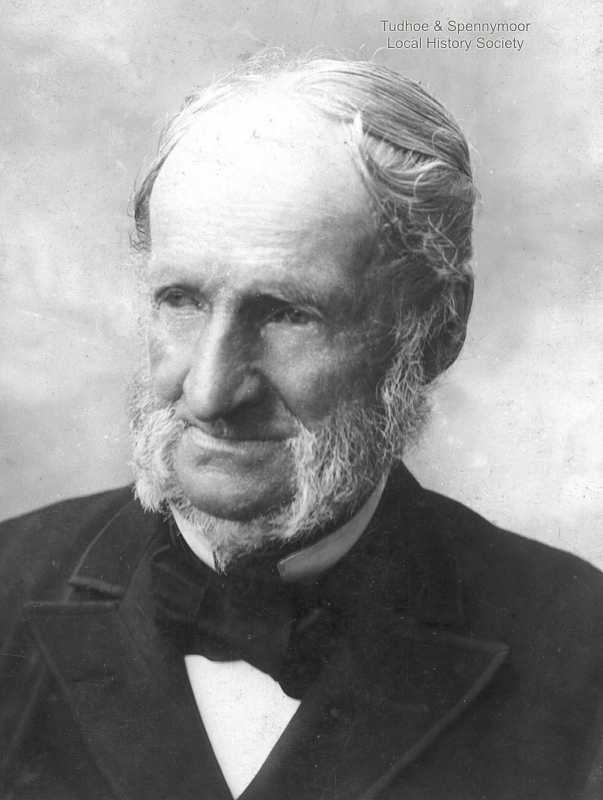
To view more information about Mr Hedley, the Hedley Memorial Hall and read his poem "J T Hedley's Long Journey" click here.
WANTED, Trustworthy Young WOMAN to manage SEATON’S TOFFEE STALL in Spennymoor Market. Apply on Saturday, at 3pm. (2nd March 1900 Durham County Advertiser)
IMPROVER - Wanted to the Painting and Decorating Trade; first-class shop. Wilson, Painter and Plumber, Spennymoor. (3rd March 1900 Daily Gazette for Middlesbrough)
BOOTS – Junior Salesman Wanted; good window dresser, Apply, stating age and wage required, to Longstaff’s, 12, High-street, Spennymoor. (7th March 1900 Daily Gazette for Middlesbrough)
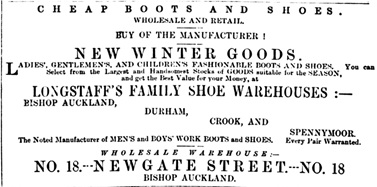
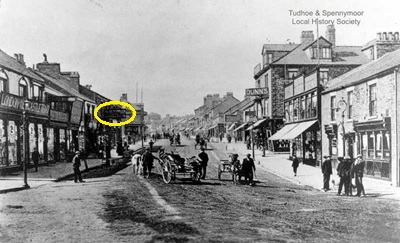 (The Longstaff business was started by Robert Longstaff in Newgate Street, Bishop Auckland by 1841. Robert and his wife Ann had six children. In 1851 he was employing 5 men and 3 apprentices, by 1861 he was employing 12 men, in 1871 his three sons are all helping in the business.
Kelly’s directory for Spennymoor, 1879 states “Robert Longstaff, wholesale and retail boot and shoe maker, High Street, & at Market Place, Durham; Church Street, Crook; & Middle Street Consett; Wholesale warehouse & manufactory 18 Newgate Street, Bishop Auckland.”
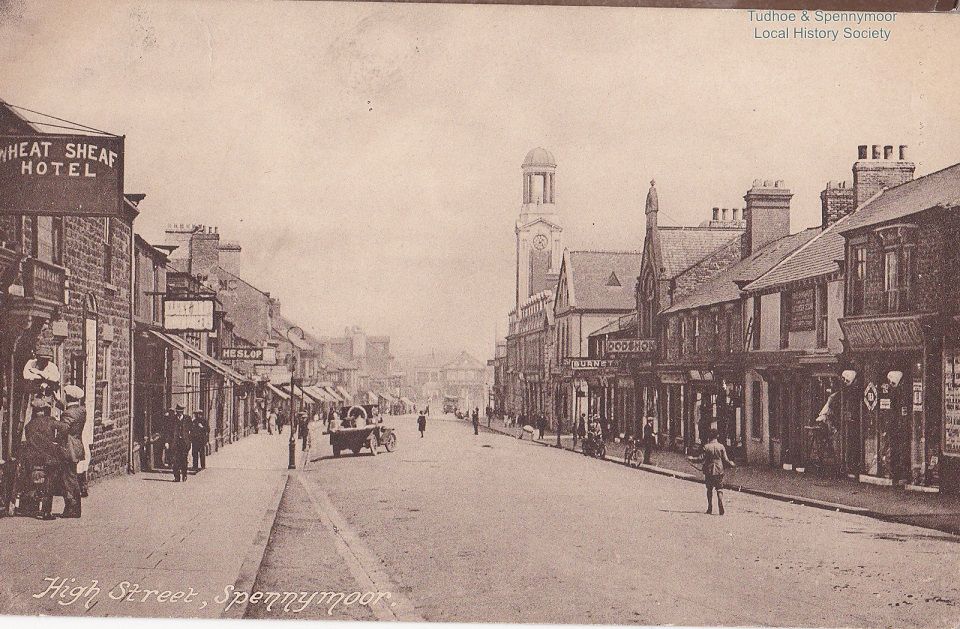
In 1881/91 Henry Longstaff (Robert’s son) is at Bishop Auckland, with his wife Rachel and they have three daughters and two sons. In 1881 he is employing 42 men, 23 boys and 10 girls. He trades at the shop in Spennymoor until 1890s, by 1902, 12 High Street, has been taken over by Mrs Mary Jane Edgar who is also a boot and shoe dealer who was dealing at High Bondgate in 1901. By 1910 the shop has a new proprietor, Samuel Joseph Knowles, a General Draper and Boot Dealer. The “S. J. Knowles” sign from the shop can be seen on the photo of Spennymoor High Street c.1914 where Cheapside meets the High Street near the Bridge Inn. (Tony Coia & George Teasdale)
THOROUGH HOUSEMAID - wanted, upper of two; also thorough Parlourmaid, good plate cleaner and waitress. State all particulars by letter to Mrs Duncombe Shafto, Whitworth Park, Spennymoor. (13th March 1900 Yorkshire Post and Leeds Intelligence)
APPRENTICE - Wanted to the Tailoring Trade. Apply Taylor, Tailor, Spennymoor. (14th March 1900 Daily Gazette for Middlesbrough)
Was this George William Taylor
HEATERS, - Two. Wanted, steady and competent Men, for Iron Guide and Merchant Mill. Write with full particulars to manager, Spennymoor Iron Works, Spennymoor, Co. Durham. (15th March 19000 Sheffield Evening Telegraph)
TO TAILORS. - Good General Hand Wanted; permanent employment to suitable man. Apply Thomas Christelow, Cheapside, Spennymoor. (22nd March 1900 Daily Gazette for Middlesbrough)
SALE OF UPWARDS OF 100 FAT CATTLE and 200 FAT SHEEP - THE WEARDALE IRON AND COAL CO. LIMITED
TUDHOE MOOR FARM
IMPORTANT SALE OF UPWARDS OF 100 FAT CATTLE and 200 FAT SHEEP
MR JOSEPH VICKERS
Instructed by the Weardale Iron and Coal Co Limited, will SELL BY AUCTION,
At Tudhoe Moor Farm, on Monday April 2nd, 1900.
The following Fat Cattle &c:- Stones
40 Three-year Old Bullocks ......50 to 75
16 Young Cows ...................45 to 65
45 Three-year Old Fat Heifers ...40 to 55
200 Prime Fat Sheep
The Cattle have been stall fed since October, and are all worthy the attention of Butchers and Dealers, being one of the best lots of Fat Stock ever offered at Tudhoe Moor.
Purchasers will be allowed one week’s keep free of charge.
Luncheon will be provided at 12.30 for Purchasers.
Sale to commence at 2.30 o’clock.
Trains arrive at Croxdale at 11.37 am, and Spennymoor at 11.26 am and 2.6pm from Bishop Auckland, and 2.15pm from Ferryhill.
‘Bus will meet Train arriving at 2.6pm from Bishop Auckland, and return in time for 5.3 Train.
Tudhoe Moor Farm, March 19, 1900 (30th March 1900 Durham County Advertiser)
A letter from Robert Cairns to the Children's Circle on 28th April 1900, page 2 of the Northern Weekly Gazette, then a prize on page 3.
COURAGE Dear Daddy, I hope you will forgive me for not writing sooner. You will see if you look at your list of prize winners that the last time I won a prize was October 31st, 1896; but I promise that I will write more regularly. I will conclude my letter with an essay on Courage:-
Courage is simply bravery. Some people may possess that which is called natural courage. In certain individuals courage may be aroused only for a reward which they may obtain. Courage by a reaction setting in from one courageous act may in another time when needed turn to cowardice. Look at the courage of the exploring parties who after colliery disasters, go down the mine in search of their fellow workmen, expecting at any moment to lose their own lives with the after-damp. David, the son of Jesse, was a courageous man when he challenged Goliath, the giant, to come and fight him. Courage is daring to do what is right, never thinking of the consequences which may follow.
Your loving son, ROBERT CAIRNS, 44, Edward-street, Spennymoor
(28th April 1900 Northern Weekly Gazette page 2)
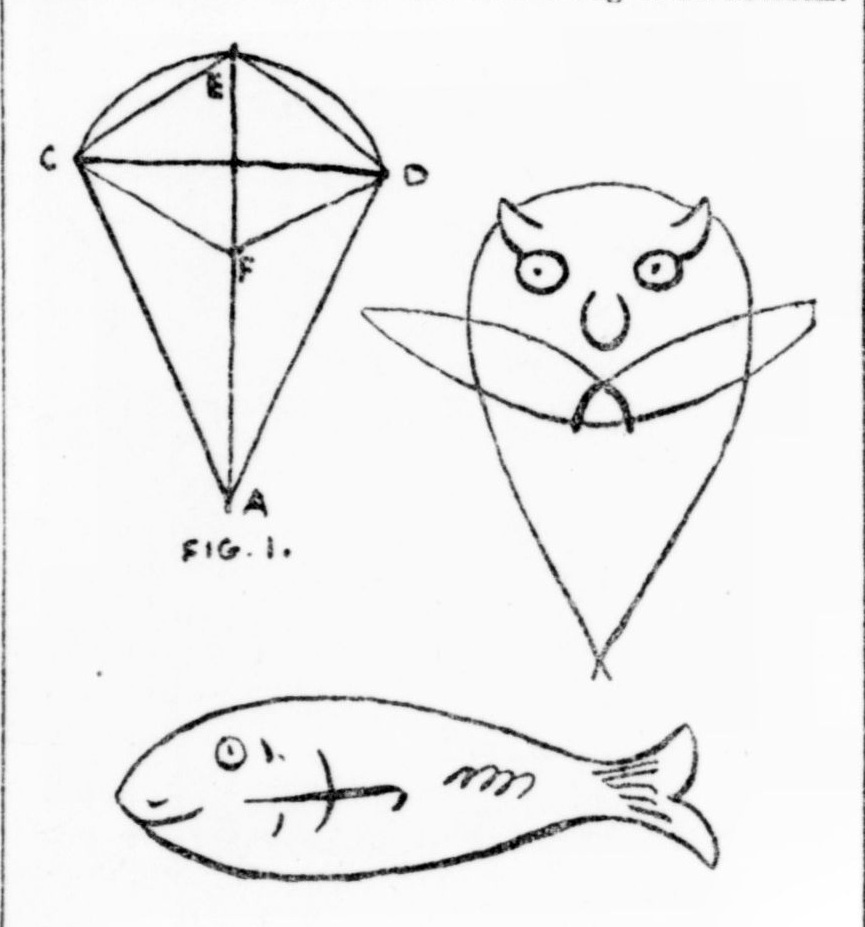 How to Make and Fly Kites - The best description of how to make a good high flying steady kite, and also a fancy shaped kite has been sent in by Robert Cairns (14), 44 Edward-street, Spennymoor, to whom a prize is awarded. I should like to congratulate Robert upon his excellent contribution. Here is the prize letter:-
There are numerous forms of kites which can be made by boys. The most popular method to make them is told in the following instructions.
First of all a long lath, a split cane, plenty of good stiff paper, string, and paste are required. The lath is required for the centre piece, and the cane, which must be fastened exactly in the middle of the top of the centre of the lath, and which must be three-fourths the length of the centre piece is for the cross-piece. When fastened in the middle bend the top over, and keep in this position by means of a length of string. Take a double turn round the upright with the cord to keep it from slipping, and securely tie it. Before tying the knot, however, be sure that the two sides of the kite balance most accurately, as the least difference in weight will make it lopsided. The two long strings are tied at the same time the top of the kite is bent in position. The frame is now complete, and the next thing required is the covering. Get some stiff sheets of paper (coloured looks best) and paste it together until a piece large enough to lap over the whole frame work at least two inches all round is made. Trim this round, and then turn the margin over and paste it firmly down. This completed, cut some wide strips of paper and paste them along and over the cross-string at the back, so that the main sheet is firmly secured to the frame. Treat the upright in the same manner with wider strips, and the kite is completed.
The tassels are made by cutting two pieces of paper, and snipping up one end like a comb; roll these in the hand and paste onto the ears of the kite. To make the tail of the kite, get a piece of string about twenty times the length of the kite, and tie pieces of paper about six inches apart along the whole length of this, finishing up the end with a tassel made the same way as the ear pieces. When selecting the string for flying always select string that is strong and light. The end of the string should be fastened to a loop, which is fastened to the upright, one end about the middle, and the other about two-thirds up the kite. The loop should not be drawn tight, but allowed to hang a little. The exact point to which the string must be fastened to the loop can only be found by experiment, as it depends entirely upon the balance of the kite.
Flying the Kite - Two persons are required in order to fly the kite, one to hold it up and give it a start, and the other to hold the string and run a little way against the wind to help it on its course. As soon as the tail is off the ground, the kite will do very well with itself, that is, of course, if there is any breeze. A boy who is sharp may construct for himself almost any pattern of kite. It does not make one atom of difference so long as the frame is correctly balanced, of what design the kite. With a box of water-colours and some crinkled paper some very eccentric patterns may be made. One of two designs which may prove suitable accompany the directions.
ROBERT CAIRNS (14), 44, Edward-street, Spennymoor
(28th April 1900 Northern Weekly Gazette page 3)
For more information about the Cairns family go to November 1900
A Blind Man's Fall - COUNTY COURT ACTION FOR DAMAGES
Before his Honour Judge Meynell, at the Bishop Auckland County Court, yesterday, John Vardy, a blind man. Belonging to Mount Pleasant, Spennymoor, sued Mrs Heads, formerly Carrick, of the Lord Raglan Hotel, Spennymoor, for £50, damages for injuries received by falling down a cellar on the defendant’s premises. Mr Dodd appeared for the plaintiff, and Mr Badcock defended.
The plaintiff, an old man, and totally blind, said for the past twenty years he had been making a living with benefit clubs, and by breeding and killing pigs. On February 6th he was passing along the main street, Spennymoor, unattended, when he fell into the defendant’s cellar, sustaining severe injuries to his face, hands, and legs.
Fo the defence, Mr Badcock submitted his client was using the cellar, as she was entitled to do, with proper precaution, and that, as the defendant was a blind man, and alone on the street, he was out at his own risk, and had not taken proper care.
His Honour: According to that, a blind man had no right to go along the street. I can’t say that.
Mr Badcock, continuing, quoted a case in which judges held that a deaf man, who was injured at a level crossing, was guilty of contributory negligence, and contended that it was on a line with the present case. His client had a perfect right to use the hatchway through which the defendant fell.
His Honour: Yes, and you have a right to protect it, especially when it is on a footpath. I can’t hold that a blind man in the street is contributory negligence, but most certainly think that a hatchway in the street, unprotected, is contributory negligence.
Mr Badcock: There was a barrel standing on the west side of the hatchway.
His Honour: Yes; but none on the east side. If there had been protection on each side of the hatchway it would have been all right. I find for the plaintiff for £18 and the costs. (11th April 1900 North Star Darlington)
 John Vardy (b1837 Durham-1902) married Mary Ann Clasper in 1859. They lived at 105 Weardale Street, Mount Pleasant, Spennymoor and had three children, Mary Ann, John and James. John was a blacksmith in 1871, by 1881 he is registered blind.
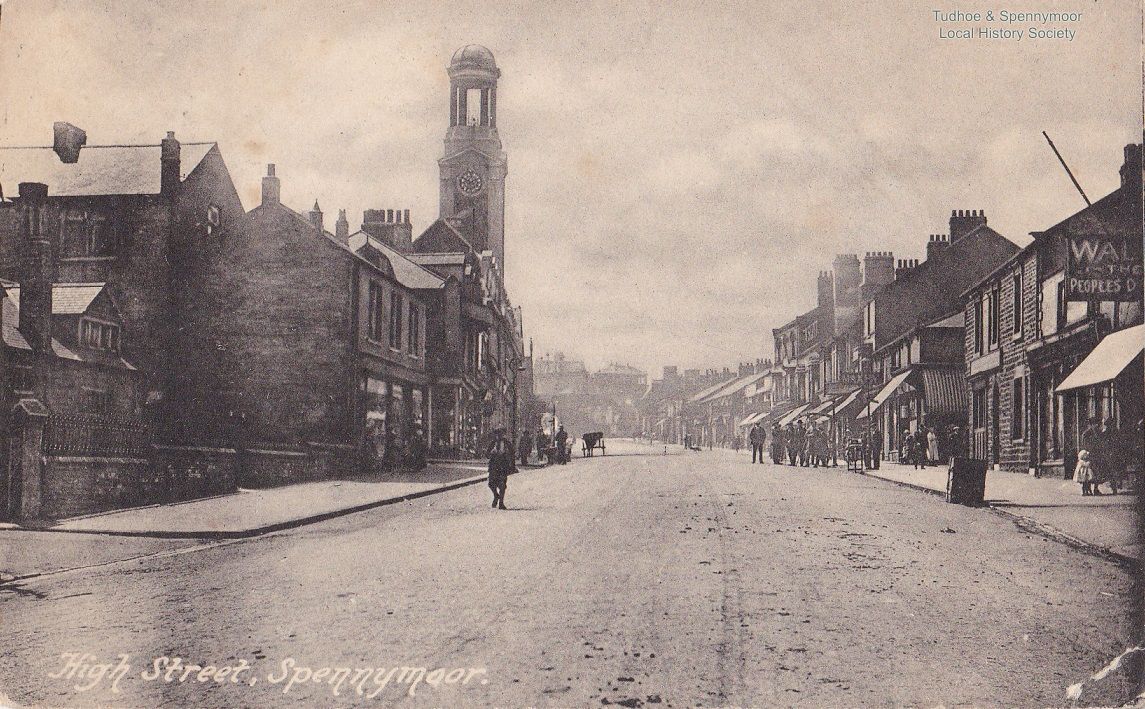
The Lord Raglan Hotel, 21 High Street, was in a prominent position at the junction of Villiers Street and High Street, it was demolished in 1960s and made way for the entrance to the precinct shopping centre.
TUDHOE CRICKET CLUB - The annual supper in connexion with the Tudhoe Cricket Club took place on Saturday evening, at Mr J T Taylor’s, Black Horse Inn, Tudhoe Colliery, when upwards of 50 sat down to an excellent spread, provided by Mr and Mrs Taylor.
After the removal of the cloths etc., Mr A Maskerry presented the prizes to the players who head the bowling and batting averages for last season, which were as follows:-
1st team
Batting Mr A G Black, cricket bag, average of 25-36 runs;
Bowling Mr Joseph Urwin, suit of cricket clothes, average of 12 72 per wicket.
2nd team
Batting, Mr J G Laidler, pair of leg-guards and trousers, average 15 11 runs;
Bowling, Mr G Ashton, cricket bag, average per wicket, 7 runs.
Mr J W Harrell was appointed as 1st team captain, in lieu of Mr Maskerry, who is leaving the district to take up a situation in Derbyshire. (13th April 1900 Durham County Advertiser)
Rugby Football - The Durham Cup Final Tie
West Hartlepool v Tudhoe
About 10.000 people assembled at Westoe to see the final tie of this competition. In the end victory rested with West Hartlepool by a penalty goal and a try to 1 try. They began trongly, and in fifteen minutes Gallagher scored a try. Ten minutes later Tudhoe equalised through Cockayne, and the teams crossed over level at the interval. In the second half the game was very even. A penalty goal by J T Taylor enabled West Hartlepool to win the match. (22nd April 1900 The Referee)
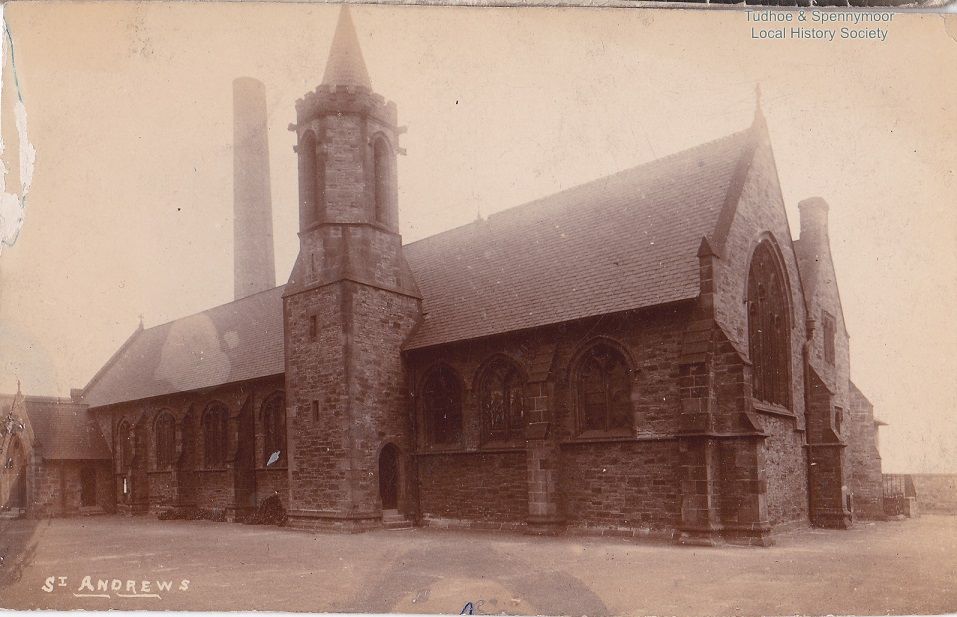
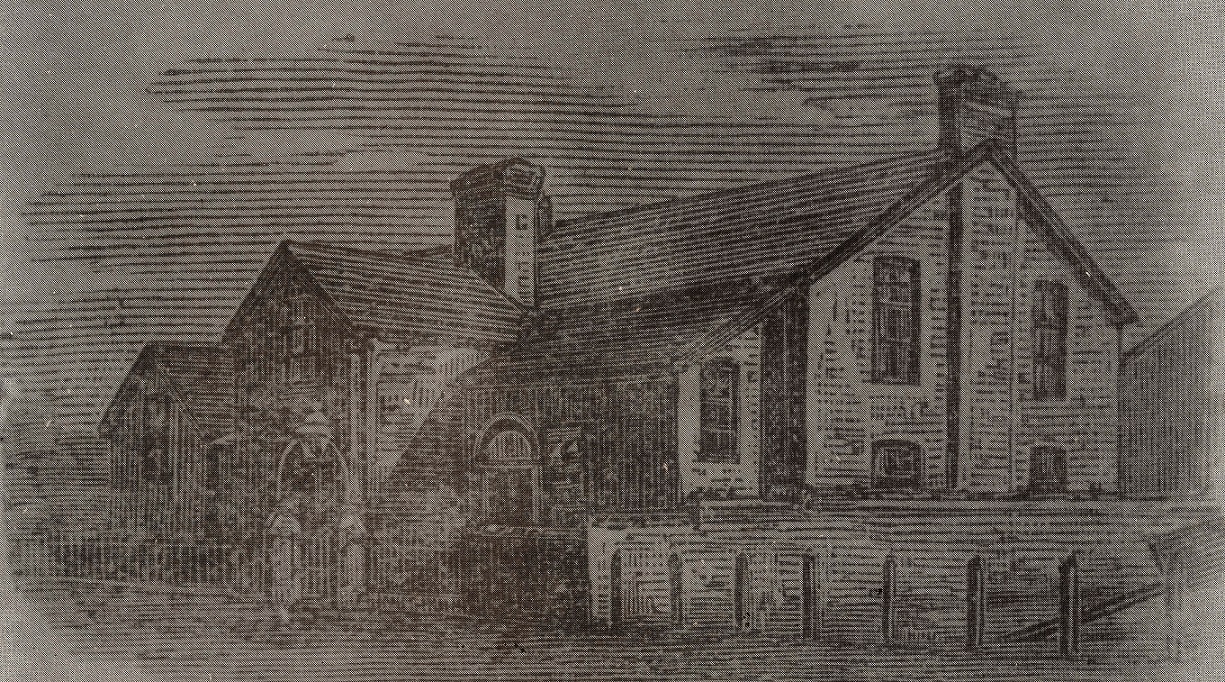 St Andrew’s Parish, Tudhoe Grange - The 18th annual Easter tea and concert in connexion with St Andrew’s parish, Tudhoe Grange, was held in the Mission Hall, on Monday. A large number of people sat down to an excellent tea in the afternoon. The tables, five in number, were provided by the following:-
Mrs Fenton, the mothers of the parish, the Girl’s Bible Class, Rev G R Cook’s Men’s Bible Class, and Mr G Wallace.
In the evening a representation of Miss Wingate’s operetta. “Aladdin” was given by the members of the choir, under the direction of Mr Wm Dixon, Tudhoe Grange. The proceeds were in aid of the sustentation fund of the parish. (20th April 1900 Durham County Advertiser)
Wanted, information of William Dawson, sinker, late of Sunnybrow, Durham, who went to Prussia 32 years ago; last heard of from San Francisco and Table Mountain Mine, State of Senora, Mexico, in 1889. His daughter Margaret Hopper, Tudhoe Colliery, Spennymoor, enquires. (7th April 1900 Newcastle Chronicle)
Margaret Dawson was born on 17th September 1867 at Sunnybrow, the daughter of William Dawson and Phoebe Jackson. She married William Hopper, a decorator and painter, in 1901/1911 they are living at 22 Front Street, Tudhoe Colliery with their four children, Mary Ethel (b1891), Frederick Wilkinson (b1892), Nellie (b1896) and William Dawson (1904).
Did Margaret ever find her father? In 1871 a three year old girl called Margaret Dawson, born in Sunnybrow, was boarding at High Street, Willington with the Bottom family, could this have been Margaret?
International Fives Match
The final game in the international fives match between J Bessford, Cassop, and Pedro Eligalde, Spain, was decided at Tudhoe Park, on Saturday, before a large crowd. The conditions of the match were two games, 33 up each, the highest aggregate scorer being returned as the winner of a £200 stake.
In the first game a fortnight ago, Eligalde won by 33 to 13, in the English style, but with the Spaniard’s ball, and in Saturday’s game, in the Spanish style (four alleys), but with Bessford’s ball, he only required to make 14 to win the championship.
On Saturday Bessford was favourite for the game, but the Spaniard was favourite for the match in its entirety. The Spaniard went in first, and failed to score, as he also did in his five successive innings. On the other hand, Bessford made eleven the first time in. In his second he made five, third two, fourth 8, fifth nothing, and his sixth and last seven, making his 33, and not allowing the Spaniard to score a single chalk.
Bessford’s total score in the two games was 46, Eligalde’s 33, so that the popular English champion won the match by 13 chalks. (7th April 1900 Leeds Mercury)
WHITE LEGHORNS - Can supply sittings of Eggs from ny Prize Winners at Blackburn, Combe, Thornaby, Cleatormoor, etc.: also won prizes for eggs last season; Settings 5s and 3s 6d. Particulars apply B Cowell, Marmaduke-st, Tudhoe Grange, Spennymoor. (6th April 1900 Daily Gazette for Middlesbrough)
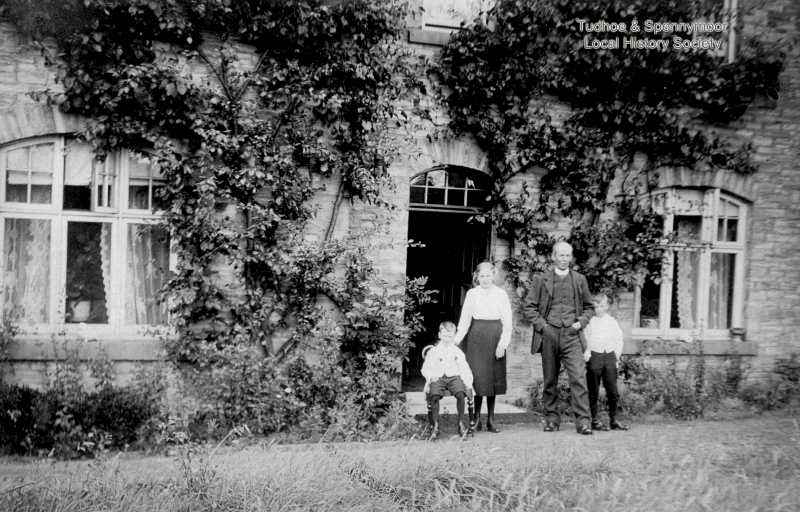 Burton Beck Farm, Spennymoor
Highly Important Displenishing Sale.
Mr Joseph Vickers favoured with instructions from Mr Henry Walker, who is retiring from farming, will SELL BY AUCTION, on Wednesday, April 25, 1900, the whole of his very Valuable FARMING STOCK, including Horses, Cattle, Seep, Pigs, Poultry, Implements, Dairy Utensils, etc. Full particulars on Posters. Sale at 12.30 prompt. Mart Offices: Tow Law.
(25th April 1900 Northern Echo)
Mr George Byers, the newly elected Chairman of the Spennymoor Urban District Council, is a man of much experience and practical knowledge. He was for several years a member of the old Local Board of Health. He was elected one of the first members of the Urban Council in 1895. At the last general election in 1898 he was returned at the head of the poll by a very large majority as a “progressive candidate”, and has served during the last few years in the capacity of vice-chairman. He is noted for his kindly and obliging disposition, and is a man who is thoroughly conscientious in all that he does and says.
His father, the late Thomas Byers, who came from Witton-le-Wear nearly 50 years ago, was one of the pioneers of Spennymoor, and with others… formed the Spennymoor Local Board of Health, and became its first surveyor.
Mr George Byers, in conjunction with his brother William, had some experience in the laying out of many streets and the erection of some of the principal buildings of the town. They were the architects of the spacious covered market, situate in the main street, the tower of which still remains unfinished for want of a public clock. (24th April 1900 Daily Gazette for Middlesbrough)
SPENNYMOOR URBAN COUNCIL - The monthly meeting was held yesterday, and presided over by Mr G Byers. A letter was read from Mr J J Dodd stating that it was more than six months ago since the rejection of his motion for a reference and public library. He had reason to believe now that there was a much stronger feeling in favour of the scheme. And he suggested that the Council should appoint a small committee to go into the matter. He was willing to give up a portion of his own library, and he knew of another person who was willing to do the same. And he was willing to leave in the hands of the Council his subscription of £20 odd. The matter was referred to the Finance Committee for consideration. (27th April 1900 Daily Gazette for Middlesbrough)
The Spennymoor Urban District Nursing Association, originated by the late Mrs Shafto, of Whitworth Hall, has now taken practical shape. An executive committee, with Mrs Wilkinson, of Whitworth Vicarage, as president, Mrs Drake secretary, and Mrs Rowland treasurer, has been formed. The services of Miss Wilson, who resides in King-street, Tudhoe Grange, and is one of the Queen’s Victoria Jubilee nurses, have been secured. More nurses are to be engaged as the funds increase.
The nurses of this Association are employed only as district nurses, paying one, two or more visits daily to each patient on the books; they do not remain all night with a patient or in sole attendance upon any one person. All visits from the nurses are entirely free. The Association is undenominational, and the nurses are forbidden to interfere with the religious opinions of the patients. (26th April 1900 Daily Gazette for Middlesbrough)
On the 7th May the Newcastle to Leeds section of the trial travelled from Newcastle via Chester-le-Street, Durham, Ferryhill, Darlington, Northallerton, Thirsk, York, and Tadcaster to Leeds.
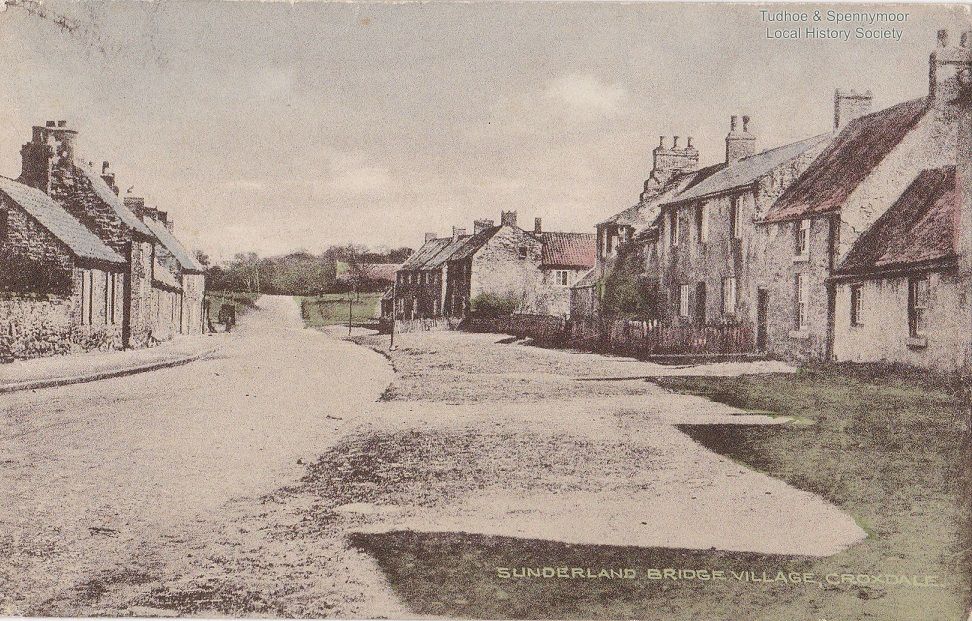
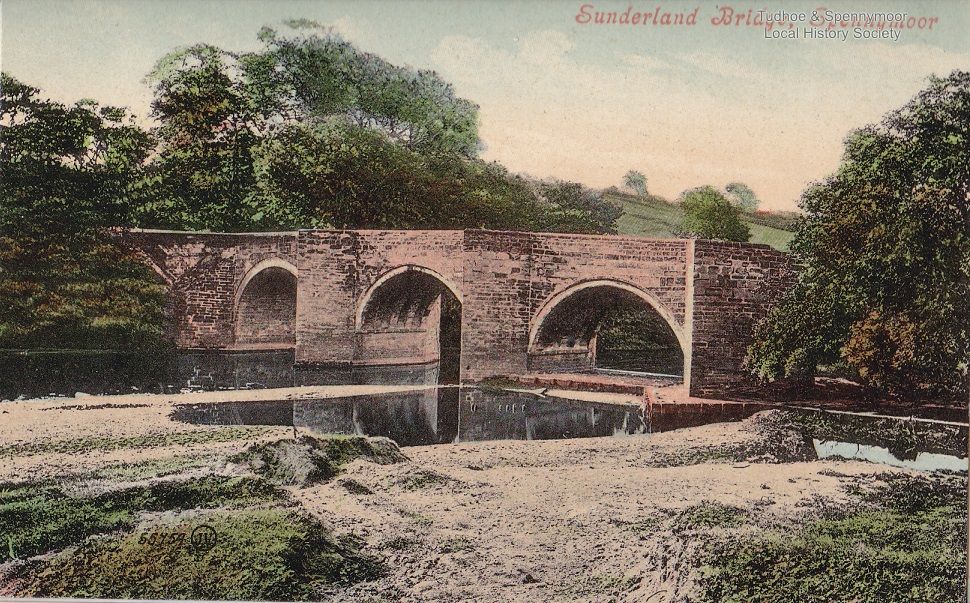 Croxdale - A considerable amount of interest was displayed in this district on Monday morning. According to the published times, the cars were not expected until 9, but about 8.30 two ascended the Sunderland Bridge bank in good style despite the heavy greasy state of the road, and were soon out of sight in the direction of Darlington.
Shortly after 9, at the foot of the hill, there was a goodly muster of Brancepeth, Browney, and Burnigill people to witness the horse and carriages take the rather awkward turn over the Wear Bridge, while in the middle of the bank a well known gentleman in the Durham and Cleveland mining circles seemed to take a particular interest in the movements of the various cars. It seemed to an ordinary passer by that the gentleman referred to had a good idea of the weakness of their climbing power, as at the spot he had chosen a good many of the machines came to a standstill, and had to be assisted by manual labour.
At the entrance to the Sunderland Bridge village there was a large gathering of ladies and gentlemen from Croxdale Hall, Croxdale Wood House, etc, and the villagers generally. On the whole, although one machine had to take the hill from about midway in rather an unorthodox fashion, i.e. the wrong way on, the cars made capital progress. Stragglers came along until noon. At Butcher Race there was also a good gathering, of the Sedgefield, Cornforth, Coxhoe, etc, inhabitants. (11th May 1900 Durham County Advertiser)
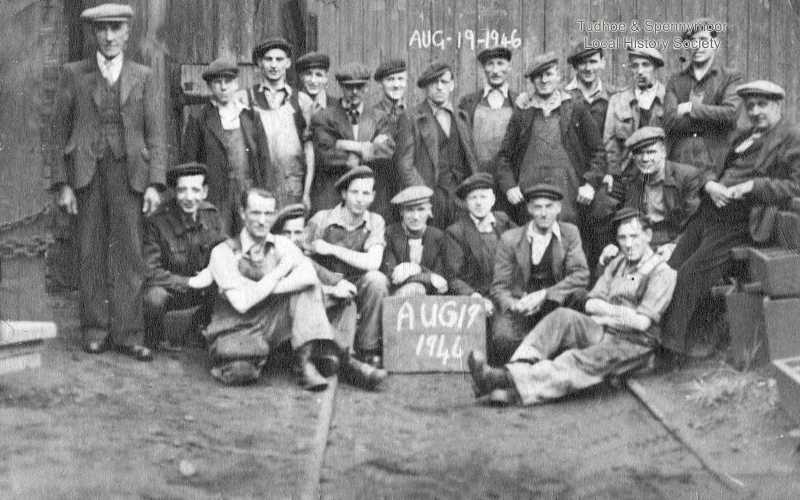 Messrs Coulson and Co. application to Spennymoor Urban Council - This firm made application to lay down a line of rails across the Merrington Lane road from their works to the large crane on the railway sidings. At present it was most difficult to convey large work from their yard to the railway, and if granted it would enable the firm to undertake much larger work.
MR Black moved that the application be granted on condition that the firm take all responsibilities, and that they pay to the Council 1s per annum.
Mr Coldwell moved that it be not granted.
Mr Gartland: It will be much safer for the public granting them the wagonway across the road. At present large castings and other machinery has to be taken on to the railway by horse and wagon. In one case a large boiler fell off the wagon and blocked the road for several hours.
Mr Reavler: It would not be right to put anything in the way of local industry.
Mr Starforth moved that £50 per annum be charged for the right of way.
Mr Coldwell: I will second that.
Mr Hill thought £1 ample.
Mr Black: The more work Messrs Coulson and Co. do the better for all.
Mr Reavler: The public are much annoyed by the Weardale Company taking up so much of the tunnel, and we have to light and keep the footpath good at a cost of £10 for lighting. Coldwell, if you will make a motion to give the Weardale Company notice to stop using the tunnel I will second you.
After Mr Starforth’s amendment that the wayleave be £50 was put and lost, Mr Black’s motion was carried. (4th May 1900 Durham County Advertiser)
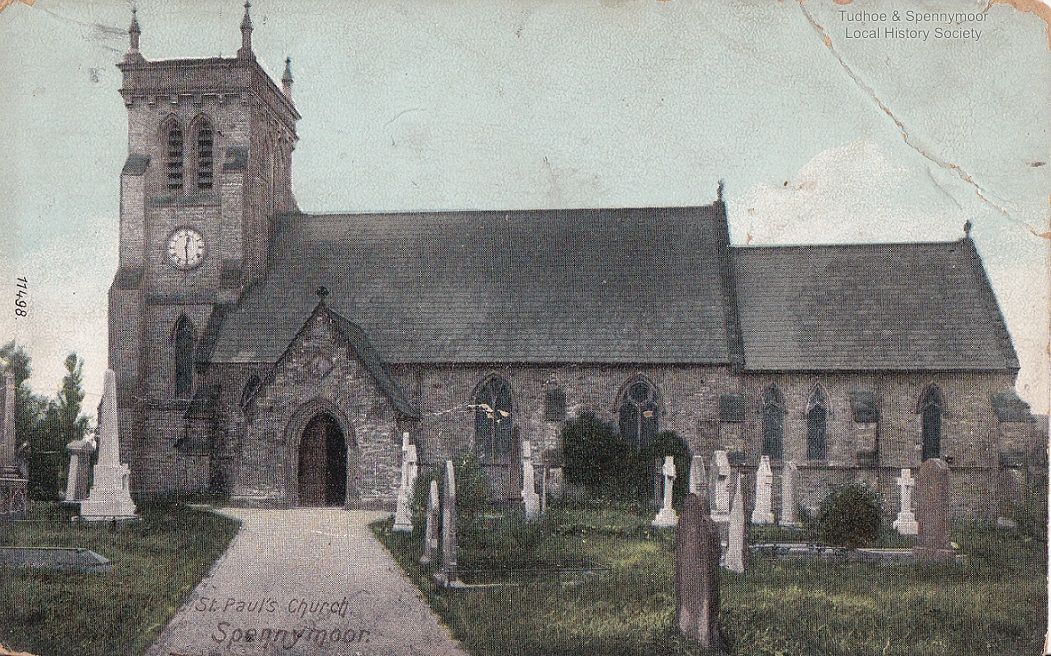 The New Vicar of Spennymoor -The Rev. Joseph Short, B.D., curate at St. Columba’s parish, Gateshead, has, as stated above, been appointed by the Dean and Chapter of Durham to the vicarage of St. Paul Spennymoor, vacant by the death of the Rev. John Gaskill, M.A. Mr Short had had a successful career since entering the church, owing chiefly to natural talent. He began life as a pupil teacher, and in time passed through St Bede’s Training College at Durham. Subsequently entering Durham University he graduated B.D. His first curacy was at St. Jude’s parish, South Shields, and after a stay of two years he became curate of Whickham, and was placed a curate-in-charge at Swalwell. During the 6 years Mr. Short occupied this position, he proved himself an able and zealous worker. He was also most acceptable as a preacher, and holding medium views in church matters, he sought to attain a feeling of friendliness throughout the parish generally. The Mission-room had soon to be enlarged, and next by his efforts the present church was erected. On leaving for Gateshead the parishioners of Swalwell showed their appreciation of his ministrations amongst them by the presentation of a purse of gold and an oak chair, Mrs Short receiving a silver tea and coffee service. The people of Spennymoor may congratulate themselves on the appointment of such a thoughtful and earnest clergyman as their vicar. Mr Short married the eldest daughter of Mr George Aird, of Seaham Harbour, where the rev. gentleman is well known and greatly esteemed.(11th May 1900 Durham County Advertiser)
In 1881 Joseph Short, (b1862 Oxhill, Stanley), was attending Durham Training College at St Giles, Durham City. He married Alice Aird (b1859 Seaham Harbour) in 1888 and in 1891 he is curate of St Jude's C of E, South Shields and they are living at 24 Westoe Parade, South Shields with Alice's sisters Grace Margaret Aird (b1861 Seaham Harbour) and Elizabeth Aird (b1870 Hawick, Scotland). In 1901 and 1911 Joseph, Alice and her sisters are living at The Vicarage, Spennymoor, Grace Margaret is a school teacher and Elizabeth is housekeeper at the Vicarage. In 1915 Joseph becomes vicar at St Helen's Auckland and then vicar at Kelloe in 1923. He died on 23rd January 1938 and was buried at Kelloe.
Primitive Methodist Circuit - At the quarterly meeting of the Spennymoor Primitive Methodist Circuit, held on Saturday, the Rev. D McKinley received and accepted a most hearty and unanimous invitation to remain in the circuit until the connexional year ending July 1902, making in all a stay of eight years in the circuit. (28th May 1900 Daily Gazette for Middlesbrough)
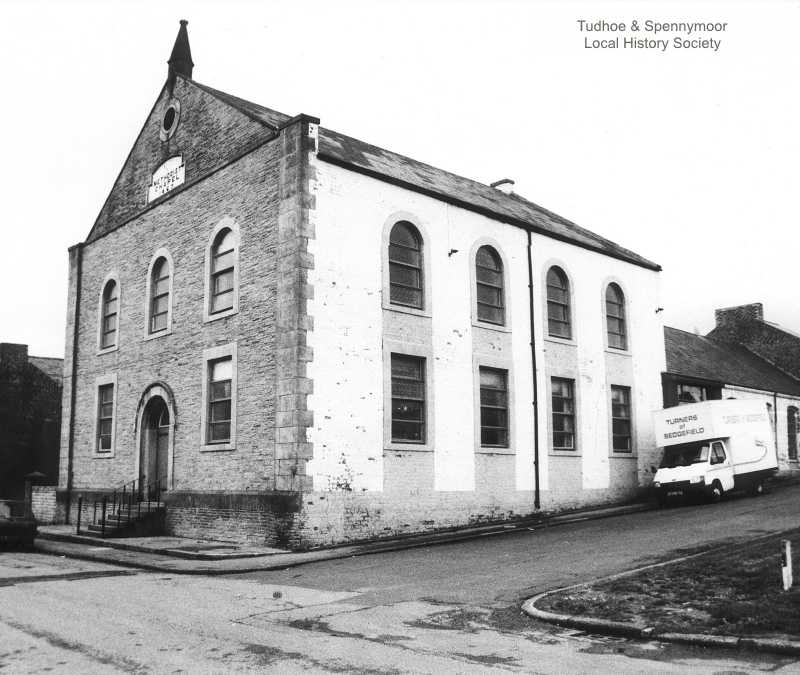 Primitive Methodism - It is 45 years since Primitive Methodism was introduced into Spennymoor. In 1854 a small society was formed, and for some time the only place of worship was a small cottage in Pitt street. Three years after, in 1857, a great effort was made, and what was to the people in those days a splendid chapel, was built in George street. Such was the progress of the church that in 12 years the chapel became far too small. In 1869 a good site was secured in Rosa street and Edward street, and the present commodious chapel erected. The property which includes the chapel with seating accommodation for 700 people, the schoolroom and the caretaker’s house cost nearly £2,400. About £900 has been spent since in alterations and improvements. Owing to the continued increase in he number of scholars attending the Sunday School, it has become necessary to enlarge the premises. There are at present over 300 scholars on the roll. It has been decided, therefore, to provide more accommodation, by the addition of six classrooms, together with other needful improvements. The trustees of the society are desirous of raising the requisite cost without adding to their present liabilities, and for this purpose a Polytechnic Exhibition is to be held this week, and will continue for seven days in the Edward street Schoolroom. The Rev. D McKinley is the Superintendent Minister, and the Rev. G C Sharp his colleague. Mr J Beckwith is treasurer and Mr J W Pratt secretary. Dr R S Anderson is to open the proceedings on Wednesday. (22nd May 1900 Daily Gazette for Middlesbrough)
POLYTECHNIC EXHIBITION AT SPENNYMOOR - Yesterday afternoon a seven days grand Polytechnic Exhibition was opened by Dr R S Anderson, of Hillingdon House, the object of which is to raise money for the purpose of extending the Primitive Methodist Schoolroom. It is intended to add six classrooms and make other necessary alterations in order to meet the requirements of the increasing Sunday School.
The exhibition consists of a splendid collection of curios, fine art, and mechanical exhibits from Palestine, Egypt, India, America, China, Japan, and Africa, including an interesting collection from the Transvaal. During each evening concerts are also held, the chief artistes being Mr R G Suggett, humorist, Darlington; Messrs Thompson, Bosanko, Bateman, Wilson, Forrest, Close, Grieves, Starforth, White, Messrs Baines, Allen, Buston, Wightman, Brown, Dobson, and T Grieves (humorist and elocutionist), the Primitive Methodist String Band, etc.
The most important exhibits included the following:-
Splendid model of the s.s. Bosnia of the Furness Line of steamers, also models of sailing vessels, kindly lent by Sir Chris Furness. There was a splendid collection of curios lent by Mrs Duncombe Shafto, of Whitworth hall, including oil painting of Mark Shafto, who purchased the Whitworth Estate in 1651.; Mrs Shafto who lived to the age of 103 years; a model of St Paul’s Church, Spennymoor by Mr Tolmie; a collection of curios lent by County Councillor Dodd, including a rare collection of Dickens relics, and the books offered to form a library for Spennymoor; also a collection of armoury by Mr Kirkup. The opening proceedings commenced by the singing of a hymn andprayer offered by the Rev. J Hope Scott.
The Rev. D McKinley, superintendent minister, before introducing Dr Anderson, said on account of the increase of scholars in the Sunday School they were under the necessity of enlarging the premises. They would have liked to enlarge on a greater scale, but the cost would be too great. The present debt on the premises is about £300. The probable cost of the improvements would be between £300 and £400.
Dr Anderson, who received a most hearty welcome, spoke of the pleasure it afforded him to be present to open the exhibition. He declared that Sunday Schools are doing great work towards the formation of the national character, and when our sons grow up and go into other countries they carry that good training with them. This is one reason why the British are such good colonists. It is the good training in the Sunday Schools which makes them favour the liberty of all races in all parts of the world. He had much pleasure in declaring the exhibition open and hoped that great success would attend the same.
Mr J Rogerson moved that the best thanks be given to Dr Anderson for his able address and his services rendered in opening the exhibition.
The Rev. J Hope Scott MA (Presbyterian), in a very elegant speech seconded the resolution, which was carried with great enthusiasm. Dr Anderson briefly replied to the vote of thanks, and the exhibition was then declared open. Mr J M Paulton MP sent a letter regretting his inability to be present, and enclosed a cheque for 21s. (24th May 1900 Northern Echo)
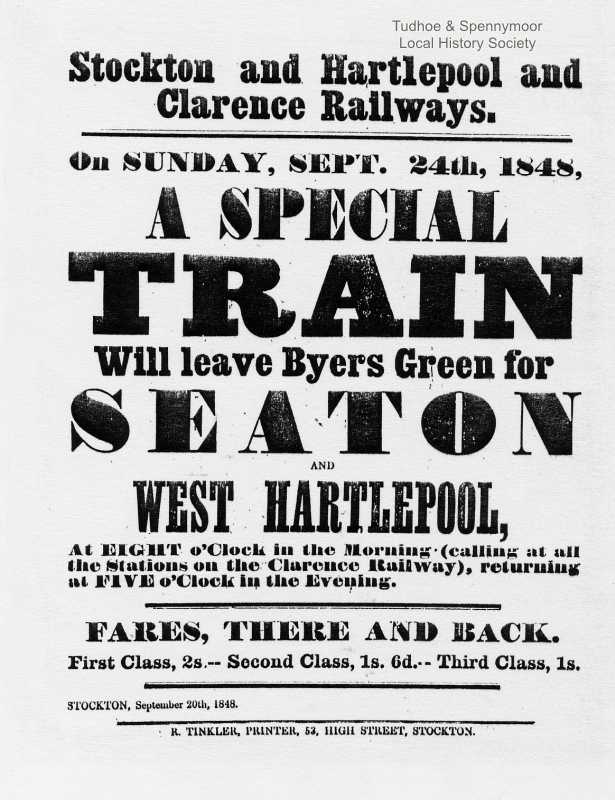 Train excursions began soon after the start of the passenger railways in 1825 as shown on this poster from 1848.
By 1900 the following excursions were being advertised to Spennymoor.
Excursions North-Eastern Railway
Excursion Trains from Sunderland. Monday May 14, at 11.20am for Spennymoor
Excursion Trains from Jarrow. Monday May 14, at 10.39am for Spennymoor
Excursion Trains from Stockton. Monday May 14, at 11.08am to Spennymoor
Local Excursions
From South Shields. Monday May 14, to Spennymoor depart 10.40am return 6.35pm.
From Tynemouth. Monday May 14, to Spennymoor depart 12.20am return 6.35pm.
(11th May 1900 Sunderland Daily Echo, 11th May 1900 Jarrow Express, 12th May 1900 Stockton Herald South Durham, 11th May 1900 Shields Daily Gazette)
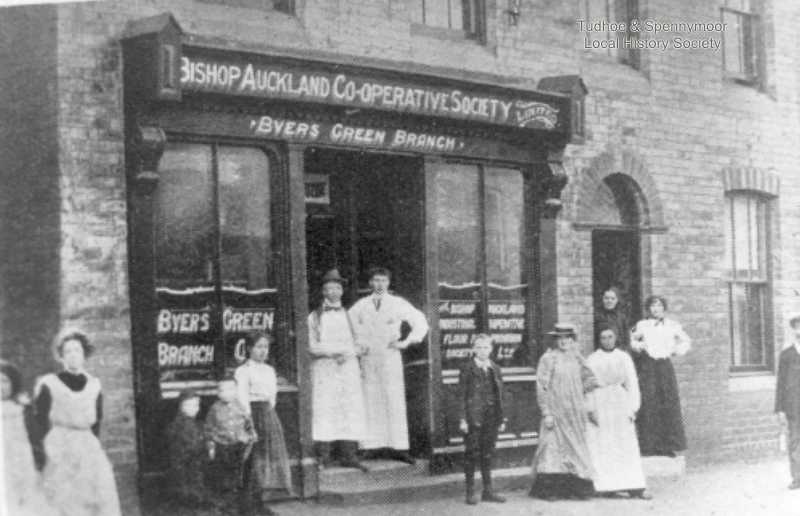 MOTHERS HELP - Dear Daddy, This is the first time I have had the pleasure of writing to you. I have now left school and am a great help to mother. I am thirteen years of age. We are living at Byers Green Colliery. There are not many houses here, as it is a very small village, situated between Spennymoor and Bishop Auckland. Hoping you have room for my letter, and sending my love to you and your children, I remain yours affectionately.
Margaret Goundry 34, Busty-terrace, Byers Green Colliery, County Durham. (19th May 1900 Northern Gazette)
Could this be Margaret Goundry (b1886), daughter of Joseph Goundry and Emma Nuthall, who had six older siblings and one younger brother?
Joseph and Emma married in 1864 and the family lived in many mining villages including Hunwick, Bowden Close, Sunnybrow, Coxhoe, Binchester, and by 1891 Byers Green Colliery where they finally settled.
In 1911 Joseph, aged 73 a retired miner, and Emma, 65, are living with their eldest son Robert, aged 45 and youngest son James, aged 23, in Byers Green Colliery.
Spennymoor Musical Society - By invitation a crowded audience assembled in the Town Hall, Spennymoor, on Thursday night, when the Spennymoor Musical Society gave their annual invitation concert. The pieces chosen were Mendelssohn’s “Hymn of Praise” and Somervals “Forsaken Merman”. The artistes engaged were Miss Janet Reed, soprano, North Shields; Mr Tom Child, tenor, Leeds and Mr. Wm. Lyall, bass, Newcastle Cathedral. The piece opened with a well played symphony by the orchestra, which was ably led by Mr F Lonsdale of Langley Moor. Mr Tom Child, the capable Yorkshire tenor, came in for a good share of work, which gave splendid opportunities for his undoubted vocal talent. Special mention may be made of the expressive manner in which he sang “He counteth all your sorrows”. Miss Janet Reed sang with admirable effect “I waited for the Lord”, and the duet with Mr Child, “My song shall always be Thy mercy” was so beautifully sung and appreciated that both had to bow their acknowledgements. The chorus was exceedingly good and well balanced, and was heard at its best in “The night is departing”. The performance was an excellent one, and reflected very great credit on the conductor, the Rev. Canon Firth, who seems to have spared neither time nor energy in making the performance a thorough success.
At this part of the programme the Rev. J Hope Scott moved that public recognition be made of the valuable services of Canon Firth had rendered to the society during the past nine months.
Major Junor seconded the motion, which was carried with acclamation.
The second portion of the programme included “The Forsaken Merman” and a miscellaneous programme. Mr Lyall sang the bass solo in “The Forsaken Merman” and the choir did full justice to the series of choruses therein. Mr T Child sang “The Sailor’s Grave” which was encored, and in reply sang “Let me like a soldier fall”. Mrs Reed sang “The scent of the lilies” and being encored gave “On the banks of Allen Water”. Mr Lyall sang “The Deathless Army”, r Lonsdale gave a splendid viola solo, and Mr C Large fairly surprised everybody with his piccolo solo, which was loudly applauded, and deservedly encored. Mr F J Rowland as secretary had all the arrangements in hand, and to his efforts the success of the concert is very much due, Mr L Wightman was an efficient pianist, and Mr G W Rippon organist. The hall was tastefully decorated by Mr T N Wallis, draper, Spennymoor. (12th May 1900 Northern Echo)
 Property Sale at Spennymoor - At the Shafto Arms Hotel, Spennymoor, on Monday night, Mr J Coldwell offered for sale several lots of leasehold and freehold properties. The leasehold dwelling-house, Oak Tree House, Tudhoe village, was withdrawn at £510. Two freehold dwelling-houses and two building sites adjoining, in William-street, Spennymoor, were knocked down at £315, Mr James Black, of Low Spennymoor, being the purchaser. Two freehold cottages in Jackson-street, were sold to Mr Hunter for £115. (2nd May 1900 North Star Darlington)
Spennymoor - To be Sold by Public Auction, at the Shafto Arms Hotel, Spennymoor, on Monday, May 21st, 1900, at Seven p.m. prompt,
Mr John Coldwell, Auctioneer,
All that valuable Block of Freehold, PROPERTY, being Nos. 32 and 33, Whitworth-terrace, and No. 2, Vyner-street, Spennymoor.
For further particulars see posters or apply to BOOTH and WOOD, Solicitors. (12th May 19000 North Star Darlington)
Game Trespass at Tudhoe - Mark Dobson, miner, of Croxdale, was summoned for trespassing in search of game on the Tudhoe estate.
Thos. Gettins spoke to seeing the defendant’s dog chase two hares. Defendant, who was on the path, never attempted to call the dog back.
Defendant said he did call the dog back. It was only a little fox-terrier.
The case was dismissed. (18th May 1900 Durham County Advertiser)
Their Friendly Relations - At Bishop Auckland yesterday Edward Railton, Spennymoor, was summoned for having assaulted his brother-in-law, Philip Brown. It appeared they had married two sisters, and lived next door to each other. On the occasion of the assault Brown complained that Railton came into his house, knocked him down, caused him to bleed, and kicked him in the chest, and this without provocation.
Defendant said that Brown aggravated him by using all manner of language about his own wife and others, and in the end, losing all patience, he swept round his arm and knocked both Brown and the chair over.
The Chairman (Mr Fryer): Are you friendly?
Defendant: I don’t know if we are friendly enough, but it is only the other week that I lent him 30s to buy a cart with. (Laughter)
Mr Fryer (to complainant): Were you drunk?
Complainant: Yes, I was drunk. To say I was not would be telling a lie. (Renewed laughter)
Railton was bound over to keep the peace and ordered to pay costs.(29th May 1900 Northern Echo)
Theft at Spennymoor - An elderly woman named Sarah Wilson pleaded guilty before the Bishop Auckland magistrates yesterday to a charge of stealing a black pinafore from the shop of Alice Bell, fancy goods dealer, Spennymoor, and she was ordered to undergo imprisonment for three days. (25th May 1900 Northern Echo)
Auckland Police Court - At Auckland Petty Sessions to-day, John William Elliott, a militia man, was charge on a warrant with deserting his wife and children, and leaving them chargeable to the Auckland Union. He was sent to prison for three weeks with hard labour.
Thomas Hodges and John William Hidges were fined 5s each for playing at fives on the highway at Spennymoor. (31st May 1900 Daily Gazette for Middlesbrough)
Tudhoe (U.D.) School Board - Mr J Rogerson presided at the monthly meeting of the above Board on Friday night. On the motion of the Rev. D McKinley, seconded by the Rev C Lumsden, it was decided to increase the midsummer holidays from three weeks to one month. (8th June 1900 Durham County Advertiser)
Spennymoor Urban District Council - Serving children with drink.
A letter was read from the Spennymoor District Band of Hope Union asking the Council to sign and forward a petition to Parliament in favour of the Bill prohibiting drink being sold to children under 16 years of age.
After some discussion it was carried that the petition be forwarded. Messrs Dowdell, Starforth and Coldwell voted against the proposal. (8th June 1900 Durham County Advertiser)
Highway Committee - Public footpaths York Hill to Green Lane
The clerk was instructed to ask Mr W Fleming, Mr Salvin’s agent, for a definite reply respecting this footpath.
Barnfield Road - The Weardale Iron and Coal Co. in reply to the matter of loading trucks, &c. said it was having their best consideration. With respect to the footpaths from Barnfield Road to the Green Lane, the manager promises immediate attention. This report was adopted. (8th June 1900 Durham County Advertiser)
Mr J J Dodd and the Free Library Scheme
Another letter was read from Mr Dodd, offering 250 books to form the nucleus of a public reference and a lending library.
Mr Copeland moved that the Council accept the books.
Mr Rymer: Mr Dodd expects if you accept his books that we will at once adopt the Free Library Act. I am given to understand that a poll will be pressed on this question, and if carried we will be obliged to adopt the Act.
The Clerk: That was so by the 1888 Act, but the 1893 Act sets that aside.
Mr Rymer: It seems that some solicitors are not yet correctly informed on this matter.
Mr Rymer read a letter complaining of the way that Mr Dodd’s offer was treated by a member at the last council meeting, when the books were described as rubbish. The books had been on view at the Polytechnic during the last week.
Mr Reavley, who had made the assertion, said the books on view were not those Mr Dodds spoke about and which were first offered, and £5 would buy the present lot.
After some cross firing. It was agreed to recommend Mr Dodd to distribute his books amongst local reading rooms, as the Council were not in favour of establishing a free library. Mr Reavley stating that Mr Dodd’s £20 could not be used for the free library scheme. (8th June 1900 Durham County Advertiser)
Obstruction on the Highway at Spennymoor
Thomas Hodges and John William Hodges were summoned by P C Telfer on a charge of obstructing the highway at Spennymoor by playimg a game of fives.
It was said the defendants with others congregated at one particular place, where a great many people passed, and played at fives, causing an obstruction. It was further said defendants had been appealed to desist, but they took no heed. Fined 5s each. (8th June 1900 Durham County Advertiser)
Championship Match at Spennymoor. Considerable interest was centred in the championship match played at Tudhoe Park Grounds, Spennymoor, on Saturday, the contestants being John Besford of Cassop, and John Miller, of Pittington. Bessford for 12 years was the acknowledged champion, whilst Miller has a long roll of victories to his credit.
The match was for a stake of £199. Betting prior to the start ruled 60 to 40 on Miller. The latter playing in grand style, by innings of 3,4,3,2,2,1 reached 15, the Cassop man in the meantime being unable to score even a single. Then the latter recorded two chalks in four innings, and, Miller replying with a couple, the score stood 16-2.
Bessford, by extraordinary play – chiefly on the line-added six chalks in one essay, the score then reading 16-8. Slowly but surely the ex-champion improved his position, and, amidst intense excitement, 19 chalks each wa “cried” by the judge. Bessford was at once made a hot favourite.
He did not, however, justify the opinion of his supporters, for he was only able to add a couple of points. Miller from this point played splendidly, eventually running out a winner by 12 chalks.
Scores: Miller 33; Bessford, 21. (11th June 1900 North Star Darlington)
Fives - Tudhoe Park. On Saturday before a good attendance at The Tudhoe Park Ball Alley, a double match was decided for £20 a-side, 21 game, between G Templey and W Maddison, Spennymoor, and the Brothers Sinclair, Mount Pleasant. A well contested game resulted in a win for Templay and partner by six chalks. Betting evens. (26th June 1900 Newcastle Daily Chronicle)
Sacred Cantata - On Wednesday night a grand performance of Jamouneau’s sacred cantata, “Saviour of Men” was given in the Spennymoor Wesleyan Chapel by the choir, assisted by a few friends. The special artistes engaged were Miss Blenkinsop (soprano), West Hartlepool; Mr William Thompson (tenor), Middleton-in-Teesdale; Miss Dodd and Mr Allan, Spennymoor; also a splendid band of instrumentalists.
Mr John Pae presided, and spoke briefly of the power of song in public worship. The performance throughout was a most creditable one, and was conducted by Mr W Outhwaite with marked ability. The audience was only moderate considering the worthy object that the proceeds were for, namely, the New Organ Fund. Miss Startforth officiated at the organ. A short miscellaneous programme was given at the close. (14th June 1900 Northern Echo)
Wanted by the Weardale Iron and Coal Company Limited, a COMMERCIAL REPRESENTATIVE to work from their Manchester Office, in Lancashire (including Liverpool) and parts of Cheshire and Yorkshire.
Apply stating experience, age, salary required, and when at liberty, to the Secretary, The Weardale Iron and Coal Company, Tudhoe Iron Works, Spennymoor. (2nd June 1900 Manchester Courier)
Wanted, for Tudhoe Show, Saturday, Aug 4th, Highland Pipers, Sword Dancers, &c. Number and lowest terms to J B Sanderson, Sec, Tudhoe, Spennymoor, Co. Durham. (2nd June 1900 The Era)
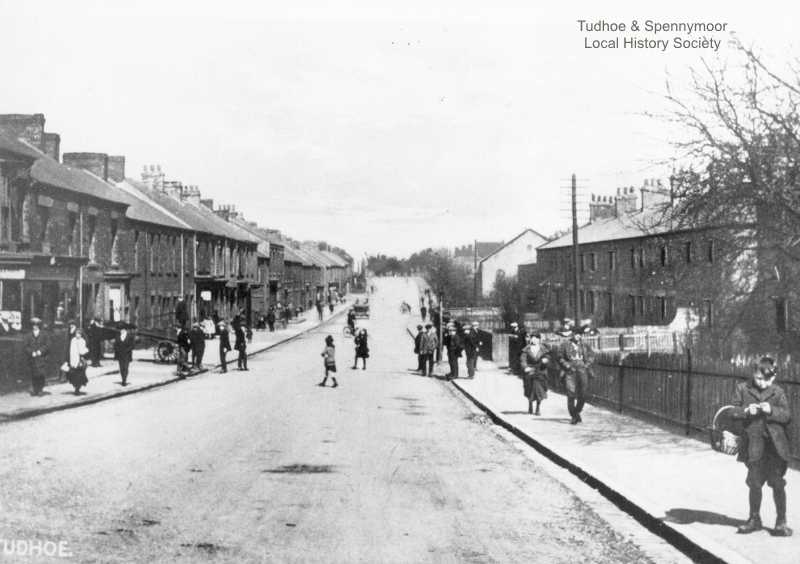 TUDHOE COLLIERY
TO BE SOLD BY AUCTION
At Mr Taylor’s , Black Horse Inn, Tudhoe Colliery, on Thursday, 28th June, 1900, at seven o’clock.
(Subject to such Conditions as will then be read)
MR ROBERT COLE,
Auctioneer
Lot 1.- The Leasehold House and Shop, No 45, Attwood Terrace, Tudhoe Colliery, occupied by Mrs Robert Currey, Draper, and comprising a good Shop, with Five Rooms, Yard, and Convenience.
Lot 2.- The Leasehold House, No 44, Attwood Terrace aforesaid, occupied by Mr Robert Farms, and comprising Four Rooms, Yard, and Convenience.
Lot 1 is held for 99 years, from 23rd November, 1874, at a rent of £1 5s 8d; and Lot 2 for 99 years from 23rd November, 1871, at £1 3s 2d.
The Property is well built, in good condition, in a good position facing the main road, and is a desirable investment.
Further particulars may be obtained from Mrs Currey, on the premises; from the Auctioneer, King Street, Tudhoe Grange; or from Joseph Mawson, Solicitor, Exchequer Offices, Durham. (8th June 1900 Durham County Advertiser)
Alarming accident at Tudhoe Ironworks
Early today before the men commenced work at the No. 1 mill in Tudhoe Ironworks, of the Weardale Iron and Coal Company, about 150 yards of the iron roof fell with a terrible crash and did damage to the machinery etc. Fortunately there was no one under at the time. If the accident had occurred during the day time there would have been over forty workmen under the roof, and the result would have been a serious loss of life. Just where the roof ceased falling a man named Shorthouse was in his cabin and had a very narrow escape. (15th June 1900 Daily Gazette for Middlesbrough)
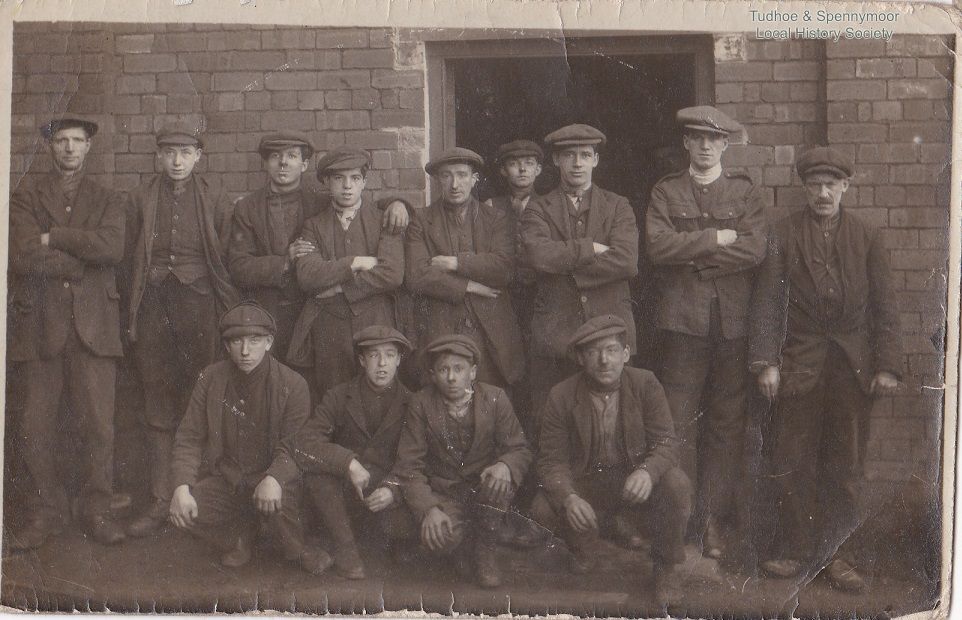 Fatality at Westerton Colliery - One Man Killed and Four Injured.
On Friday afternoon a serious accident occurred at Westerton Colliery, owned by Messrs. Bolckow and Vaughan. It appears that when all the men and boys are done their work in the “back shift,” they are all drawn out by the empty set of tubs. The set left its usual place about half-past three with over 100 men and boys, and on nearing the top of a steep incline a coupling chain broke about six tubs from the fore part of the set, and precipitated the remaining part of the tubs down the incline at a most terrific pace, with the result that a married man belonging to Middlestone Moor, named John Kellery (45), coal hewer, was killed.
Also two deputies, both of Middlestone Moor-Thomas Mason and William Latheram-were severely injured about the head and legs. A coal hewer of Spennymoor, named William Thompson, was crushed about the side and leg. A boy named Blewer, of Middlestone Moor, was fearfully crushed about the head, and now lies in a dangerous condition. The whole affair caused much consternation in the locality, and the pit was laid idle in the night shift in consequence. The scene of the accident was most pathetic, as men and tubs were all jammed together, and there were many very miraculous escapes. Some that were not injured had much difficulty in extricating themselves from their dangerous position. Considerable damage was done by the tubs to the timber, &c. (16th June 1900 Newcastle Evening Chronicle)
Report - No. 218 on the list occurred at Westerton Colliery, belonging to Messrs. Bolckow, Vaughan & Co., Ltd., on June 15th, and caused the death of a hewer and injury to five other men.
The deceased along with other men was riding out-bye on the engine plane, in what is called the men's set, at the end of the shift and at a place where the road rises 1 in 6, and when the set was in the heaviest part a coupling chain broke and all the tubs except the first ten ran amain and eventually got off the way.
Deceased and the men who were injured, when they found the set was running back, jumped out of the tubs, the others remained where they were and took no harm. I cannot blame them for attempting to get out as soon as they found something was wrong, it is a very natural thing to do and in many cases would be the safest.
Since this accident occurred a "cow" has been used when men are riding in the sets, and it would have been much better if one had been in use before, it would probably have prevented the tubs running back very far and the unfortunate loss of life and personal injury. (Durham Mining Museum Westerton Colliery)
Durham Colliery Enginemen’s Association - The Quarterly Meeting
The quarterly meeting of the Durham County Colliery Enginemen’s and Boiler Minder’s Association was held in the Miner’s Hall at Durham yesterday. Mr W A Nicholson, of Ferryhill, presided, and there was a good attendance of delegates. The quarterly report presented by the agent (Mr W H Lambton) stated that the general trade of the county continued to be exceptionally good. The number of unemployed was practically nil, and during the last three months the association had only had to pay one week’s out-of-work support. A similar experience they never had had in the past. He hoped this good state of things would continue, and that the people would take full advantage of the good trade. He had observed that for the last three months a gradual lessening of the hours of labour had taken place in the general trades in the country. During that period 6,586-persons had had their hours reduced, the average reductions being two hours and five minutes per week for each person, or a reduction in their working hours of almost four per cent. This was in itself a healthy index of the improving conditions of the workers. There had been an increase of 44 members during the quarter, making a total membership of 1,891. The funds were also increasing. He then proceeded to refer to the Conciliation Board and the eight hours question, and concluded by remarking that the new association banner was expected not later than July 27th, and arrangements would be made to unfurl it at Durham Town Hall on the day of the demonstration.
The report was adopted.
Mr Lambton was elected to represent the society at the Trades Union Congress. Messrs D Ireland, Bishop Auckland (for the winding enginemen), and W Hold, Hebburn (for the under-ground enginemen), were elected on the Executive Committee. (29th June 1900 North Star Darlington)
Spennymoor Matrimonial Case - Yesterday, Frederick Brown, miner, Spennymoor, was summoned before the Auckland magistrates and charged with having persistently ill-treated Louisa, his wife, who applied for a judicial separation. Applicant stated that they had been married three years, and she complained that from the first month of their marriage he began to ill-use her. Whenever he was the worse for drink he used to beat and to threaten her, and in the course of the last five weeks had twice run her out of the house, on the last occasion doing so after challenging her to fight him. Mr J T Proud, for the defence, stated that the husband had had cause to complain to his wife about neighbours coming into the house and bringing drink with them. He submitted that as there was no corroboration of the wife’s evidence there was not sufficient grounds for granting a separation. The magistrates accepted this, and the case was dismissed, the woman being advised to go home again to her husband. (12th June 1900 Northern Echo)
An Unlicensed Dog – Ralph Storey, of Butcher Race, was fined 7s 6d and costs for keeping a dog without a licence. (15th June 1900 Durham County Advertiser)
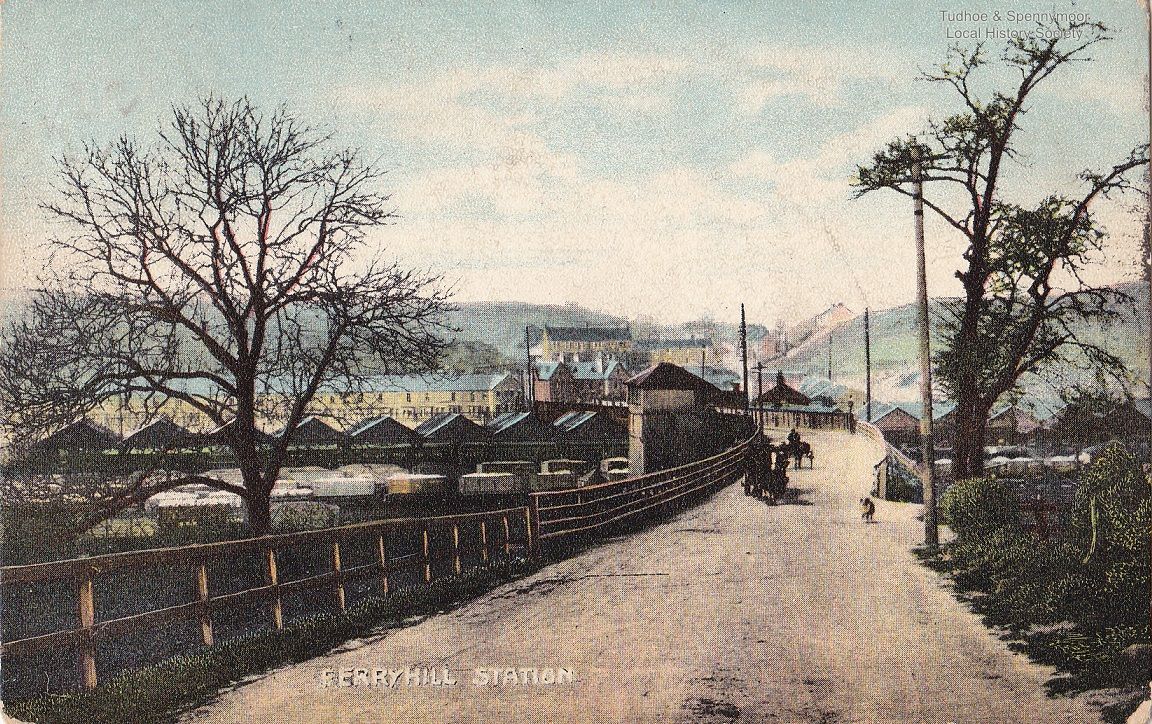 Women Passengers at Fault
Yesterday, at Auckland Police Court, Harriet Davis and Martha Bell, both of Mainsforth Rows, were charged with having travelled from Spennymoor to Ferryhill on June 5th without tickets.
Evidence for the prosecution went to show that the two women travelled together to Spennymoor, were seen there, and afterwards returned to Ferryhill Station, where they were again observed on the platform. Davis asked the officer in the check office what time a train was due from Redcar, and then returned to the platform. The officer afterwards left the office, and it was whilst he was away that the women left the station and went to a public-house some distance away. There they were seen by P.C. Stephenson shortly afterwards, and to him Davis admitted they had come from Spennymoor without tickets.
Mr Wilkinson, representing the defendants, submitted there was no intention to defraud on the part of the women. At Ferryhill they decided to await the arrival of a son of Davis, and it was in respect of the train he was travelling by that Davis asked the officer. Having some time to wait they went out to the public-house, but they fully intended returning to pay their fares, which, indeed, they offered to the police officer.
The Bench took a lenient view of the case, defendants being fined 10s each, inclusive of costs. (26th June 1900 Northern Echo)
Folly Land
Too Curious
A number of noisy young men were passing through a village one night on their way home. They saw a new notice-board had been nailed to a post just over a fence. They stopped and tried to read it, but were unable to do so on account of the darkness. One of them, however, determined to settle the matter. He climbed to the top, being pushed by his companions. He came down faster than he went up, for the notice which he was anxious to read was “Wet Paint”. And well he knew it when he got home and found his suit covered with bright paint.
Thos. Scott, 42 Church-street, Mount Pleasant, Low Spennymoor
Which of You?
A queer incident is related about two temporary warders who were employed to watch a prisoner sentenced to be hanged. Those warders wore their ordinary clothes, as no uniform was forthcoming. On the morning of the execution the cell-door was thrown open by the governor and the executioner admitted, who looked first at the two uniformed warders and then at the prisoner, and said, in a deferential air, “Excuse me, but which of you three gentlemen is the one I’m to hang?”
Thomas Scott, 42 Church-street, Mount Pleasant, Low Spennymoor. (2nd June 1900 Northern Weekly Gazette)
A Wonderful Guess
Dear Daddy, I suppose by this time you will have got quite tired of receiving letters, unless you have very good patience, which I think you must have. I daresay you will be ready fo a rest when the summer holidays come. It is a long time since I wrote to you last, because I think I am getting rather old now. I think there is a lot of changes in your Circle now, at least, since I joined. I think I will now close my letter with love to all your large family and yourself.
Yours affectionately Mary E. Sill, 15 Michael Terrace, Byers Green Colliery, Spennymoor.
I wonder how Mary guessed I was ready for a holiday. I am, and I shall be taking it shortly. Please, I am not tired of reading my children’s letters, and Mary can never be too old to write to Daddy. By the way, how old are you, Mary? (23rd June 1900 Northern Weekly Gazette)
Damage to Property in the North
Houses Struck at Spennymoor.
A terrible thunderstorm broke over the town on Monday evening, and continued till the early hours of yesterday morning. There were several houses in Jackson-street struck by lightning and some damage done to the roofs. (13th June 1900 Northern Echo)
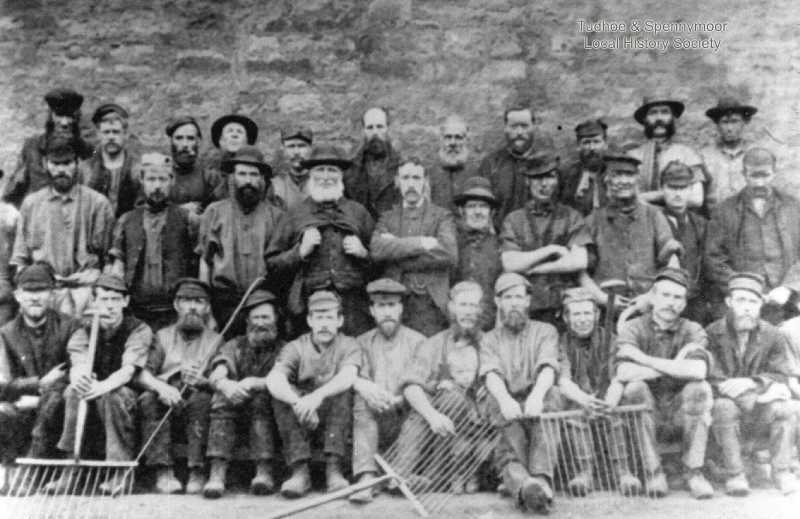 Death of Mr Robert Dixon of Tow Law - It is with sincere regret that we record the death of Mr Robert Dixon, of Tow Law, which occurred at the house of his son, Mr John Dixon, at a late hour on Saturday morning. It appears that Mr Dixon had an apoplectic seisure whilst at West Thornley Colliery, about midday on Thursday, which is attributed to the heat whiuch was pretty general on that day. He was intending to go home from work about the time of the seisure, but his sudden illness was of such a character that he was taken to the house of his son, a few yards distant.
Despite the attention of Dr. Dennis he gradually became worse, and eventually passed away on Saturday afternoon. Mr Dixon was 61 years of age. He leaves a grown-up family of four sons, all of whom are under the Weardale Iron Company, and five daughters.
Mr Dixon was a faithful and much esteemed servant of the Weardale Iron Company in whose service he had been for about 40 years. He commenced work under the firm in the early sixties at the Etherley Colliery, when he was transferred to Bishop’s Close, under his uncle, Mr Elliott, who at that time was chief mining agent for the company.Mr Dixon had then the position of coke burner. Upon the Black Horse or Tudhoe Colliery being opened, Mr Dixon was given charge of the coke department.
Shortly afterwards, upon the recommendation of Mr Baring, who was a director of the Weardale Company, Mr Dixon was selected by the Ottoman Government to superintend the laying down of some coke plant in Turkey (Asia Minor). He stayed there about a year. In the early seventies he came to Tow Law, where he was chief coke inspector for the Weardale Company, and had charge of the Hedley Hill, Black Prince, and West Thornley Collieries until his death.
Mr Dixon was well known amongst ironmasters of the North of England, amongst whom he had an excellent reputation, the West Thornley coke always being recognised as one of the foremost cokes of the day. In Tow Law Mr Dixon will be much missed. He was a staunch Liberal, and a very prominent Primitive Methodist, and had filled the position of circuit steward. He took an active interest in the Free Church Council, and he was a member of the Tow Law Co-operative Stores Committee. He was also on the Management Committee of the Mechanic’s Institute, and in many ways took an active and commendable part in the public and religious life of the town and district. (20th July 1900 Consett Guardian)
In 1859 Robert Dixon (b1840) married Mary Ann Dixon (b1840), in 1861 they were living at Bishop’s Close Colliery where Robert was a checker and store keeper. They had one son John (b1860 Escomb). In 1871 they were at Ridley’s Houses, Tow Law where Robert is a coke inspector, they have four more children all born at Spennymoor, Alice, Thomas, Jane Ann, and Harriett Ann.
In 1881 they live at Thornley Terrace, Ironworks Road, Tow Law, they have four more children all born in Tow Law, Joseph, Robert William, Mary Ann, and Annie Ethel. John is already a foreman at the coke ovens and Thomas a colliery weigh clerk. In 1891 Robert is superintendant of the coke works, Joseph is a clerk and William a coke burner’s assistant.
Durham County Enginemen - The annual meeting of he Durham County Enginemen’s Association was held in the Town Hall, Durham, on Saturday morning, Mr W E Nicholson, of Ferryhill, presiding. Since the association was formed about 39 years ago, it has gained a position amongst the 100 most prominent trades unions in the kingdom, and compares favourably with any kindred oganisation, the assets of the association, as shown in Mr Lambton’s (the agent’s) report, being no less than £5 19s 3d per head of its members, who are enrolled in both the sick and labour departments. This is an increase of slightly more than 7s 3d per member over the previous year. The usual vote of thanks having been accorded, the new banner was unfurled, and the members marched in procession to the racecourse to attend the miners’ demonstration. (30th July 1900 North Star Darlington)
The Late Vicar of Spennymoor - A committee has been formed for the purpose of raising a memorial to the late vicar of Spennymoor (the Rev John Gaskill) and has so far collected £40. There are also a good many more subscriptions yet to be collected. The general feeling of the parish is in favour of a stained glass window, but the decision will not be made till a subsequent meeting is held when the fund is closed. The Rev. J Short MA who has been appointed vicar of Spennymoor, will take up his duties on the second Sunday in July. (3rd July 1900 Newcastle Journal)
The New Vicar of Spennymoor - Last evening there was a large congregation assembled in the Spennymoor Parish Church on the occasion of the introduction to the parish of the new Vicar (the Rev Joseph Short MA, late of Gateshead). The following local clergy took part in the service:- The Revs. P Hughes, T O Douglas (Tudhoe), P Y Knight (Byers Green), R Coulton (Kirk Merrington), J W Wingate (Bishop Auckland), and G R Cook (St Andrew’s, Tudhoe Grange). A powerful and instructive sermon was preached by the Rev. Canon Moore Ede MA. The Canon paid an excellent tribute to the character and workof their ne Vicar, having had him as a colleague in his work in Gateshead parish. He hoped that they would work in harmony together, and that the work of edifying and uplifting the character of the people of the parish would be most successful.
The new Vicar is now fully licensed by the Bishop, and will at once commence his work as vicar of the parish of Spennymoor as successor to the late Rev. John Gaskill, MA, who was for over 38 years vicar of Spennymoor. The new Vicar will preach his first sermons in the Parish Church on Sunday first. (13th July 1900 Northern Echo)
Jubilee Park, Spennymoor - Good Templars Great Gala Wednesday, July 11th 1900.
Sports, Royal Punch and Judy, Conjuring and Ventriloqism, Washing Competition, Maypole Dance, Sons of Temperance Band, Brock’s Fireworks. Gate open at 2pm Admission 3d.
Late train to Bishop Auckland at 11.28 pm. Shows, Stalls, etc.
Apply Berriman, Secretary, Spennymoor. (5th July 1900 Daily Gazette for Middlesbrough)
Spennymoor Good Templars’ Annual Gala - Yesterday the Good Templars of Spennymoor held their fifth annual gala in the Jubilee Park, under the finest possible weather conditions. All kinds of spots were held, and valuable prizes given. During the day the Sons of Temperance Prize Brass band played some fine selections of music. The gala was a thorough success, and finished up with a grand display of fireworks. (12th July 1900 Northern Echo)
Mr William Whittle, of Stockton, temperance advocate, has just concluded a week’s open-air campaign in the South Durham district, commencing on Monday last at Spennymoor, and from thence to Fighting Cocks, and thence to Darlington. At all these places large gatherings, consisting chiefly of the working class, assembled to listen. Mr Whittle has been ably supported by Messrs. J W Berriman and J Fleming, of Spennymoor, Mr and Mrs Moore, missionary, of Dinsdale, and Messrs Herring, YMCA, Woodward, Lot, Whitworth, A G Barker, Darlington, and others. (21st July 1900 Daily Gazette for Middlesbrough)
Garden Party at Tudhoe Vicarage - On Saturday afternoon a garden party and sale of work was held in the beautiful grounds of Tudhoe Vicarage. The stall was provided by Mrs Hughes’s Sewing Meeting Party and Tudhoe Young People’s Sewing Party.
Light refreshments were provided and various games indulged in. The Sons of Temperance Prize Ban was in attendance during the day, and under the able conductorship of Mr J Mutton played some fine selections of music. There was a fairly good attendance. The proceeds were in aid of the Clergy House Building Fund. (13th July 1900 Durham County Advertiser)
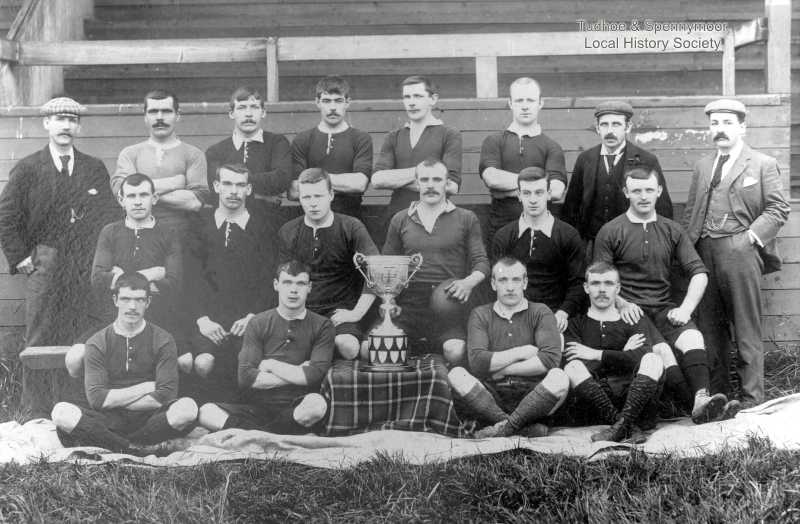 Rugby – Tudhoe Club Annual Meeting - On Saturday night the annual meeting in connection with the Tudhoe club was held in the County Hotel, Spennymoor. Mr Black occupying the chair. The secretary presented the report, and in the opening part of his remarksadvocated the formation of a league for the counties of Northumberland and Durham.
He said all clubs, with one exception, in the two counties were in favour of a league, and application had been made to the English Union for the formation of one, but up to the present no reply had been received. The success of the county team in becoming champions of England was a matter of gratification, especially so to Tudhoe, as the club supplied seven of the fifteen players who took part in the first match. During the season the club had supplied 48 players for the county teams. The first team played 26 matches, out of which 18 were won and 3 lost. ……
The election of officers for the ensuing year resulted as follows:-
President, Sir Christopher Furness;
Captain of the 1st team, A Stephenson;
Vice-captain, Walter Taylor;
Hon secretary, T Naylor, Board Schools, East Howle, Ferryhill;
Assistant secretary, Percy Cutier, Tudhoe Colliery;
Treasurer, L Squire, Tudhoe Colliery;
Assistant treasurer, B Urwin, Tudhoe Colliery;
County representative, Mr T Naylor;
Captain of the 2nd team, S Carmedy;
Vice-captain, W Smith;
Selection committee, Messrs Black, Charlton, Marston, Squire and Soulsby.
A vote of thanks concluded a very enthusiastic meeting. (3rd July 1900 Newcastle Journal)
Fives Matches at Spennymoor - At the Tudhoe Park Ball Alley on Saturday, a single fives match was decided before a good attendance, between Ralph Local, Cassop and Joseph Linn, Shotton, in a game of 33 up, for a stake of £40. After two hours play, the game resulted in a win for Local by 19 chalks.
Scores, 5 to 4 on Local.
On Saturday, at the North-Eastern Ball Alley, Spennymoor. A double fives match, which attracted a large attendance, was decided for £50, in a game of 33 up, between M Kell and P Davison, Byers Green, on the one side, and J French and W Boustead, on the other side. The game, which was watched with a large amount of interest, resulted in a somewhat easy victory for Kell and partner by 21 chalks. Scores: Kell and Davison, 33; French and Boustead, 12. Speculation prior to the start was 5 to 4 on French and his partner. (9th July 1900 North Star Darlington)
Tom Riley, of Belfast, now of Spennymoor, - would like to box Dick Johnson, of Newcastle, or Tommy Lancaster, of Spennymoor, 15 three-minute rounds, if Mr James Lowes, of Newcastle, will give a purse. (25th July 1900 Boxing World and Mirror of Life)
Spennymoor Urban District Council - On Thursday night, the usual meeting of this body was held, Mr G Byers, JP, chairman presiding. There were also present Messrs P Knox (vice chairman), Thomas Black, Hodgson, Gartland, Ross, Copeland, Cheesman, Bell, Fleming, Bell, Berriman, Starforth, Dowdall, Blenkin, Raine, Reavley, and Rymer.
Pawnbrokers Distribute Tea and Cigars
Application was made by the following brokers for a renewal of their certificates:- Mrs C Watson, Burnett Street, Merrington Lane; Mrs E Curry, Thomas Street; Mr R J Curry, Spennymoor; and Mr F H Simpson, Tudhoe Grange.
Mr Bell moved that the certificate be not granted. He had good reasons for this step. He could prove that needy people who went to these places for a loan on their goods were compelled to take tea or cigars as part payment. He might explain that if they got a ten shillings’ loan they must take tea or cigars to the value of 6d. The way he gained that knowledge was this. He went to one of the pawnbrokers and pledged his watch for 10s. That was all he asked for. He had to take two threepenny cigars and got 9s6d in cash. The cigars were no better than they should be. It was an injustice to the poor people whom necessity compelled to use such places, and the way of trading was an imposition not only on the people, but the Act of Parliament governing pawnshops.
Mr Fleming: Did you disguise yourself?
Mr Bell: No, I did not. I went the following day and got my watch out. My experience cost me over 1s (laughter).
Mr Dowdell said the tea and cigars were generally of a very inferior quality, and the Council ought to take steps to put the practice down. The pawnbroker was extorting from the poor.
It was agreed to renew the whole of the certificates.
Mr Knox moved that this council protest against the present method of dealing with the poor and that the clerk write to the pawnbrokers and inform them of the council’s opinion; further, that the clerk look up the Pawnbroker’s Act and see if any steps can be taken in the matter.
Weekend Railway Tickets
A letter was read from the Tudhoe Colliery Miners’ Lodge with respect to the granting of weekend railway tickets. It was pointed out that if a miner took a weekend ticket and had to return earlier, say on the Sunday night, there being no trains to Spennymoor or Croxdale, holders of such tickets were charged the full fare, because they gave up their tickets at a station from which the ticket was not issued. The Council was desired to ask the North-Eastern Railway Company to make such weekend tickets available for the nearest railway stations, Ferryhill, Brancepeth, Durham, or Bishop Auckland.
The clerk was instructed to make this application.
Mr Dodd and his Books
Another letter was read from Mr Dodd with respect to his free library scheme, and accepting his books.
Mr Black moved that the letter lie on the table.
Mr Cheesman seconded.
Mr Rymer moved that the letter be referred to the Finance Committee.
Mr Raine seconded. – Carried.
(6th July 1900 Durham County Advertiser)
Victory over Durham County Council -
The Spennymoor Urban Council has obtained a signal victory over the Durham County Council. Last year the Spennymoor Council sent in a claim for £3,748 for the maintenance of the main roads. The County Council refused to pay, and after a lot of bickering the local Council appealed to the Local Government Board to step in and act as arbitrator between the two authorities. The enquiry was held in October last before Colonel Slack, at which time the County Council had paid £1,757 odd, less than one-half of the claim, and disputed the balance. A further sum of £415 odd was admitted, the Urban Council abandoning their claim over footpaths on county bridges. The award has now been given, and the County Council has to pay £3,315 16s, something like £400 less than the original claim. In this respect the Spennymoor Authority has set a good example to other district public bodies. A good deal of the credit for the present success is due to Mr Badcock, the clerk, and the committee. (20th July 1900 Daily Gazette for Middlesbrough)
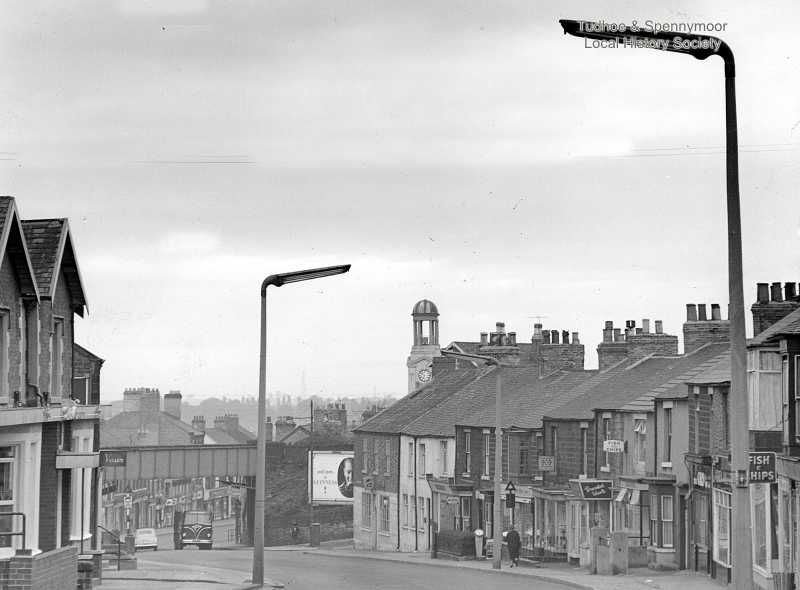 Spennymoor Licensing Case
At the Bishop Auckland Police Court, yesterday, George Ross and William Calvert, Spennymoor, were charged with being on the licensed premises of Thomas Berry, Railway Hotel, Spennymoor, during prohibited hours, on the 23rd ult.
Berry was also charged with keeping his licensed premises open during prohibited hours.
Inspector Elliott and P.C. Steele spoke to finding defendants Ross and Calvert in the snug of Berry’s premises shortly after midnight. There were glasses on the table in front of them, one containing port wine.
For the defence, Mr J T Proud submitted that there had not been a breach of the licensing laws. What took place was this:
Shortly before eleven o’clock on the night preceding the offence, Berry sent for Ross to discuss some alterations to the house, and in the course of the night the contract for the work was sealed. Calvert was a personal friend of Ross’s, and went with the latter, but neither did more than he was entitled to do. Mr proud produced a plan of the alterations, contract, etc., and called the defendants Ross and Calvert, who corroborated his statements.
The Bench decided to give the defendants the benefit of the doubt in the case, and dismissed all three charges, the chairman remarking that the police had done quite right to bring the case into court. (10th July 1900 North Star Darlington)
A Much-Married Woman at Spennymoor
At Auckland Petty Sessions yesterday, Thos. Henderson, of Spennymoor, was charged with persistent cruelty to his wife, Phyllis Henderson. Mr J T Proud appeared for the defendant. She stated that when the defendant punished her boy, and she complained about such treatment, he struck at her, and even had kicked her. In cross-examination, she admitted that she had been married to the defendant at Auckland Registry Office on the 6th of February, 1897, under the name of Phyllis Codling, a spinster. She told the defendant that she was a single woman, and not a widow. She further admitted that on the 24th September 1889, she was married at Middlesbrough to a man, Robert Scott, who was now living at Gateshead, and married again.
The Bench, on hearing such admissions, at once dismissed the case. (24th July 1900 Daily Gazette for Middlesbrough)
Adulterated Whisky
H Cowen, innkeeper, Byers Green, was summoned at the instance of Mr M A Thompson, foods and drugs inspector, for selling whisky which on analysis was found to be eight and a quarter per cent below standard.
Defendant pleaded guilty, and Mr J T Proud in extenuation of offence, stated that in the absence of the husband, the wife mixed half a gallon of spirit, and it was this which was found to be under proof. Fined 15s inclusive. (27th July 1900 Durham County Advertiser)
Henry Cowan was licensee at the Victoria Inn, Byers Green from 1898 to 1902. It was licensed from 1816 and closed in 1931, it was demolished to make way for council bungalows. (Bob Hall – Public Houses of Spennymoor and Neighbourhood).
Stealing Coal
Yesterday at Bishop Auckland, Mary Coates, Spennymoor, was fined 2s 6d for having stolen a quantity of coal from the waste heap belonging to the Tudhoe Iron Works. (31st July 1900 Northern Echo)
Tudhoe Colliery
On Thursday night Mr R Cole, auctioneer, offered for sale, at Mr J T Taylor’s Black Horse Inn, Tudhoe Colliery, the leasehold house and shop, No 45 Attwood Terrace, and also the dwelling-house No 44, Attwood Terrace.
There was a very good attendance, and after some competition Mr Murrell, of Tudhoe Grange, became the purchaser of both lots at £200 and £170 respectively. Mr Joseph Mawson, of Durham, was the solicitor for the vendor. (6th July 1900 Durham County Advertiser)
Tudhoe Horticultural, Industrial and Fine Art Exhibition.
Saturday, August 4th, 1900
Also Dogs, Poultry, Pigeons, and Rabbits.
Horse Leaping and Pony Hurdle Scamper
Grand Fireworks Display
And other attractions.
Popular Judges Good Prize Money
Low Entry Fees
Prize Lists, &c. apply J R Sanderson, Tudhoe, Spennymoor,
(13th July 1900 Durham County Advertiser)
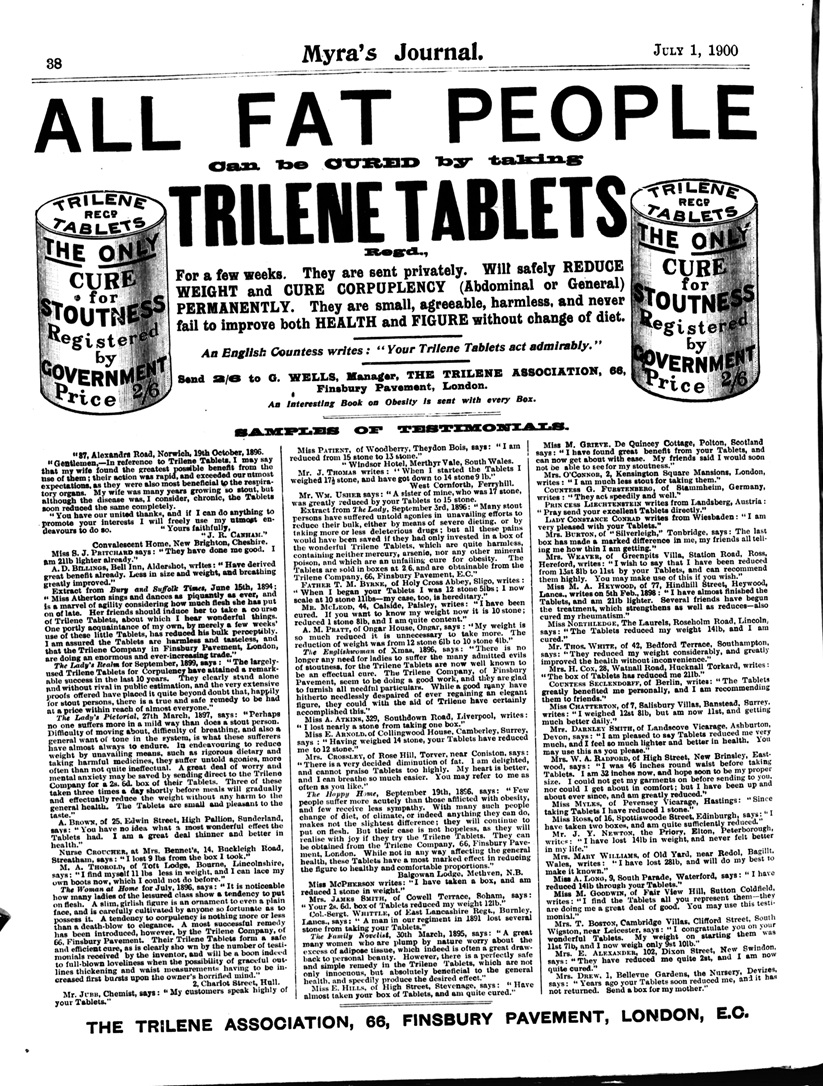
The Only Cure for Stoutness Registered by Government Price 2/6
ALL FAT PEOPLE
Can be CURED by taking
TRILENE TABLETS
For a few weeks. They are sent privately. Will safely REDUCE WEIGHT and CURE CORPUPLENCY (Abdominal or General) PERMANENTLY. They are small, agreeable, harmless, and never fail to improve both HEALTH and FIGURE without change of diet.
Send 2/6 to G Wells. Manager, The Trilene Association, 66, Finsbury Pavement, London.
An interesting Book on Obesity is sent with every Box.
Testimonials
A Brown of 25, Edwin Street, High Pallion, Sunderland says: You have no idea what a most wonderful effect the Tablets had. I am a great deal thinner and better in health.”
West Cornforth Ferryhill. Mr Wm. Usher says: “A sister of mine, who was 17 stone, was greatly reduced by your tablets to 15 stone”.
(1st July 1900 Myras Journal of Dress and Fashion)
The London woman’s magazine "Myra’s Journal of Dress Fashion & Needlework" started in February 1875, at a cost of 3d. It was edited by Martha Browne, a ‘journalist of much experience’ and provided advice on fashion, health and beauty with illustrated material. It stopped publication in 1912.
In the early 1900s, Redcar and Saltburn-by-the-Sea were popular seaside holiday destinations. Redcar, initially a small fishing hamlet, grew into a town with attractions like a pier and promenade, catering to the rising popularity of coastal holidays. Saltburn, also experiencing growth due to the railway's arrival, became a fashionable Victorian resort with a pier and a Cliff Tramway which opened in 1884 and is now the oldest water balanced funicular still in operation in Great Britain.
Their local newspaper "Redcar and Saltburn-by-the-Sea Gazette" printed lists of visitors staying at the resorts. This selection lists some of the people from the Spennymoor area at the end of July 1900.
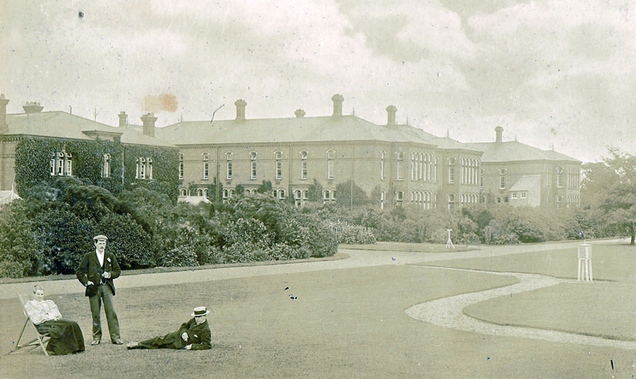 Durham County Asylum - Wanted a Cook for the Officers’ Quarters; wages commence at £19 a year, paid monthly, rising to £20 after three months’ approval, with board, washing, dresses, etc.
Apply, with testimonials and photograph, to the Medical Superintendent, Winterton, Ferryhill. (10th August 1900 Daily Gazette for Middlesbrough)
DURHAM COUNTY ASYLUM - Laundry-Maids wanted: wages £22 a year. Dormitory-Maid, to take charge of Mess Room, also wanted; wage to commence at £16 a year. Each of the above will have board, lodging, washing, and uniform, &c. Wages paid monthly.
Apply, enclosing testimonials and photograph, to the Medical Superintendent, Durham County Asylum, Winterton, Ferryhill. (25th August 1900 Thetford Watton Times)
DURHAM COUNTY LUNATIC ASYLUM - Tenders for Provisions, &c., Wanted
The Visiting Committee of Durham County Lunatic Asylum invite TENDERS for supplying the Asylum with such of the following Articles as may be required during the half-year commencing on the 1st day of October, 1900, viz:-
1. CLOTHING, BEDDING, and other ARTICLES of DRAPERY, patterns of which may be seen at the Asylum between 27th day of August and the 3rd day of September next, between the hours of 10am and 4pm.
2. FLOUR, RED WHEAT MEAL, CHEESE, SUGAR, RICE, BARLEY, SPLIT PEAS, TEA, COFFEE, SOFT SOAP, SODA, &c., samples of which must accompany each tender.
3. LEATHER, and other ARTICLES required in the Shoemakers’ Department, samples of wich must accompany each tender.
4. GLASS, OILS, PAINTS, VARNISH &c.
5. EARTHENWARE.
6. BRICKS, CEMENT, and LIME.
7. FIRE-BARS and BLACKS|MITHS’ IRON
8. PLUMBERS’ MATERIALS.
9. COALS.
Sealed Tenders, addressed to “The Steward, County Lunatic Asylum, Winterton, Ferryhill,” and marked on the outside thereof “Tender for Clothing” (or as the case may be), must be delivered at the Asylum not later than 12 o’clock at noon on the 4th September next.
Forms and Conditions of Tender may be had on application at the Office of the Steward, at the Asylum, on and after the 22nd August instant, and no Tender will be considered unless made on such form.
Persons whose Tenders are accepted will be required to enter into Contracts for the due fulfilment thereof.
The Visiting Committee do not bind themselves to accept the lowest or any Tender, and reserve the right to accept the whole or any part of a Tender, A O SMITH, Clerk to the Visiting Committee. 21st August, 1900. (25th August 1900 Sunderland Daily Echo)
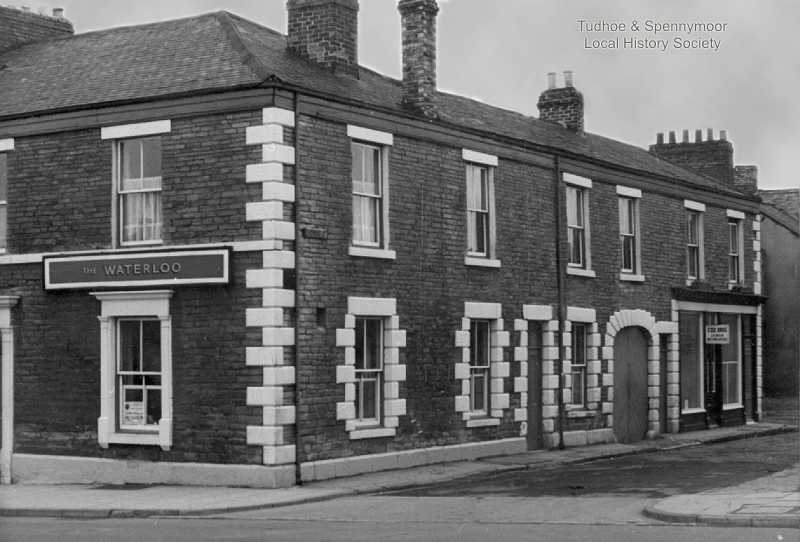 Ironworkers’ Demonstration at Spennymoor
The annual demonstration and dinner in connection with the Spennymoor Lodge of the Iron and Steel Workers’ Association was held on Saturday. A procession was formed at the Waterloo Hotel, and headed by the Whitworth Brass Band, paraded the principal streets.
Afterwards a meeting was held at the headquarters, which was addressed by the following gentlemen:- Mr W Ancott, Wednesbury, president of the Ironworkers’ Association of the North of England; Mr J Cox, Darlington, general secretary; Mr W Griffiths, Stockton; and Mr E Halliday, Consett, who spoke of the good feeling existing between the masters and men connected with the North of England Board of Arbitration and also of the necessity of continued unity amongst the members.
Other business followed, after which the members sat down to an excellent dinner provided by Mr and Mrs Proud of the Waterloo Hotel. A regrettable incident was associated with the demonstration. One of the members named R Urwin, 27 years of age, residing at Tudhoe Grange, after having taken part in the procession, died very suddenly at his home. (14th August 1900 Newcastle Journal)
Northern Notes
A suggestion made some time ago in this column is bearing fruit. The following resolutions have been sent by the Tudhoe Lodge of the Durham Miners’ Association for the next Council programme;- “That we erect a statue in memory of the late Mr W H Pattinson (William Hammond Patterson 1847 – 1896) similar to the one erected to the late Mr Crawford, to be placed in front of the Miners’ Hall, North-road, Durham; that the county be levied to meet the cost, and that friends outside the Association be asked to subscribe.” (14th August 19000 Daily Gazette for Middlesbrough)
Tudhoe Iron and Steel Co.
Since the new plate mill at Tudhoe was erected some monster steel plates have been rolled. The record, however, was broken last week, when a finely finished plate, with a surface as smooth as glass, was rolled, its length being 46ft. 8in. (24th August 1900 Sunderland Daily Echo)
Colliery near Ferryhill to be Restarted
Dene Bridge Colliery, near Ferryhill, which was drowned out many years ago, is about to be started by Messrs Stobart and Company. A new manager has been appointed, and a very old experienced pitman, but for the present his name cannot be mentioned. It need not be a matter of surprise if Bishop Middleham and Mainsforth collieries are started again. (31st August 1900 Daily Gazette for Middlesbrough)
Tudhoe Rugby Club
The ensuing season of the Tudhoe Rugby Club has every appearance of being another prosperous one, as the whole of the arrangements are now complete, and a strong list of fixtures are again arranged with the leading clubs in Northumberland and Durham. Through the courtesy of the secretary, Mr Thomas Naylor, two extra fixtures have been added in Northern and Hartlepool Rovers. Last season, through some cause or other, these clubs did not arrange fixtures, and each club suffered considerably in the gates through not arranging matches, because such clubs as these draw on any ground.
The Tudhoe team will again be piloted by Alec. Stephenson, who has done yeoman service for his club and county, and the hopes of the Tudhoe supporters are that Alec. Will lead his men to regain the cup which they lost last season at the hands of West Hartlepool, and with such fine players of the handling code as Walter Taylor, Jimmy Gordon, E Sleep, J Fraser, J Carmedy, J Foster, J Cockayne, and Roger Richardson, a formidable team will again be placed in the field, notwithstanding the fact that two forwards, Thomas Stitt and B Ham, have severed their connection with their old club, and thrown in their lot with the Hull Town Club, under the Northern Union rules. Their places in the Tudhoe fifteen will be occupied by much younger players from the A team.
It is often said that old players must give way to young, and there is not the least doubt but that the new blood in the Tudhoe team will give a good account of themselves. Practice matches are arranged to take place this week, and the opening match is to take place on Saturday week with Westoe, on the latter’s ground at South Shields. (31st August 1900 North Star Darlington)
Hull Football Club – Another Capture
By the policy they are pursuing the Hull Football Club intend getting their house in order for the fast-approaching season, and have just “signed on” another forward, making the fourth capture within as many weeks. The latest acquisition is T Stitt, of Tudhoe, a Durham County player. Stitt is a powerful-looking fellow, weighs 13.5 stones, and is about 24 years of age. (6th August 1900 Hull Daily News)
Spennymoor Fatality
Yesterday Coroner Proud held an inquiry at Mr Roy Stone’s Bridge Inn, Spennymoor, into the circumstances of the death of Mary Burns, aged 79, widow of the late Stephen Burns, cokeman, Spennymoor, which took place on Thursday at the residence of her daughter. Mrs Isabella Mason, Queen-street, Spennymoor.
Mrs Mason, daughter of the deceased, stated that her mother was walking about the kitchen last Saturday when she suddenly fell, the floor being very broken. Questioned as to whether the attention of the landlady had been drawn to the condition of the floor, she replied that the landlady had refused to do any repairs. She was assisted to bed and died on Thursday. Dr Anderson attended deceased on the day of the accident, but the woman refused to be examined. He suggested that, on account of her old age and weak state, she would have to be chloroformed, but she refused.
The jury returned a verdict of death from natural causes, accelerated by the fall, and also added that the landlady’s attentioon be called to the bad state of the floor. Also that the attention of the Urban Council be called to the same. (4th August 1900 Northern Echo / 3rd August 1900 Daily Gazette for Middlesbrough)
Sudden Death of a Low Spennymoor Contractor
The death occurred very suddenly on Tuesday of Mr James Ross, contractor, of Low Spennymoor, at the age of sixty. Mr Ross retired to rest the previous evening in his usual good health, and about six in the morning he was noticed by Mrs Ross to have fainted. Stimulants were at once applied, but without avail, and he died before the arrival of the doctor. The deceased has carried on a large business as joiner and builder at Spennymoor for a large number of years, and was highly respected in the district. (31st August 1900 Durham County Advertiser)
Tudhoe Flower Show
On Saturday the 56th annual Floral, Industrial, and Livestock Show was held at the pretty little village of Tudhoe. This show is one of the oldest in the county, and oon Saturday was said to be fairly successful considering the weather the previous day. The day, however, kept fairly bright. The exhibits were about the average. There was a little falling off in dogs, but poultry and rabbits showed a good increase.
During the day there were various attractions in the shape of Highland pipers, horse leaping, and a pony scamper. The Whitworth Prize Brass Band and the Sons of Temperance Prize Brass Band each played some fine selections of music during the day. Thee whole concluded with a brilliant display of fireworks by Messrs. J Pain and Sons.
Horse leaping results;- W Cussons, Sir Roger; 2 T and H Ward, Tip Top; 3 J D Smallwood, Beauty; 4 A Rutherford, Lady Mowbray; 5 C P Nichol, Molly; 6 J Codling, Lord Roberts.
Pony Scamper:- Mrs J W Deans, Auckland; 2 J Harris, Billy Row; 3 R Green, Spennymoor; 4 A Bramley, Sleetburn; 5 W Smith, Durham. (6th August 1900 Northern Echo)
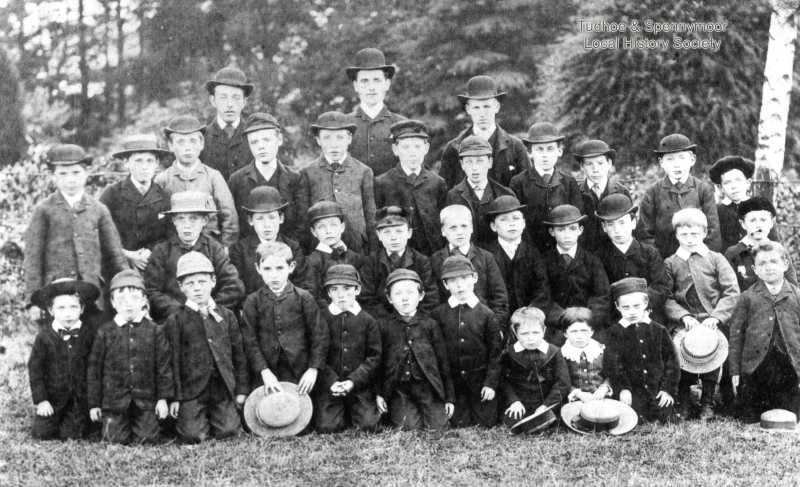 Sale of Work at Whitworth Park
Yesterday a sale of work in aid of Dr Barnardo’s Homes for Waif and Strays was held in the beautiful and historic grounds of Whitworth, kindly lent by Mr R Duncombe Shafto. The stalls were provided and attended to as follows:-
Lady Eden, of Windlestone Hall, assisted by the Hon. Agnes Eden and Master John Eden;
Miss Bentham’s stall, assisted by Miss Hilda Bentham and Miss Fenton;
Mrs Duncombe Safto’s stall, assisted by Miss Hamilton, Miss Duncombe Shafto, and Miss Cynthia Duncombe Shafto;
Flower stall, Miss Eden and Miss Weber;
Refreshment stall, Mrs J A Hope, Whitworth Cottage, Mrs Ernest Craddock, and Mrs and Miss Donaldson;
Bran tub, Misses Elliott and Verrill;
Aunt Sally, Masters Archie and Phil. Hope;
Concerts, Messrs J Arkless, J Burrows, W Wilson, W Harrell and W Belcher.
Amongst those present included the Revs P Y Knight (Byers Green), P Hughes (Tudhoe), and J Short (Spennymoor), Mrs Wilkinson, Messrs G E Markham, C.C., R F Gowland, and J A Hope.
The Whitworth band was in attendance and played some fine selections of classical music. The weather was very fair, but the attendance was not so good as it might have been for such a worthy object.
The object of the sale of work was to raise money to pay £30 off the debt on the Spennymoor Cot in Dr Barnardo’s Homes. The Spennymoor Cot was, if not the first in the country, among the first two or three that were established. For the last few years nothing has been done to pay off the debt. (9th August 1900 Northern Echo)
Spennymoor Flower Show
The fourth annual show of the Spennymoor Horticultural and Live Stock Society was held to-day in the Wood View Grounds, Tudhoe Grange. It is only a young society, but it has made rapid strides, and bids fair to be a big rival to the Tudhoe Show. There is no industrial section, so that the show is confined to plants, flowers, vegetables, poultry, pigeons, rabbits, &c.
The aim is to encourage local exhibitors, a very encouraging feature of the show. Last year’s entry was a very excellent one, and today’s was equally as good if not better generally, both in numbers and in quality, than the last show. If there was a marked improvement it was in the live stock sections.
Many attractions were catered for. There was a 120 yards foot handicap, for which money prizes amounting to £15 were offered. There was a very good entry, and some capital sport expected. Beyond that there was a one mile bicycle handicap, and a pony hurdle scamper.
Tonight there will be fireworks, a new feature in local show. This section of the entertainment is provided by J W Potter and Co., of Huddersfield, and a number of interesting set pieces have been arranged for, including a twenty feet picture of Lord “Bobs”. The musical portion of the programme was supplied by the Spennymoor Temperance Prize band, under the leadership of Mr Mutton.
Just about noon a terrific thunderstorm broke over Spennynoor, and, practically speaking, spoiled the success of the sow, and did considerable damage to exhibits. It was one of the roughest storms ever known in Spennymoor, and it certainly was a pity for the show. Many houses in Spennymoor and Tudhoe Grange were completely flooded, and much damage was done to property. (22nd August 1900 Daily Gazette for Middlesbrough)
Spennymoor felt the power of the storm.
In less than half an hour the ground floor rooms of the Shaftoe’s Arms and the Bridge Hotel were flooded, and people had to seek refuge upstairs. Such a thing has not been known in Spennymoor for many years. An excursion train as stopped some time at Spennymoor Station, owing to the railway at Binchester Junction being flooded. Another excursion, as well as the ordinary train, was delayed for the same thing.
Heavy Storm of Thunder and Lightning.
Serious Flooding of Streets and Houses.
Severe Fall of Hail
An immense amount of damage was done by the brief but memorable storm that passed over the North East district on Wednesday. Crops of all kinds were battered down by the great hailstones, which fell in such quantities that for hours after the storm had passed they could be gathered in bucketfuls from hedge sides and street corners.
Everywhere the street grates were choked- the volume of water being so great and the rush so impetuous that no drains could have carries the floods away. Cellars were flooded, some to the depth of many feet and in the low-lying quarters the water accumulated in lake like quantities, flooding the houses to an alarming extent, and doing a deplorable amount of mischief. The deluge did not fall like rain, but like a cloud-burst.
(25th August 1900 Stockton Herald South Durham)
Child Neglect at Spennymoor - Pigsty for a Sleeping Place
Owen Burns and Mary Ann Burns, man and wife belonging to Spennymoor, were charged before the Auckland magistrates yesterday with neglecting two children in a manner likely to be injurious to their health. Mr J T Proud prosecuted for the NSPCC and he said it would appear that the woman had been to blame much more than the man.
A witness named Herbert Bottomley stated that he saw the 13 year old stepson of the woman at Tudhoe Grange waiting whilst some people should go to bed in order that he might get into a pigsty belonging to the house to sleep for the night. In this sty he had been sleeping for 6 weeks. He had no shirt, and what clothes he had were very filthy and verminous. Witness took him to a hotel and there gave him food and refreshment, which he disposed of ravenously. He then took the lad to his home and there saw the mother, whom he heard threaten to “bash” the head of the baby she had in her arms.
The lad had previously been seen about the streets begging. He had been taken in by people who had taken pity on him but such was his filthy condition that they had been fain to set him away again. The woman it appeared, was addicted to drinking.
Inspector Sparks spoke to visiting the house, which he found almost bare of furniture, and in a very dirty and filthy condition. Indeed, he had seen some pigsties which were in better condition than some of the rooms. The woman told him she had no control of the lad, but the latter, who was present at the time said he had to go away, for there was no food for him at home. The baby though cleaner than the boy, was covered with vermin.
Defendants alleged they had no control of the boy, who was constantly going away from home.
The woman was sent to goal for six weeks, and the man discharged with a caution. (31st August 1900 Northern Echo)
WANTED, a Good, Steady BARMAID, not under 25 years of age; must have first class personal references.
Apply, North-Eastern Hotel, Spennymoor (17th August 1900 North Star Darlington)
Tudhoe Colliery Co-operative and Industrial Society, Limited. Wanted a Young Woman as Clerk; must be thoroughly efficient; wages 15s per week. Apply to the Committee on Wednesday evening, August 29th at 6.30. (23rd August 1900 Daily Gazette for Middlesbrough)
WANTED, for cash provision stores at Spennymoor, CASH GIRL, about 16. Letters and references, Mr Shinkfield, Northgate, Darlington. (23rd August 1900 North Star Darlington)
BLACKSMITH Young man Wanted to the Blacksmith Trade as an Improver. Apply W Beel, Charles-street, Spennymoor. (25th August 1900 Daily Gazette for Middlesbrough)
GROOM Wanted at once; married or single; to take charge of horse and two traps, and make himself generally useful.
Apply, Wm. Thompson, 25, King-street, Spennymoor. (28th August 1900 Northern Echo)
SERVANT. Respectable Girl Wanted, about 16, as General Servant. Apply Mrs Taylor, 1, Belle Vue-terrace, Spennymoor. (31st August 1900 Daily Gazette for Middlesbrough)
Lost, Blue Dragon Cock Pigeon; conference rung 1898. Anyone returning it to 31 Whitworth-terrace, Spennymoor, will be rewarded; detention will incur prosecution. (1st August 1900 Daily Gazette for Middlesbrough)
Found, Black Retriever Bitch; if not claimed in three days will be sold to defray expenses. Apply Richard Nutter, Nutter-buildings, Spennymoor. (20th August 1900 Daily Gazette for Middlesbrough)
Spennymoor Urban District Council Monthly Meeting at their Chambers, Silver Street, Spennymoor.
Public Lighting
It was agreed that tenders be asked from the two Gas Companies for the lighting of the lamps during the ensuing year, and, further, to ask the Weardale Iron and Coal Co. to light the tree lamps in the Merrington Lane tunnel “free of charge”.
Lodging Houses Inspector Joseph Elliott reported all the common lodging houses to be well conducted, well whitewashed, and in good state of cleanliness.
Infectious Diseases The Clerk was instructed from a request by the medical officer to write to all head teachers of schools, asking them as far as possible not to send children to enquire after absentees, as it had been reported that children had gone into houses where there were infectious diseases.
Medical Officer’s Report
Birth rate Males 26; females 18; birthrate of 29.5/1000/year
Death rate Males 14; females 13 16/100/annum
No deaths from Zymotic diseases.
26 cases of infectious disease, 10 cases of scarlatina, 1 of diphtheria, 1 of puerperal fever.
Many parents allowed there children to go out without being under supervision during the peeling stage, and no doubt their mingling with other children assisted to spread the disease.
Mr Bell said he was not at all satisfied with the way the pawnbroker business was disposed of at the last meeting, and with the answer given to his question by the clerk. Most likely during the month he would give notice to bring the question up again as to the forcing of those who frequented such places to take tea, cigars and soap. It was illegal, and from enquiries it appeared they had no right to force such goods on their customers. If forced he would call the attention of the Local Government Board to the matter.
After a little good natured banter from several members the question was allowed to drop, and the meeting broke up.
(3rd August 1900 Durham County Advertiser) See Spennymoor Urban District Council July 1900.
Boston Cream: a cooling drink for summer.
6 quarts of water, 2lb of lump sugar. Boil, and then let cool to milk-warm, then add 1/4lb of tartaric acid, 4d worth of essence of lemon, the whites of 2 eggs well beat up, and carbonate soda when using to make it fiz. Mrs L Hall, 69, South-street, Spennymoor. (25th August 1900 Northern Weekly Gazette)
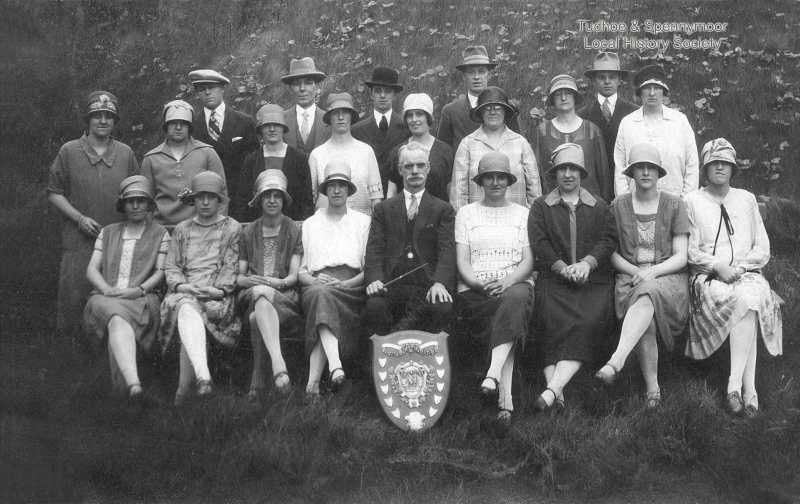 South Durham District Lodge Independent Order of Good Templars
The 110th quarterly session of the District Lodge was held in the Wesleyan Church, Tudhoe Colliery, yesterday, August 29, and was attended by a large gathering of members from all parts of the district. Bro. J W Fleming, DCT, Spennymoor, presided. The report of the DCT showed that a very large amount of splendid temperance work had been done during the quarter, no less than 157 public meetings, and 17 temperance sermons, besides galas, demonstrations, church parades, and other efforts having been reported…. The membership of the adult order showing an increase of 191, a membership of 2,111 members in 46 lodges.
As a result of a great revival, the “George Dodds” Lodge, Tudhoe, was awarded the challenge block and gavel for the quarter, for a capital increase of 75, the lodge now numbering 201 members.
The next report of the D. Supt. Of Juvenile Templars showed a membership of 2,176 in 36 temples, an increase of 39 on the quarter. Altogether the reports were very cheering, and gave every hope of a prosperous winter’s work. ….
Much interest was manifested in a paper by Bro. G H Pattinson, DSJT, on “The Lodge Contest” at Tudhoe, which had resulted in the membership having been more than doubled in three months, and it gave a very interesting summary of the methods adopted. It was unanimously agreed to adopt a similar scheme for the district, to be carried out during the winter months….
The session then adjourned for tea, provided in the Tudhoe Temperance Hall. The meeting was continued in the Wesleyan Church at night, one of the features being a capital report of the recent “World’s Temperance Congress”, held in London, by Bro. Rev. A Graham-Barton, Crook, which proved very interesting to the members. ….after further addresses the members separated, feeling that in spite of many difficulties, the work was progressing and there was every room for encouragement. (30th August 1900 Northern Echo)
Foundation Stone Laying at Spennymoor
The foundation stones of the extension to the Primitive Methodist Schoolroom, Edward-street, were laid yesterday by Mrs Johnson, in memory of her husband, the late Mr W Johnson, for a number of years manager of the Weardale Iron and Coal Company’s Tudhoe Colliery; Mrs Rogerson, Mrs Benson, and Mrs T Watson, for the firm of Watson and Beckwith. Previous to the laying of the stones a service was held in the schoolroom, conducted by the Rev. D McKinley, circuit minister, when an address on the “Rise and progress of Sunday School work in the Primitive Methodist Connexion” was given by the Rev. W A French of Shildon.
Tea was partaken of at 4.30. Afterwards a public meeting was held in the chapel, when addresses relative to Sunday School work were delivered by the Revs. C Lumsden, FG; T Dent, Wesleyan; and Mr H Butcher. The Rev. D McKinley presided. There was a good attendance, considering that the weather was anything but favourable. According to the Secretary’s report the cost of the extension and other improvements will be about £300, and towards this amount £120 has already been raised. (8th August 1900 Northern Echo)
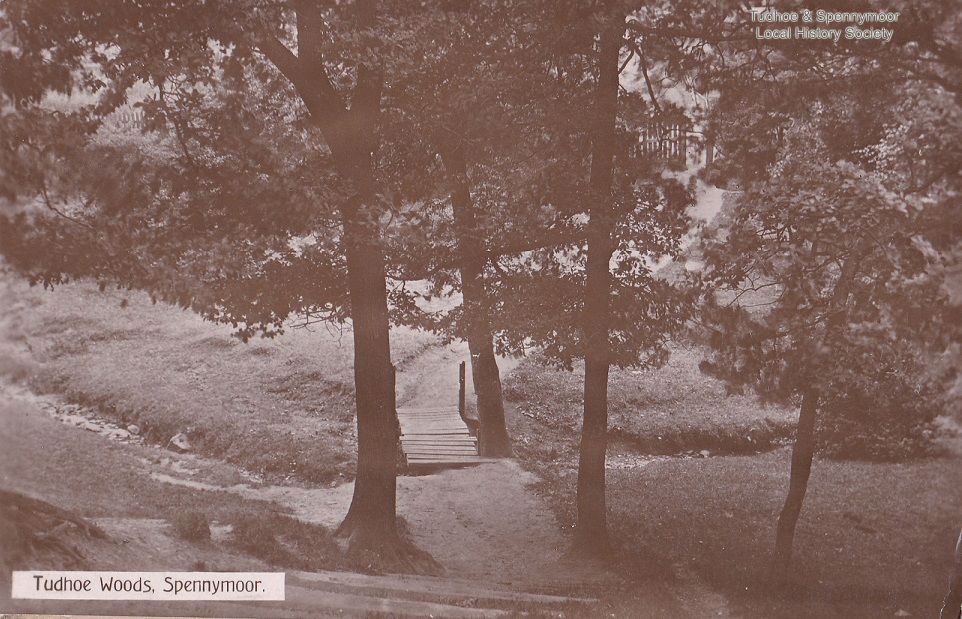 Spennymoor Robbery Case - George Hope and George Olley
At Auckland yesterday, Geo. Hope and Geo. Olley, of Spennymoor, were charged with breaking into the shop premises of Isabella Donaldson, general dealer, Spennymoor and stealing therefrom a quantity of jewellery and 26s in money, on May 12th. Mrs Donaldson stated that on the day in question the shop was left securely locked, but on going back after 11 o’clock she found the back door on the latch and the scullery window open. On going in she found the rooms had been ransacked, and there was missing a quantity of jewellery, including a gold watch, four silver watches, a gold albert, a gold bracelet, two gold bangles, and a Canadian gold locket.
Frederick Anderson and Wm Lawrence both spoke to buying certain of the articles from Olley about the latter end of May, some two weeks after the articles were stolen.
Supt. Smith admitted a written statement by Olley which set forth that on the 12th May in company with Hope he entered the premises and took there from a quantity of jewellery, which was equally divided between the two.
The articles were hidden for a period of two weeks and then disposed of to Anderson and Lawrence, who, according to the statement, were told they had been obtained by unfair means.
A written statement by Hope was to the effect that they found the shop door open and entering it took the articles.
It was not till August 13th that the police were able finally to trace their men. On that day Sergt. Newton visited the house of Olley, and there found on the left side of the fireplace, between the joists and the paper ceiling of the kitchen, a ladies gold ring and bangle and two keys. When charged with the robbery Olley made no reply.
Hope was afterwards arrested and five days later, at his request, the police proceeded to a spot in Tudhoe Wood indicated by Hope, and at the root of a tree found a gun metal watch that had been hidden there.
Prisoners pleaded guilty to taking the articles, but denied breaking into the house, admitted thereto having been gained by the open door.
They were committed to take their trial at the October sessions. (21st August 1900 Northern Echo)
Durham Quarter Sessions
A sentence of six months’ imprisonment was passed on George Hope (38) and George Olley (31), labourers, for breaking into the dwelling-house of Isabella Donaldson, at Whitworth, on May 12th, and stealing a gold watch, four silver watches, one gun metal watch, one gold bracelet, one gold bangle, two gold rings, one Canadian gold albert, two silver lockets and chains, and 26s in money. (16th October 1900 North Star Darlington)
Reopening of Dene Bridge Colliery.
Dene Bridge Colliery, near to Ferryhill, is to be reopened at an early date. The mine was some years ago drowned out. It is stated that a very extensive supply of coal has been lying unworked since the stoppage. The restarting of Dene Bridge pits may mean the clearing of water from the Middleham and Mainsforth collieries, the flooding of which about the same time caused a stoppage. (3rd September 1900 Sunderland Daily Echo)
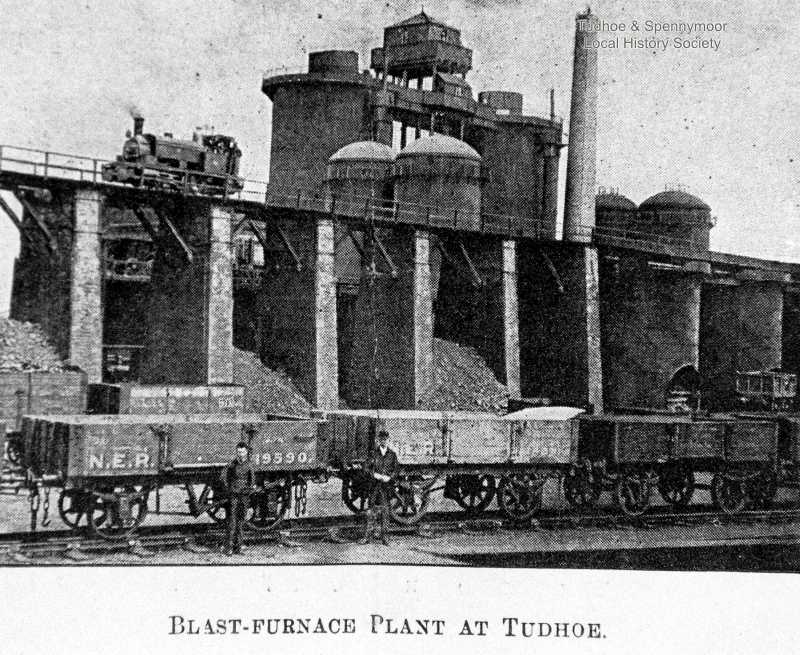 Weardale Steel, Coal, and Coke Company
Part of the report of the Weardale Steel, Coal, and Coke Company stated that…
"the directors have acquired the whole of the share capital of the Cargo Fleet iron Co. (Limited), the works of which comprise five blast furnaces and a considerable extent of freehold land on the south bank of the Tees, ironstone mines in Cleveland , and limestone quarries, all of which will add materially to the resources of the company. Three 50-ton steel-melting furnaces have been erected at Tudhoe Works during the year, and further improvements and additions are in progress." (12th September 1900 Sheffield Daily Telegraph)
In late October 1901 it was announced that the ironworks in Tudhoe were to close and fifteen hundred men and boys were to be unemployed.
Good News for Spennymoor
It is stated with some confidence that Messrs Bolckow, Vaughan, and Co. are going to put down a couple of shafts between Merrington Lane and Binchester Junction with the North-Eastern Railway line, which, when completed, will produce an output of 3,000 tons of coal each day. The railway engineers have been surveying the ground for sidings. Should this event really take place, it will mean the building of many houses, and a big thing for a town like Spennymoor. (15th September 1900 Daily Gazette for Middlesbrough)
Was this the first plan for Dean and Chapter Colliery as they expected a large output of coal and the need for lots of houses which were eventually built at Dean Bank, Ferryhill?
South Durham Coal Trade
It is freely rumoured in the Ferryhill district that a well known firm has taken the underground royalty of the Gate House Farm, Ferryhill Station, with the intention of opening out a landsale colliery. The royalty covers about 70 acres. (28th September 1900 Durham County Advertiser)
Spennymoor Musical Society
The annual general meeting of the Spennymoor Musical Society was held in the Wesleyan School, Spennymoor, on Tuesday night, Mr T A Burdon presiding. The Treasurer (Mr Rowland) presented the balance-sheet, which showed that the income for the year had been £82, and the outlay about the same. At the end of last season there were 97 members. For next season Mr Wraith was elected president, and Mr T A Burdon vice-president, with Mr F J Rowland (North-Eastern Bank, Spennymoor), as secretary. The Rev. Canon Firth was again appointed conductor, and that gentleman, in a few well-chosen remarks, thanked the members for again appointing him to the post, and hoped that the next season’s concerts would be a success.
The first subscription concert will be held about Christmas, Cowan’s “St. John’s Eve”, with a full orchestra, constituting the programme. Practices will be held every Tuesday evening, and we are asked to remind those who desire to take part in them that they should join the society at an early date. (6th September 1900 Northern Echo)
Luton Red Cross Bandmaster
A biographical sketch of Mr R H Cooper, in the “Brass Band News” states: “Mr Cooper started to learn music when he was nine years old, under Mr. L Winstone, Tudhoe Grange, Spennymoor, as a choir-boy. A year or two later he was induced by the late Mr John Raine (who was then conductor of the Whitworth Prize Band, Spennymoor) to take a cornet, Mr Raine placing him under Mr W Holland’s tuition, when he made very rapid strides. However, bad trade compelled his parents to leave Spennymoor and remove to Castleford. Hethen joined the Castleford Old Prize Band as 3rd cornet. Having played a few years, he was promoted to solo cornet, also bandmaster, which position he held with success."
The article continues to say he was in the celebrated Leeds Forge Band, playing before royalty. Leeds Forge band won 22 firsts and £375 in prizes in 1890. In 1892 he went to Rushden National Prize band for two years. In 1894 he worked with the South Derwent Band, composed entirely of colliers and he started a junior band for boys connected with the collieries. In the last year he was with South Derwent they won 15 prizes at 9 contests.
1894-1898 was one of the most successful amateur conductors in the North of England, taking about 100 prizes in four years. In 1899 Luton Red Cross Band engaged him as their resident conductor, won eight first prizes.
He was involved with at least twenty bands including Framwellgate Moor, Sunnyside, Dipton, Marley Hill, Egglestone, Beamish, Heworth Colliery, East Stanley, Chester-le-Street, Dunstable Excelsior, Spennymoor Temperance, and South Derwent Seniors and Juniors. (21st September 1900 Luton Times and Advertiser)
Football
South Shields journeyed to Spennymoor on Saturday last to indulge in a friendly match with Tudhoe, but imagine their surprise when they arrived at that out-of-way place to find that their football togs had gone astray. The team, with their followers, changed trains at Pelaw, but the clothes were left in the train. The match could, therefore, not take place. Surely someone is to blame for this sort of bungle, for it is a bungle and a big one too. It is to be hoped that such a thing will not take place again or Shields will be getting a bad name. (19th September 1900 Shields Daily News)
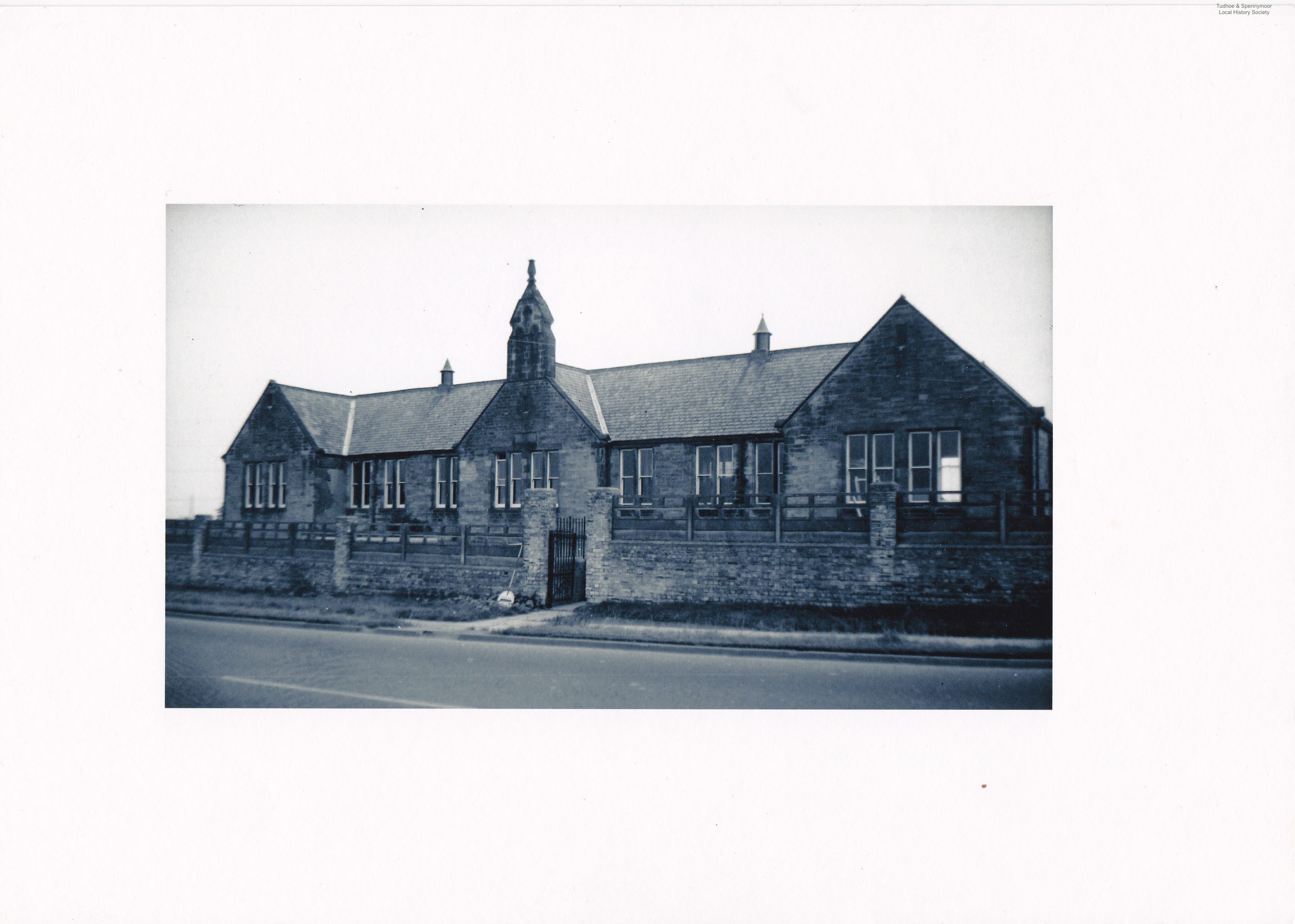 Tudhoe U.D. School Board
Mr J Rogerson presided at the monthly meeting of the above Board on Friday evening. A long discussion took place with regard to a letter received from the Urban Council Authorities calling attention to the practice of head teachers sending children to the homes of absentee children where there are infectious diseases, as they think a good deal of infection is spread among children by this practice. The Board decided that the practice be discontinued.
Miss Janet Knox, of Kelloe, was appointed headmistress of the infant department in Tudhoe Colliery School.
The Rev. D. McKinley moved that a pupil teachers’ central class be formed, consisting of the teachers from the Voluntary and Board schools. He condemned the discontinuance of the Board school teachers’ central class as a retrograde step, but thought that it might be recommenced again, seeing that there were about sixty teachers in the School Board area.
The proposal met with much opposition, the majority of the Board preferring to go on with the present system.
Mr McKinley then moved that a committee be formed to meet the teachers and ascertain their opinion with regard to the proposed central class.
This was seconded by Mr Nicholson and carried.
A letter was read from Mr J J Dodds, a former member of the Board, in which he stated he had much pleasure in presenting each of the boys who won the scholarship with a 21s copy of the ‘History of Spennymoor’. The Board decided to thank Mr Dodds for his offer. (8th September 1900 Hartlepool Northern Daily Mail)
(Mr J J Dodds published his book “The History of Spennymoor” in 1897. It is available online at
The History of Spennymoor Online copy in various formats.).
Tudhoe (U.D.) School Board
Certificated ASSISTANT MASTER wanted immediately for the Tudhoe Colliery Board School; salary £75 per annum, increasing by £2 10s per annum to £80. Applications, on printed forms, which may be obtained from me, must be sent to the Very Reverend Provost Watson, Tudhoe, Spennymoor, not later than the 2nd day of October next.
SAM ADAMS, Clerk, School Board Office, Bishop Auckland. 18th September, 1900. (22nd September 1900 Yorkshire Post and Leeds Intelligencer)
Tudhoe (U.D.) School Board
Certificated mistress wanted for ‘Infants’ Department of the Tudhoe Colliery School; salary £80 per annum, and £2 for each P.T. who passes the examinations. Applications, on printed forms, to be obtained from me, must be sent to the Very Reverend Provost Watson, Tudhoe, Spennymoor, not later than Tuesday the 2nd day of October next, 1900.
Sam Adams, Clerk to the Board, 56 North Bondgate, Bishop Auckland. 19th September, 1900. (24th September 1900 The_Scotsman and Leeds Mercury)
Spennymoor Primitive Methodist Quarterly Meeting.
The quarterly meeting of the Spennymoor Circuit was held on Saturday at the Primitive Methodist Mission, Merrington Lane, presided over by the superintendent minister, the Rev. D McKinley. There was a very good attendance of officials and the Rev. G C Sharp officiated as secretary. The report of the Examining Committee was read and considered satisfactory. Messrs E Gardner, H Whitehouse, and J Hope passed their examinations very creditably, and their names were ordered to appear on the preachers’ plan as exhorters. Mr G Henderson was not able to be examined on account of the death of his child, his examination to be held when convenient.
Doctrinal documents from Henry Fairley and Edward Gulliser, both of Croxdale, were received, and they are to accompany preachers during the quarter and to sit for examination as local preachers in six months time. Arrangements were made for missionary services during the quarter, the deputations to be the Revs. J H Taylor, MA of Newcastle, and R W de Winton of Houghton. Miss Haywood , of Edinburgh, to be engaged for special evangelists services at Rosa-street Chapel, Spennymoor. The circuit makes application for the General Missionary Committee’s evangelist for three months special services. There was a lengthy and profitable conversation on the religious work of the circuit. A circular letter is to be forwarded to all members of the church as a result of the aforesaid conversation. The financial and numerical reports were read and considered very satisfactory. The sum of £45 is to be paid off the debt of the circuit house. A public tea was held at the close of the business. (4th September 1900 Northern Echo)
Masonic Installation – Banquet at Spennymoor
On Wednesday night the Whitworth Lodge (1932) of Freemasons held their annual meeting in their hall, Dundas Street, Spennymoor. There was a very large gathering of the craft. The lodge was duly opened by Bro. H Hogg, Last Past Worshipful Master, who installed Bro. J M Chisholm as Worshipful Master for the ensuing year, and who elected the following officers:
J Fleming, Senior Deacon,
R Fleming, Junior Deacon,
Rev, S M Thompson, chaplain,
Bro. W J Sanderson, Entered Apprentice,
S Millward, sec.,
R Hedley, Senior Warden,
B Bethell, Junior Warden,
T Raine, Director of Ceremonies,
W Rutter, Junior Grand Deacon,
W Welsh, Senior Steward,
F J Rowland, Junior Grand Deacon,
R Richardson, tyler.
After the lodge was duly closed the brethren, numbering 80, adjourned to the Town Hall to partake of the Feast of St. John, after which the evening was spent in a convivial manner, Bro. G Rippon ably presiding at the piano. The banquet was catered for by Bro. R Richardson, of the Green Tree Inn, Tudhoe. (14th September 1900 Durham County Advertiser)
Spennymoor Urban District Council meeting 6th September 1900.
Game licences were granted to Messrs Kerby and Son, Craddock Street, Spennymoor.
Highways Committee – Main Roads - Tenders were opened for supplying road metal.
The Committee recommended that the road leading to Rock Colliery from the main road be repaired with slag, owing to the small sum paid by the Rock colliery owners. For three years this had only been £5.
Mr Startforth contended that to repair a road with this amount of traffic on with slag would be a waste of money. He was sure if the owners of the Rock Colliery were asked they would pay a little more to have a good road for their customers. It was used by all the tradesmen in the district.
Mr Gartland: It looks a cheap way of making a road, but it is a dear way in the end. It is dust in dry weather and sump in wet, and has to be cowled off. I support Mr Startforth.
It was agreed to place orders with Messrs Ord and Maddison, Messrs Summerson, and Mr Barker for 350 tons for immediate use, and that the surveyor provide an estimate of what will be required for the next six months.
It was agreed that more attention be given to the High Street, and after Saturday’s market to gather up all loose paper and other refuse.
Public Lighting – Spennymoor and Tudhoe Gas Co. and Tudhoe and Sunderland Bridge Co. tenders offered to light the street lamps at sunset and extinguish one hour before sunrise, from 1st September to the 30th April except six nights, when about full moon, at £2 10s 9d per lamp. The prices were accepted on the condition that the Tudhoe and Sunderland Bridge Co. do the repairs to the lamps, as do the Spennymoor and Tudhoe Company.
The Weardale Iron and Coal Company’s replied they were unable to comply with the request for them to light the three lamps in the tunnel (Merrington Lane) footpath for free.
Water Supply – A letter from Weardale and Waskerley Water Company stated that the Rock Colliery Co. had been taking water out of the company’s mains by permission of the Council’s Surveyor.
The Surveyor stated he had made no such arrangement about the water, but had lent the Rock Colliery Co. the Council’s water cart at a charge of 5s per day, and Mr Brown, the manager, would write the water company’s secretary, stating that they were willing to pay for the water taken.
The Chairman said it was a matter they had nothing whatever to do with; it was the water company and Rock Colliery.
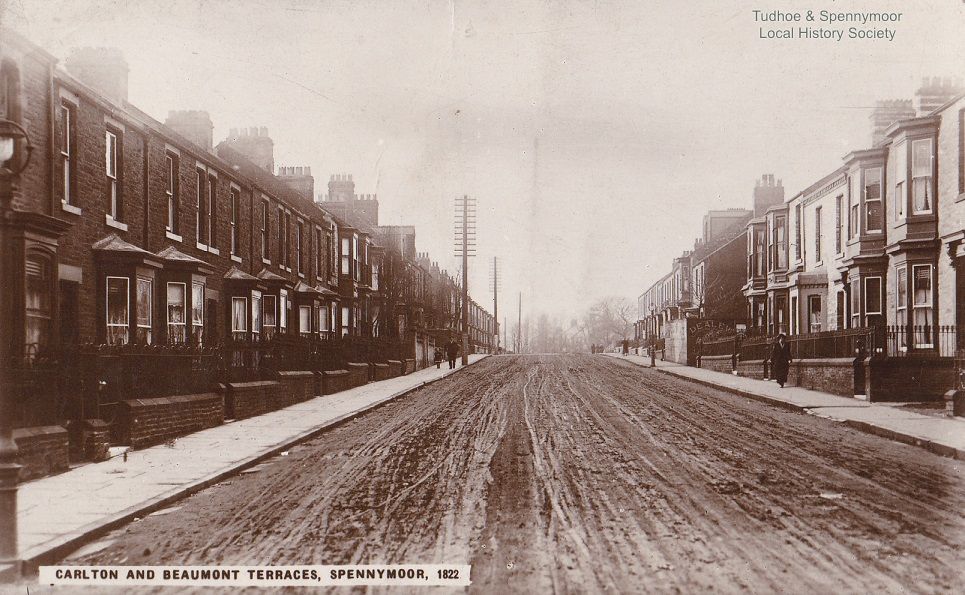 Buildings
Notices to be served on the owners of Ridley’s Building, Low Spennymoor and Johnnies’ Row due to serious defects.
New Buildings
Mr J J Dodd was proceeding with the building of his flats in Jackson Street, although no plan had been passed by the Council. Notice is to be given to Mr Dodd to stop building and submit plans.
The Surveyor reported that he had refused a certificate of occupation for a house in Beaumont Terrace, as the drainage was unsatisfactory. The house is occupied.
Mr Kenmire has occupied his house in St Paul’s Gardens without sanction. The surveyor had had no opportunity of making a final inspection. A letter was read from Mr Kenmire stating that he had occupied his house in ignorance of the bye-laws, but was willing that his house drains etc, should be inspected. On the Surveyor making an appointment he would have a man ready to open any drain. This was deemed satisfactory.
Spennymoor Cemetery
The Clerk had received a cheque in settlement of the claim made against Messrs Bolckow, Vaughan, and Co. for £30, on account of damage to the walls by pit falls.
(7th September 1900 Durham County Advertiser)
Auckland Police Court
Charles McIvor, for fighting at Spennymoor, and Ephraim Hughes, for a like offence at Binchester, were bound over to be of good behaviour and mulcted in 7s 6d costs each.
Wm. Stevenson, Byers Green, was fined 7s 6d for keeping a dog without a licence.
Robert Shaw (14), summoned for damaging the house door of Michael Toole, Spennymoor, by throwing stones at it, denied the offence, which he said was committed by another lad, whose name he gave, and the magistrates agreed to dismiss the case.
Bessie Burns was fined 10s for using obscene language at Spennymoor.
(21st September 1900 Northern Echo)
Bad Language at Spennymoor
William Caine was charged with using profane language within the limits of the Spennymoor Urban District Council, unlawfully, and to the annoyance of the residents in George Street, on the 14th inst, and was fined 7s 6d.
Domestic Life at Whitworth
Hugh Shields was brought up charged with committing an aggravated assault on his wife, Mary Shields, at Whitworth, on the 16th and 17th inst. Defendant pleaded guilty “under provocation” Mr J T Proud defended.
Complainant said the defendant “slapped her well”, and after that he struck her several times with his hands.
In answer to Mr Proud, complainant said she had pawned some goods belonging to her husband.
Mr Proud (pulling out a large envelope and exposing about a score of pawn tickets): Yes, you have pledged nearly all his property.
Complainant, in answer to further questions, said when her husband discovered she had pledged a large quantity of his goods he commenced to break up some furniture, and she helped him in the destruction.
Mr Proud: You even pawned his shirt. What became of his clothing? Complainant: I don’t know.
Mr Proud: Did you burn them? Complainant: No, but I broke some ornaments and he broke up the furniture.
Complainant in answer to further questions, said he struck her with his double fist, just like a man. She did not tell him to go to -– for his breakfast, but refused to supply him with it. She had no witnesses, and asked for an adjournment. She was now an Inmate of the Workhouse.
Mr Proud suggested before the magistrate made an order they should have some corroboration.
Defendant was sworn, and said he would not deny using his hands to his wife, but he was provoked to it. She had not washed his shirt for him to go to church with. He gave her 30s, 35s, and 40s weekly. She followed up horse racing and drinking to such an extent she never had anything, and could not supply the house with necessaries.
Sergt. Newton said he had been in the house occupied by the complainant and defendant, and never saw a home in a more wrecked condition, nearly everything was broken in the house, and it was very dirty.
Defendant was fined 15s including costs.
Breach of County bye-laws. Noah Grainger was charged on the information of Supt. Snaith with a breach of the county bye-laws by betting on the highway at Middlestone Moor between September 12 and 14.
The officer said he saw defendant standing near to the Binchester Hotel receiving money and slips of paper, which he entered in a book, and on closer scrutiny he found the defendant was making a book.
Edward Standish was also charged with a similar offence at the same time and place.
There was no actual defence, and the defendants were fined 40s each including costs. (28th September 1900 Durham County Advertiser)
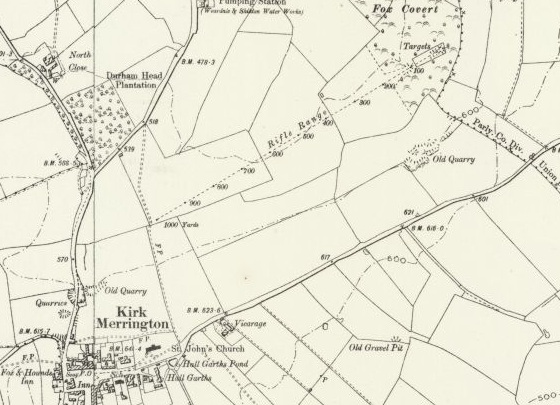 Spennymoor Shooting Club
The club formed in connexion with P and H (Spennymoor) Companies of the 2nd V.B. Durham Light Infantry held their seventh competition on Saturday afternoon, on the Merrington Range. There were two Silver Spoons competed for, and out of twenty-six competitors the winners were Corpl. Mawson and Col-Sergt. Watson, with 66 and 64 points respectively. The distances were 200 and 500 yards, seven shots at each distance. The chief scores were:-
Spennymoor Shooting Club
The club formed in connexion with P and H (Spennymoor) Companies of the 2nd V.B. Durham Light Infantry held their seventh competition on Saturday afternoon, on the Merrington Range. There were two Silver Spoons competed for, and out of twenty-six competitors the winners were Corpl. Mawson and Col-Sergt. Watson, with 66 and 64 points respectively. The distances were 200 and 500 yards, seven shots at each distance. The chief scores were:-
Corpl. Mawson (10 st) 31 25 66
Col-Sergt. Watson (scratch) 30 34 64
Lieut. Fleming (10 st) 22 28 60
Sergt. Wilson (5 behind scratch) 31 32 58
Cpl. Johnson (5 behind scratch) 28 33 56
Pte. Chisholm (5 st) 23 26 54
Bugler Clement (scratch) 24 30 54
Sergt. Bramley (scratch) 26 27 53
Pte. Drake (15st) 22 15 52
(7th September 1900 Volunteer Service Gazette)
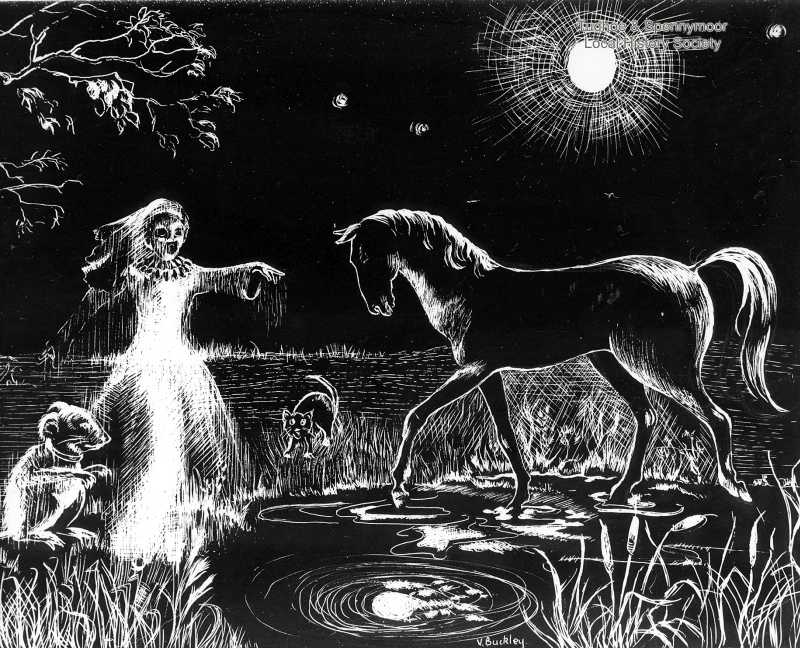 Extract from James J Dodd's "History of the Urban District of Spennymoor" published 1897.
The Tudhoe Ghosts
The Tudhoe Mouse has been frequently seen even in recent times, and there is said to be a Green Lady who "walks" in Tudhoe Old Hall. The Green Lady is ingeniously connected with the Black Horse and the Tudhoe Mouse. There is a local tradition to the effect that the horse's master died in battle, that the horse's head was also struck off, and that nevertheless the spirit of the horse remained for days over its master's body defending it from wild animals.
The mouse belonged to the Green Lady, taking the place of a pet dog, and tradition says that when anyone in the village is going to die the Black Horse comes out of the pond and meets the Green Lady and her mouse at the brink. What happens afterwards nobody knows. Nobody has as yet had the courage to wait and see. A former tenant of the Old Hall used to give out that he had seen a lady dressed in green with white stockings walking around his bed, but there is no reason to suppose that he wanted to live in the old house rent free, and hoped to prevent anyone from taking it over his head by giving out that it was haunted.
Whatever truth there may have been in his statement, the wife of the present tenant of a portion of the building claims to have already had a similar visit. At any rate she affirms that she snecked her bedroom door most carefully one night, and yet it flew suddenly open whilst she was in bed. A child in another room cried out, "Oh da, I'm frightened," whereupon she hid her head under the bedclothes and saw nothing of the Green Lady.
There were two other ghosts, the Nicky-Nack Ghost and the Devil himself who would appear at the Blasted Oak near Oak Tree House.
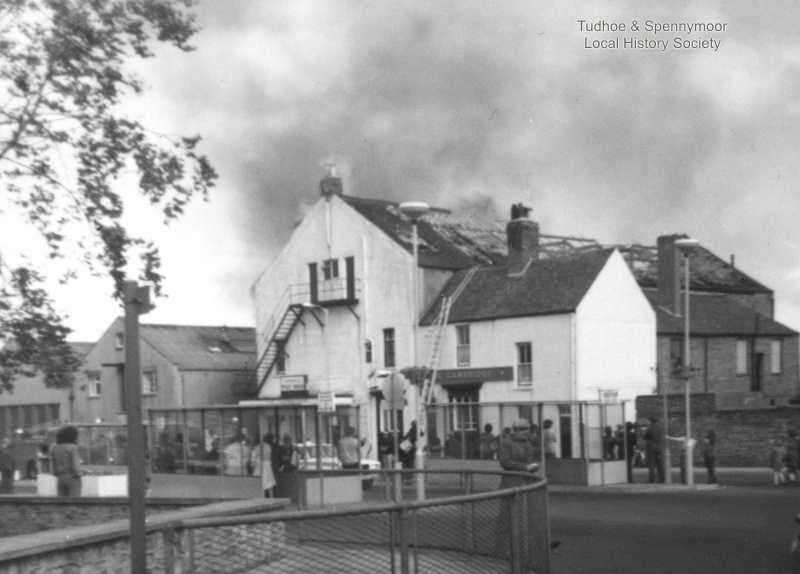
 Secrets of the Harem The CASINO QUARTETTE. Acrobatic Dancers and High-Kickers, in Secrets of the Harem, Co.
next week C. Spennymoor.(4th October 1900 The Stage)
Review - For the second week in succession we have to record a bumper attendance at this popular house. The presentation of the piece is rendered picturesque by the many sets of pretty scenery, and the variety and appropriateness of the costumes. Interwoven with the more serious parts of the drama are many capital speciality turns, in which the Casino Quartet of lady vocalists and dancers distinguish themselves. (11th October 1900 The Stage)
Saturday Night in London. Spennymoor Cambridge (Lessee, Mr Harding Thomas; Resident Manager, Mr Herbert Vere)
Drama presented and written by Mr Matt Wilkinson. Includes a clever boxing exhibition by the Two Bowery Boys. (18th October 1900 The Stage, 20th October 1900 The Era)
A Night’s Folly. MISS MAUDE STEWART, Soubrette, Speciality Dancer. Priscilla Mumby,
Messrs. A. & E. Spalding’s Co., next Cambridge Theatre, Spennymoor.
Musical Farcical Comedy in 3 Acts. Described as one of the Best and Brightest Musical Shows on Tour.
The piece causes roars of laughter from start to finish, and the sparkling musical numbers are loudly encored.
At Liverpool, Manchester, Glasgow, Edinburgh etc. next Cambridge Theatre, Spennymoor. (25th October 1900 The Stage)
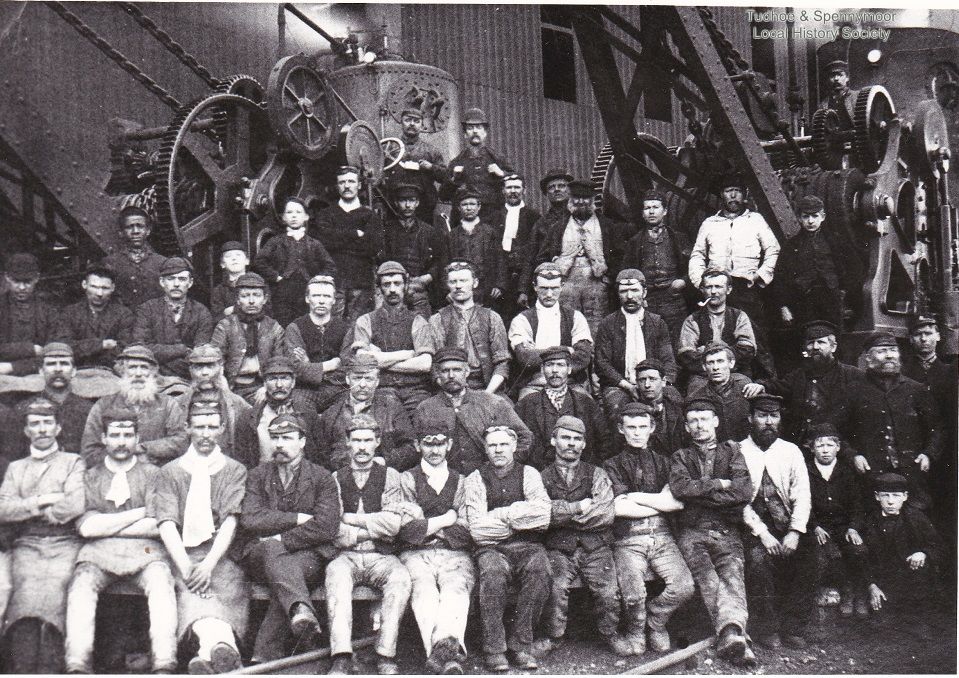 Tudhoe Ironworks Fatality - Inquest and Verdict.
On Thursday evening of last week Deputy-Coroner Fred Badcock held an inquiry at the Vulcan Inn, Low Spennynoor, touching the circumstances of the death of Benjamin Shaw, aged 75 years, of 110 Weardale-street, Mount Pleasant, Spennymoor.
Henry Shaw was the first witness called, and identified the body as that of his father. He said that deceased was employed at the Tudhoe Ironworks of the Weardale Steel and Coke Company as a forge labourer.
William Howard, bricklayer, stated that in returning to work after dinner he was walking along the railway, and observed an engine and wagons coming along. He heard the whistle blow and also saw deceased near to the engine, when he was knocked down. Deceased had his back to the engine. He went up at once, and assisted to get him off the line. He observed that both legs had been run over by the wheels and that his legs were almost severed from his body. They were only hanging together by the trousers. He assisted to get him home, where he died within an hour of the accident.
Thomas Weldon, engine driver, stated that he was on the engine on Wednesday, October 10th, and about dinner time he was coming through the works, when shortly before one o’clock he noticed deceased crossing the line about thirteen yards from the engine. Deceased stepped from the line and he thought that all was clear. However, he had evidently crossed on to the line the second time and before the engine could be stopped he was knocked down. In reply to the coroner he stated that he thought if deceased had not been rather deaf he should have heard the whistle blow or should have heard the fireman, who shouted at him. He always blew the whistle in going round this particular curve. They were only going slowly.
John Cunningham, fireman, stated that on the day in question he saw deceased on the line with his back to the engine. He shouted to the driver, “Blow the whistle, there’s that man on the line again.” He at once jumped from the engine, but before he could pull the man out of the way the engine was over him. He did his best to save him but it was too late.
After hearing the evidence the jury returned a verdict of “Accidental death”.
Mr R Hedley, manager, attended the inquest on behalf of the Weardale Steel and Coal Company. Deceased had worked at the Works for over 40 years.
The interment took place on Sunday at the Tudhoe Cemetery amid many tokens of sympathy and respect. Deceased leaves a widow and grown-up family.
(18th October 1900 Northern Echo)
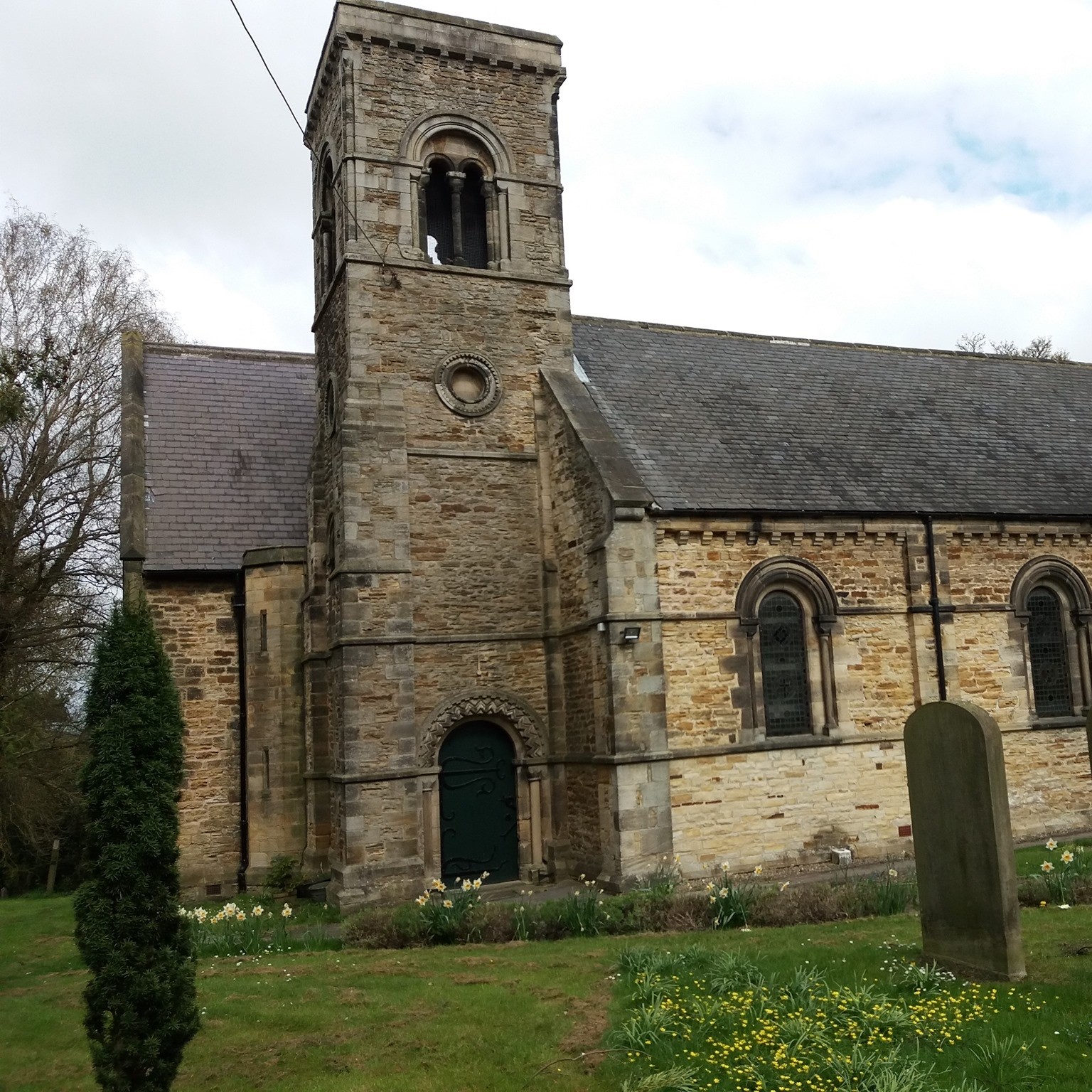 St Bartholomew's Church, Croxdale.
On Saturday afternoon first the induction service of the Rev E H Stewart, MA of St Aidan’s, Gateshead, to the rectorship of St. Bartholomew’s, Croxdale, will be celebrated by Canon Body, D.D., of Durham. The service will commence at 4pm
(19th October 1900 Durham County Advertiser)
S.P.G. Society [Society for the Propagation of the Gospel in Foreign Parts].
Meeting Sat Spennymoor
Speech by the Bishop of Durham
Meetings in connection with the above society were commenced in Spennymoor on Sunday, when special sermons were preached in the churches of the combined parishes of St Paul’s, St. Andrew’s, and Tudhoe. Throughout the day the services were exceedingly well attended.
Yesterday the second annual meeting of the combined parishes of Spennymoor, Tudhoe, and Tudhoe Grange was held in the Town Hall, Spennymoor. In the afternoon a meeting was held for the children, when a lantern lecture on missionary work was given by the Rev. W G H Holmes, vicar of St. Peter’s , Jarrow. In the evening a crowded meeting was held in the Town Hall, presided over by the RevJos. Short BD, vicar of Spennymoor, who was supported on the platform by the following clergy:- Revs E. Fenton, G. R. Cook, Tudhoe Grange; P. Hughes, J. O. Douglas, A. O. Townend, Tudhoe; P. Y. Knight and W. J. Burnett, Byers Green; T. L. Lomax, Ferryhill; F. T. W. Hill, Coundon; J. Dodshon, Spennymoor; and the Bishop of Durham.
The Chairman said he was pleased to welcome His Lordship amongst them, and only hoped that his visits could be more frequent. He spoke of the unity of the three parishes in organising the meeting.
The Right Rev. Lord Bishop of Durham, who rose to address the meeting, received a most hearty welcome. He dealt at great length on the need of unity in their great work of uplifting mankind by the power of the Gospel. He spoke of the great privilege they had conferred upon them in spreading the Gospel. He declared that the message of Christ to his disciples to preach the Gospel to all nations was just as potent as ever. In dealing with the numerous objections to mission work, he referred to the words of Dr Livingstone, who said that the people in this country had no idea of the vast difference between a savage heathen and the most imperfect Christian. Referring to statesmen’s criticisms of mission work, he cited the words of Lord Lawrence, who declared “That the benefits conferred upon India through the missionaries was infinitely greater than all else combined.” (Applause)
He then dealt with the work of the S.P.C., which was established 200 years ago for the propagation of the Gospel in the colonies. There were now 95 dioceses in connection with the society. It had been declared that missionaries have not acted with wisdom, but if they could be encouraged to greater zeal in the work of missions, they would make it clear to those who most bitterly assailed them that they had done their duty to those who looked up to them for protection and guidance. He was glad to know that the war in South Africa was nearly at an end, and that they should soon see the work again commenced among the too much neglected native races. He concluded with a most earnest appeal to all to further interest themselves in mission work.
The Rev. W. G. H. Holmes, vicar of Jarrow, then addressed the meeting, and delivered a most eloquent and interesting address.
Mr G Byers, J.P. (chairman of te Urban Council), moved a vote of thanks to the Bishop and the other speakers, which was seconded by Mr E Eddy.
The chair of St Paul’s was in attendance, and special hymns were sung. Mr W. Dixon presiding at the piano.
(23rd October 1900 Northern Echo)
Mrs Bramley. We regret to record the death of Mrs Bramley, widow of the late Mr Thos. Bramley, for many years timekeeper for the Weardale Works, Tudhoe. Mrs Bramley was in her eightieth year, and one of the oldest and most respected residents in Spennymoor. She was one of the founders of the Spennymoor Presbyterian Church, and up to her death took a very active part in everything pertaining to its welfare. Her remains were interred in the Yorkhill Cemetery on Tuesday afternoon amidst every token of respect. She leaves two sons to mourn her loss, Mr J W Bramley, one of the chiefs at Tudhoe Works, and Mr Tom Bramley, Birmingham. Mr J W Bramley is also organist at the Spennymoor Presbyterian Church.
(24th October 1900 Daily Gazette for Middlesbrough)
Joseph Wetherell. Another old Spennymoor standard passed away this week in the person of Mrs Wetherell, wife of the late Joseph Wetherell, printer. Mr Wetherell was one of the first printers employed on the staff of the “North-Eastern Daily Gazette”. Mr Wetherell came to Spennymoor nearly thirty years ago, and for a time conducted a local paper known as the “Spennymoor Times”. Mrs Wetherell was interred in the Yorkhill Cemetery on Tuesday afternoon.
(24th October 1900 Daily Gazette for Middlesbrough)
Mr. Collard Ellis was the first person in Spennymoor to venture a newspaper-at least there were two first persons, for Mr. Wetherell, Senr., published a paper on the very same day. There was room in Spennymoor for a newspaper, but not for two, and so they both died a natural death. Dodd's History of Spennymoor, 1897.
John Parkin., another old standard in the Spennymoor locality, passed away on the 18th inst., at the advanced age of 82 yars. He carried on a most successful business as miller at the Steam Mill in Merrington Lane for a long period, and was the only miller in the district for many miles around. His remains were interred at Kirk Merrington on Monday.
(22nd October 1900 North Star Darlington, 24th October 1900 Daily Gazette for Middlesbrough)
Thomas Austin Burdon.
The death of Mr T A Burdon, chemist, took place suddenly at his residence, Beaumont Terrace, Spennymoor, at a late hour on 24th October evening, he was 65.
Mr Burdon was well known and highly respected throughout the district. He carried on a successful business in High Street, Spennymoor, as a chemist and druggist for nearly 30 years, succeeding the late Mr Prudhoe (one of the founders of Spennymoor). Mr Burdon retired from business only a few weeks ago after selling his business to Mr Snowdon. He was seen in the street on the morning of the day of his death. Deceased leaves a widow and grown up family. He was at one time a prominent figure in the public life of the town. He was a Roman Catholic, his interment was at St Charles’ Church, Tudhoe on Saturday 27th Oct.
(25th October 1900 Newcastle Evening Chronicle, 26th October 1900 Newcastle Daily Chronicle)
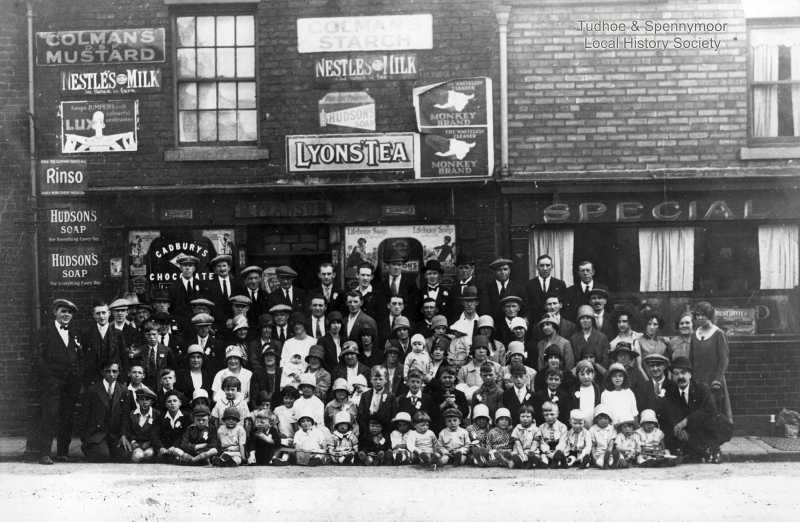
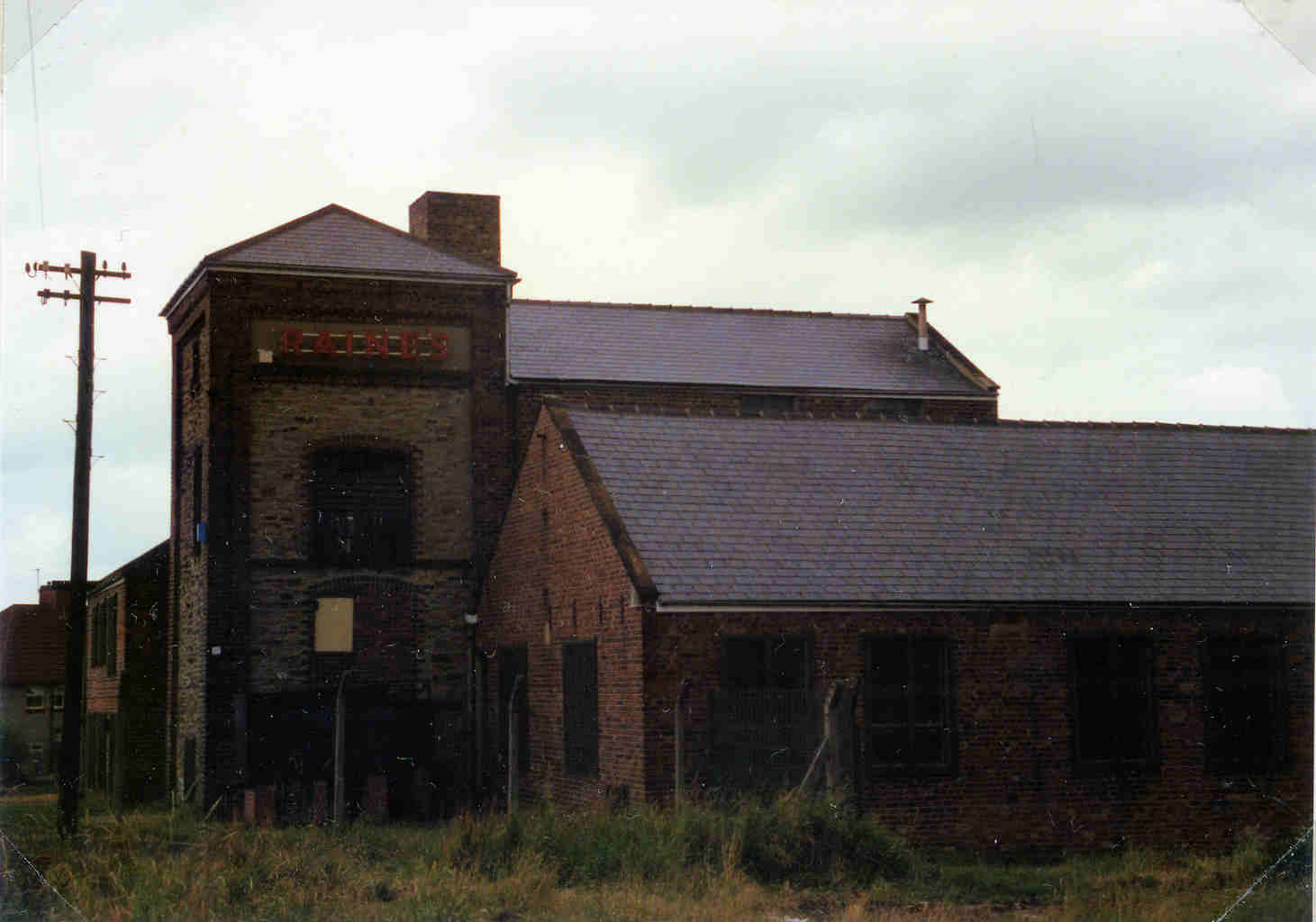 Draymen, Topmen, and Cask Washers, sober and industrious, Wanted at once; references required; good wages. Apply Tower Brewery, Spennymoor.
(23rd October 1900 Newcastle Daily Chronicle)
Click for more information about Tower Brewery.
Wanted, lady Pianist-Vocalist, vamper; open at once; state salary to live in; wire or write.
Hunter, Queen’s Head, Spennymoor.
(31st October 1900 Yorkshire Post and Leeds Intelligencer)
The Queen's Head was in Villiers Street. Thomas Hunter (b1861) was a publican and agent for bottled beer, he was born in Leadgate.
Spennymoor Urban District Council.
The SUDC invite tenders for the erection of an Isolation Hospital in Merrington-road, Spennymoor. Plans and Specifications may be inspected at the Surveyor’s Office, Silver-street, Spennymoor, any day up to the 17th November, between Nine and Ten a.m., and on Mondays and Fridays from Nine a.m. to Five p.m.
Forms of Tender can be obtained of the Surveyor, Mr G W Rogers, A.M. Inst.C.E., Spennymoor.
Sealed Tenders, endorsed “Tender for Isolation Hospital,” must be delivered at my Office on or before Monday, 19th November next.
The Council do not bind themselves to accept the lowest or any Tender.
F Badcock, Clerk to the Council, Clerk’s Office 3, James-street, Spennymoor, 11th October 1900.
(13th October 1900 North Star Darlington)
The isolation hospital was on South View near Rock Road Cemetery and there are newspaper reports of charity donations made to the hospital in the 1900s. The Annual Report on the Public Health Services in 1937 stated "I regret to record the closure of our Infectious Diseases Hospital, a course decided upon by the Joint Hospital Board four months after taking over the hospital, July 1937 saw our hospital cease to exist as such, much to my regret and the regret of many residents in the District. Although the Spennymoor Isolation Hospital was considered as unsuitable and out of date, it had a record comparing very favourably with similar hospitals in the North. The Staff worked together very amicably and the atmosphere created for the patients was one of sympathy combined with efficiency. From the year 1923 to the day it ceased to admit patients, 940 cases were admitted to hospital suffering from Scarlet Fever, Diphtheria and Enteric Fever, with a loss of only 15 patients and 7 of these deaths should not be recorded against the Hospital, as death took place within 24 hours of admission."
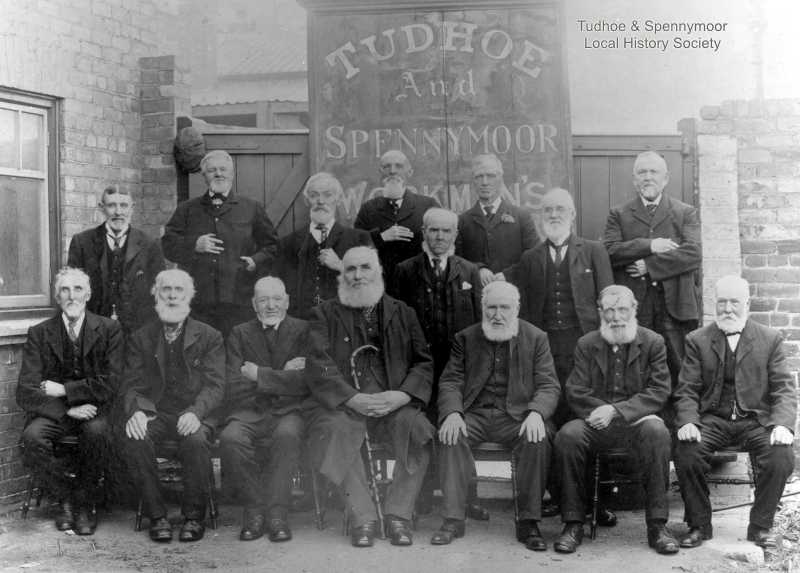
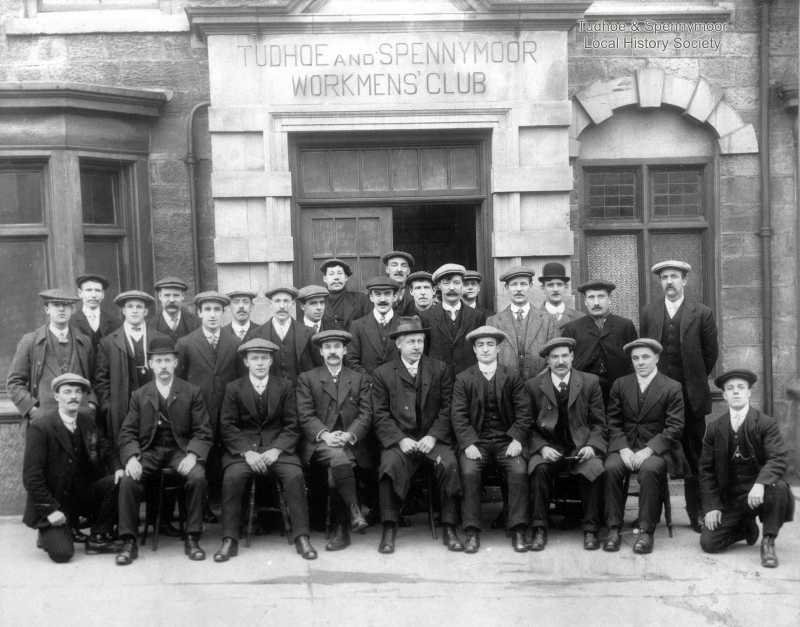 A working-man’s Club for Spennymoor.
For a considerable time past the working classes in the Spennymoor district have been considering the advisability of inaugurating a non-political club, and a meeting was held on Saturday night in the Central Hall, Mr C Eagle, of Page Bank, presiding. Speeches pointing out the benefits to be derived from clubs of this description were delivered, and Mr Berriman, on behalf of the committee, intimated that extensive premises, including seven cottages situated in Tudhoe Grange, Spennymoor, had been purchased at a cost of £900, and a deposit of £50 had been made (cheers).
A motion endorsing the action of the committee was carried unanimously. After discussion, the share capital was fixed at £1,650, in £1 shares, and no member to possess more than five shares.
At the close of the meeting Mr G Robson was elected treasurer, pro.tem., and in a few minutes deposits amounting to £64 7s 6d, representing 285 shares, were made.
(26th October 1900 Durham County Advertiser)
A Letter to the Editor - Workmen’s Clubs.
(The Editor “North-Eastern Daily Gazette”)
Sir, A great stir is being made in Spennymoor and district at present about the establishment of a Workmen’s Club. I think it very desirable that people should have some information as to what this so-called “Workmen’s Club” is intended to be. All are agreed about the usefulness of a library and institute, where men may assemble in a social fashion, and share in innocent recreation and amusement, but when huge profits are expected to be made, principally by supplying intoxicating drinks to the members and visitors, it becomes a most serious matter.
A club constituted, as this Workmen’s Club is intended to be, is neither more nor less than an unlicensed public-house, subject to no police supervision, no restriction as to hours, and with o check to its evil tendencies, apart from the rules made by the members, which are not likely to be strictly enforced, if they interfere with the earning of large profits.
The effects of similar clubs in other districts have been deplorable, and there is abundant evidence to prove that they produce infinitely greater evils than do the ordinary public-houses.
Even the advocates of the system help to prove this as witness the statement made by onespeaker at the meeting held at Spennymoor on Saturday evening, when he pointed out as one of the advantages of the club, that if a member fell asleep, in other words if a member got drunk, he would not be turned out to fall into the hands of the police, but would be kept inside until he could pass muster in a respectable way. How this will work out in the member’s home, when a wife is waiting in suspense for the return of her husband, or a mother for her son, can easily be imagined.
I say nothing about the evils of betting and gambling, which are too often associated with clubs of this kind, but I trust that every good influence in Spennymoor and district will array itself against this club, and that our young men will carefully shun an institution which can only prove a curse to all who have to do with it.
Yours faithfully George H Pattinson, Tudhoe
(25th October 1900 Daily Gazette for Middlesbrough)
Was this George H Pattinson who lived in Tudhoe Village in 1901, a sawmill foreman who lived with his father, a sister, two brothers and a niece and nephew.
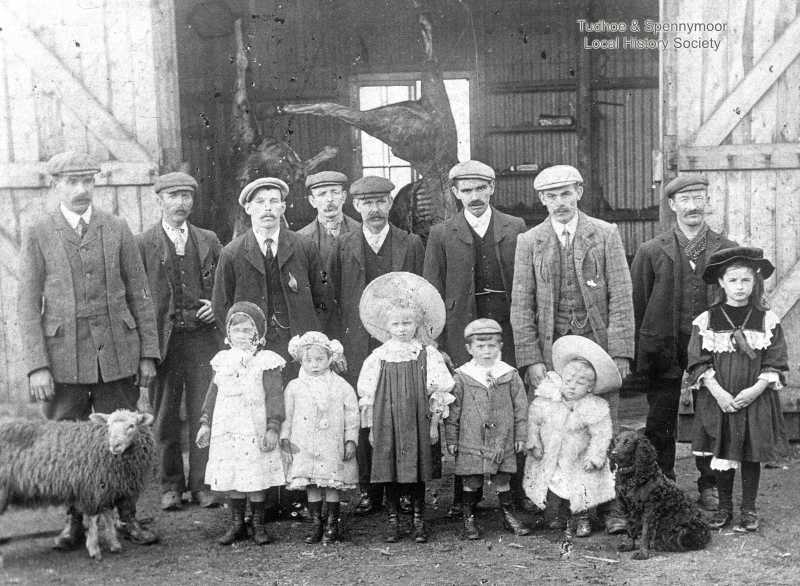 Durham Police Court - A Warning to Slaughter House Keepers.
Wm. Miller, Tudhoe Grange, was summoned under the Prevention of Cruelty (Animals) Act with not having over his slaughter house a sign board bearing the words “Licensed for Slaughtering Horses”, and further with not keeping a book containing a proper description of the animals slaughtered.
Defendant pleaded guilty to both charges.
Mr Heath, of Sunderland, prosecuted on behalf of the N.S.P.C.A., and stated that defendant under the Act was liable for the first offence toa penalty not exceeding £5 for every day during which such neglect had continued, and for the second offence to a penalty of 40s for each offence.
Mr Heath pointed out that although the offences might not appear serious, it was necessary in the first place that a slaughter house should be distinguished by a notice board so that people might know where it was, and might get the benefit of using it; also in order that the place might get proper inspection to see that the requirements of the Act were complied with.
Then as to the second charge it was necessary that a book recording the animals slaughtered should be kept, inasmuch as otherwise the place might be taken advantage of by people who wanted to gt rid of animals that had been illtreated, etc. He did not suggest anything had transpired through the neglect of the defendant, but for all that he must comply with the Act, or serious difficulties might arise.
Inspector Doyle (R.S.P.C.A.), stated that from information received he went to Tudhoe Grange with P.S. Fryer on the 25th September, and there visited the premises where the defendant carried on a knacker’s business. Witness went into the slaughter house, and he there saw two fresh hides on the floor. He asked Miller when the animals had been slaughtered, and he replied on the previous Saturday, the 22nd. Witness asked if they had been slaughtered there, and he replied yes. There was no sign-board over the premises as required by the legislature, and he asked defendant the reason. The latter replied that he had one about ten years ago, but it was taken down when the football ground, &c., was laid out, and had not been put up since.
Witness then accompanied the defendant to the house, where he asked him to produce his identification book. Witness examined the book, and found that it contained no entry whatever of the two ponies which defendant admitted having slaughtered on the 22nd, the last entry in the book being the 25th August. Witness asked Miller if he had slaughtered any animals in the meantime, and he replied that he had slaughtered somewhere about eight horses and two cows. Defendant added that he kept a mental note of the animals and entered them in the book in a bulk. He said he had been ill for some time, but admitted if he had not he would not have made the entries just the same.
The Chairman said the full penalty for the first offence amounted to some thousands of pounds, somewhere about £25,000 for the past ten years. Defendant, however, would be fined £1 including costs, which were 16s.
Mr Heath asked that the solicitor’s fee might be allowed, or the society would be the losers over the prosecution by £17. It was hard on the society that its funds should thus suffer in the discharge of a duty to the public.
The bench altered the fine to 30s including costs.
(12th October 1900 Durham County Advertiser)
Children's Circle
In April 1900 Robert Cairns wrote a letter to the children's circle about the courage of the exploring parties after colliery disasters. In November 1900 he wrote another article about miners.
A Miner’s Life
A miner is a man who has to do his work underground. He is let down in a cage in the morning, and drawn up when the day’s work is over. It is very hard and unpleasant, but the worst part is the danger he is always in. If he is at work in a coal mine there may be an explosion and all the miners may be killed. This happens when the bad gas gets to the light in the miner’s lamp. This lamp is supposed to be so made that the gas cannot reach the light, but accidents are liable to happen where it is used. Coal miners are not allowed to take matches down, nor candles, nor even smoke their pipes. If they are caught breaking the rules they are punished by being sent to prison, for they may not only cause their own lives to be lost, but the lives of all who work with them. Another way by which they may get killed or very badly hurt is by a very large piece of stone falling on them. Miners work lying on their sides and sometimes in very narrow places. Thee pit is so hot that they can scarcely wear any clothing. With them it seems always night, and one set of men may be at work during the day, and another during the night. Very few people care to go down a pit, but the miner having been born near it and seen his father go down day after day does not see or think of the danger. The miner does not work so many hours and is paid higher wages than some workmen, but this is because his work is so hard and dangerous. Of course, there are many kinds of mines, such as copper, tin, iron, lead, salt, and coal mines. It seems strange that all these useful things should be got out of the earth, and we should be glad that there are men who are willing and ready to get them for our use.
Robert Cairns (14), 44 Edward-street, Spennymoor. (3rd November 1900 Northern Weekly Gazette)
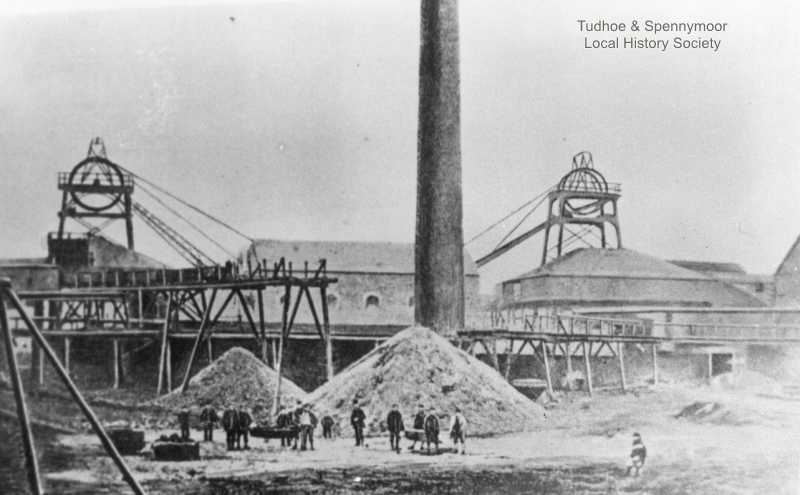 Robert Cairns Family
Why was Robert so interested in the dangers of mining? Looking at his family history Robert seems to be the grandson and nephew of three of the miners killed in the 1882 Tudhoe Mining Disaster, although he wasn’t born until three years after the disaster.
His grandfather was James Cairns (b1824 Ireland, whose surname appears to be McKearney until after 1851) who married Hannah Brown (b1828 Allendale) in 1849.
In 1851 they are living at Leadgate near Crookhall Ironworks with their son Jacob (b1851, Crookhall).
In 1861 they have moved to 3rd High Row Shotton with three more children Ellen (b1854), Michael (b1856, South Hetton) and Robert (b1860, Shotton Colliery).
In 1871 the family are at 5 Pit Row, Tudhoe with their 5th child Catherine Ann (b1864, Shotton). James, Jacob and Michael are all miners.
In 1881 they are at 5 Church Street, Tudhoe, Michael and Robert are enginemen drivers. Jacob Cairns has married Elizabeth Martha Hodgson in 1876 and they are living at 177 Tudhoe Colliery with three children, Hannah Brown (b1876, Tudhoe Grange), Mary Gill (b1878, Tudhoe) and Catherine Alice (b1880, Tudhoe). They have three more children during the 1880s, Susan (b1882), James (b1884) and Robert (b 25th December 1885, Low Spennymoor).
On the 18th April 1882 there was an explosion at Black Horse Colliery, Tudhoe and 37 men lost their lives. Three of these were James Cairns (57), and his sons Michael Cairns (26) and Robert Cairns (21). Michael died of burns and he and Robert were buried at Holy Innocents churchyard on 22nd April 1882.
James, a wagonwayman, was entombed in a thirty feet fall of stone and his body wasn’t recovered until 24th, he was buried at the Roman Catholic churchyard, Tudhoe.
The eldest son Jacob was also a miner at the time of the explosion but after 1882 he is working as a butcher at Low Spennymoor. This doesn’t seem to have been very succesful as he is mentioned in the register of County Court Judgements, on 22nd November 1886 he is in debt for £14 10s and in March 1887 at Durham County Court
“Jacob Cairns, Mount Pleasant, Spennymoor, applied for an administration of his affairs, his debts amounting to £24. He had no money to pay with, and his Honour ordered the case to be struck out until debtor got work and was able to pay”.
This wasn’t Jacob’s biggest problem as his wife had died on 12th February 1887 leaving him with six children under 11.
In 1891 the children are living with their grandmother Hannah Cairns whose husband and sons died in the colliery disaster, Jacob is lodging at Seldom Seen, Newfield and has returned to mining. Hannah died in 1893, aged 65, and her son Jacob remarries in 1896 to a lady with three children from a previous marriage. In 1901 they are living at 44 Edward Street, Spennymoor, with a new baby called Jacob (b 1901), this is the address Robert uses in his letters to the Children's Circle.
However on the 1901 census Robert is living with his sisters Catherine Alice, who has married a farmer at Woodland, Hannah and brother James. James, aged 17, and Robert, aged 15, are both working at the mine.
Click to see details of an Inquest and Court Case to determine the owner of Treasure Trove found by James Cairns at Spennymoor in 1896.
If anyone has any information or corrections to this article please let us know.
(23rd December 1886 Commercial Gazette London / 16th March 1887 Daily Gazette for Middlesbrough?
A Boy’s Victory
Dear Daddy, I send you a short story called “A Boy’s Victory”. A little boy was out for a walk one day with some other boys; coming to a garden they saw some fruit lying on the ground, and he was asked to climb over the fence and steal it. At first he would not, but when they called him a coward he began to give way, and sprang up over the fence. Sin was very close to him then, right on his shoulder, but not in his heart. But suddenly he thought of his dear mother in Heaven and of Jesus whom he had been taught to obey and remembered how it would grieve Him if he took the fruit. So, whispering a little prayer to himself for help, he jumped down from the fence and told them he couldn’t do it. How the boys laughed at him! But he did not mind. He ran home, glad that he had, with God’s help, done what was right, and been saved from being dishonest. Never forget, then, that if you are tempted God will save you if you ask him. I think, I will close now, hoping you are in the best of health.
I am, your loving daughter Rachel Riddle (14)
95 Upper Church-street, Mount Pleasant, Spennymoor. (10th November 1900 Northern Weekly Gazette)
Another First Letter
Dear Daddy, This is the first letter I have written to you. I have been wishing to join the Circle a long time. I go to the Tudhoe National Church school, and I am twelve years of age, and in Standard VII. We get the “ Weekly Gazette” every week, and we enjoy it very much reading the interesting stories, and have done for years. I am, your loving daughter, Annie Howe.
103, Upper Church-street, Mount Pleasant, Spennymoor. (24th November 1900 Northern Weekly Gazette)
My Favourite School Lesson
The best essay in order of merit on “My favourite school lesson” is that of Martha Stuart (12) Booth’s Buildings, Byers Green.
To whom Daddy awards the second prize.
Martha’s letter is as under:-
Dear Daddy, I am going to write you an essay on
my favourite lesson at school. The lesson which I take most interest in and call my favourite lesson, is the formation lesson which we get every Friday afternoon. This is very useful, and there is much information in it. I have many reasons for liking this particular lesson, first, because it teaches us how to make things and how to use them, and also I take interest in it because we learn many things which have gone by.
Your loving daughter, Martha A Stuart (12) Booth’s Buildings, Byers Green. (24th November 1900 Northern Weekly Gazette)
Martha Ann Stuart (b1888, Hutton Henry) was the daughter of William Henry Stuart/Stewart (b1863, Mickley, Northumberland) and Ann Watson (b1863, Wigan, Lancashire). In 1891 they are living at 69 George Street, Spennymoor with a two week old baby, Peter.
In 1901 they have moved to 12 Booth’s Buildings, Byers Green with three more children, David,4, Sarah,2 and Edmund, 6mths, all born at Byers Green. Henry is now a stoneman at the mine. Sadly Henry dies on 8th May 1906, aged 44, “he was a deputy putting up a brattice, when a partially-filled tub ran down from the face into him and killed him. The hewer was filling the tub at the face and had it spragged.” (Durham Mining Museum)
In 1911 Ann, his widow, is living at Front Street, Shotton Colliery with Martha Ann, Peter, Edmund and a boarder. In 1920 Martha Ann marries Percy Alcock, a stoneman born in Staffordshire. They are living with the family in Front Street, Shotton Collliery.
In 1921 Martha Ann is postmistress at Shotton Post Office, Peter is a coke oven labourer at Horden, coal, coke and by-products company, Edmund is a grocer’s assistant at Pearman & Corder Co Ltd. Sunderland, wholesale grocers & provision merchants.
In 1939 Percy and Martha Ann Alcock are living at the Post Office, Front Street, Haswell where Percy is General Dealer and officer in charge of the sub Post Office with his wife helping him.
Croxdale - The harvest festival of St. Bartholomew’s, Croxdale, was held on Thursday se’nnight [week]. The church was very prettily decorated, and the service bright, the preacher being the Rev. J A Kempthorne, the newly inducted vicar of St. Thomas’, Sunderland, and late of Rochdale. The services were continued on Sunday. In the morning the Rev. P Hughes, of Tudhoe, occupied the pulpit, and the rector, the Rev. E Hamilton Stewart, preached in the evening to a very large congregation. In the afternoon a special service for children was held. (2nd November 1900 Durham County Advertiser)
A Live Stock Society has been formed in Spennymoor and district, with Dr R S Anderson president and Mr Tom Maughan secretary. The society is under the patronage of Mr J M Paulton, MP, Sir Chris Furness, MP, Lady Eden, Mrs Shafto, the Rev. J Short, BD, and others. Subscriptions to the amount of £30 have been received, and the society bids fair to becoming a most prosperous one. The first exhibition will be held in the Market Hall, Spennymoor, in December next. The schedule has been drawn up, and there are over 80 classes. There are also to be special prizes in every class, including a silver cup and three silver medals and other cash prizes, given by local patrons. Full particulars of the show will be duly announced in our advertising columns. (8th November 1900 Daily Gazette for Middlesbrough)
The annual choral festival of the Spennymoor Wesleyan Circuit was held on Wednesday evening in the Wesleyan Chapel at Spennymoor. There was a large audience, with Mr Thomas Colley as chairman. The choirs which took part in th proceedings were the Darlington North Road, New and Old Shildon, Crook, Willington, Chester-le-Street, and Spennymoor, the singers numbering over 200. They were under the leadership of Mr William Outhwaite, of Spennymoor. The principals engaged were Miss Margaret Gray (soprano), Newcastle, and Mr J Armstrong (bass), Middlesbrough. (23rd November 1900 Yorkshire Post and Leeds Intelligence)
Sale of Work at Low Spennymoor - Opening by Lady Eden
Yesterday afternoon a large company assembled in the Parochial Hall of Tudhoe parish on the occasion of a sale of work in connection with Mrs Douglas’s young people’s sewing party. Mrs Douglas who is the wife of the Rev. T O Douglas (curate), has worked hard in order to organize the young people’s party. The object of the sale of work is for the purpose of clearing the £100 debt on the clergy house at Mount Pleasant. The proceedings were opened by the Rev. P Hughes, vicar, after prayer by the Rev. T O Douglas, curate.
The Vicar, in explaining the objects of the bazaar, said that it was exactly three years since he came to the parish. When he came he saw the skeleton of a clergy house. It had neither doors, windows, nor roof. The late vicar had collected about £300, and for want of more money the work had ceased. He set to work, and got a willing band of helpers to face the debt of £500, for the house was to cost £800. He was pleased to state that the debt had been gradually reduced to £100. He had much pleasure in calling upon Lady Eden to open the sale. He said that she needed very little introduction to the people, because her goodness and good works were very well known throughout the district. (Applause).
Lady Eden, who was most cordially received, said it gave her great pleasure to be present with them. She was glad to see the result of the good work of Mrs Douglas and her co-workers. She thought that it was a much better thing for them to have a clergyman residing amongst them instead of being so far away. They were quite right in working to reduce the debt on the clergy house. She sincerely hoped that all those present would patronize the stalls and help the young people in their work to clear off the debt, and thus take a great burden from the shoulders of the clergy. She therefore had much pleasure in declaring the sale open. (Applause)
The Rev T O Douglas, moved, and Mr C Ounger seconded, a vote of thanks, which was carried with acclamation. (29th November 1900 Northern Echo)
Spennymoor – On Monday evening, a public meeting, convened by the temperance party, was held in the Town Hall, Spennymoor, the Rev. Mr Short, vicar, presiding over a large attendance. On the platform were the Rev. J Hope Scott (Presbyterian), the Rev Mr McKinley (Wesleyan), Mr Guy Hayler (Newcastle), Councillor Rymer, Mr G Pattison, Mr J W Fleming, and others. These speakers protested strongly against drink being sold in Working Men’s Clubs, and urged those present to do all in their power to prevent the inauguration of such a club in Spennymoor.
Mr Dodd, solicitor, said he was in favour of a reformed public house, and he was of opinion that if properly conducted it would prove a success. There were some forty public-houses in Spennymoor, and, with one exception, all were tied. The brewers in the county were masters of the situation, and the working-classes were now aware of this fact (cheers).
Discussion of a lively character followed, and eventually a resolution in opposition to the movement for the proposed club was carried by a very large majority. (30th November 1900 Durham County Advertiser)
Defaulting Scales at Tod Hills - Ralph Robinson failed to answer a charge preferred against him by Mr M A Thompson, Inspector of Weights and Measures. &c. for having defaulting scales. Evidence was given of Mr Thompson of having visited the defendant’s premises at Tod Hills, near Byers Green, on the 16th ult., for the purpose of examining his weights and scales, and found a scale four ounces against the purchaser.
The defence was the scales were not at the time in use, but Mr Thompson contended they were on the premises, and it was a violation of the Act. They had the appearance of having been recently used. A fine of £2 was imposed. (9th November 1900 Durham County Advertiser)
Charge Against a Tudhoe Wine and Spirit Merchant. - William Archer, wholesale wine and spirit merchant at Tudhoe, was charged by Mr M A Thompson with having two gallon measures, a pint, and a gill respectively, deficient. Defendant did not appear, but wrote a note exonerating himself by saying the measures were not in use, and had not been for some time. The measures were beside the barrels, but were not used for trade or measuring purposes in alcoholic drinks, but were used for vinegar.
A fine of 20s and costs were imposed, and the measures were ordered to be confiscated. (9th November 1900 Durham County Advertiser)
Dispute Over a Pullet
At the Auckland County Court yesterday John Stobbs, boot dealer, Byers Green, sued Jonathan Storey, of the same place, for 5s, the value of a certain pullet found in the defendant’s possession. Evidence was given that the plaintiff bred a certain variety of pullets, which the defendant did not, and that a missing pullet was found in the defendant’s yard.
The defendant’s story was that the pullet was bred upon his own premises, that he had the same breed, and got a “setting” of eggs from the same place as the plaintiff.
P C Wardle said that the pullet found on the defendant’s premises was the only one to be seen of that variety. The plaintiff brought his pullet and showed the bird in Court, but the defendant did not do so, and his Honour have judgement for 5s, the amount claimed, and the costs. (14th November 1900 Daily Gazette for Middlesbrough)
Bishop Auckland Court – Monday November 12th before Sir William Eden (chairman).
Breach of the Peace
Thomas Nichol, of Low Spennymoor, and John Elliott, of Spennymoor, were charged by PC Telfer with committing a breach of the peace at Spennymoor on the 5th inst., and were bound over to keep the peace in the sum of 20s each, and pay costs.
Damage to Turnips at Binchester Lodge.
Geo. William Taylor, of the Batts, was summoned on a charge of doing wilful damage to turnips, the property of Mr William Proud at Binchester Lodge, on the 3rd inst., and was fined 8s 8d, including costs and damage.
Setting Off Fireworks.
J Jenkins, of Spennymoor, was charged by P.C. Telfer with setting off fireworks at Whitworth, on the 2nd inst., and was fined 7s 6d.
John Jenkins and William Wallace, for a similar offence at the same place on the 3rd inst., Jenkins was discharged, and Wallace was fined 7s 6d.
(16th November 1900 Durham County Advertiser)
Spennymoor. Yesterday William Taylor, Spennymoor, was summoned before the Auckland magistrates for stealing a hen, the property of his employer, Mr W Green, Cambridge Hotel, Spennymoor. Mr Proud defended, and called Mr Green, who said he did not wish to press the case as defendant had always proved a good servant up to this time. He intended to keep him in his employ.
The defendant was bound over to come up for judgement when called upon, and ordered to pay costs. (23rd November 1900 Northern Echo)
Negligent Parents John Henry Bake, of Byers Green, was charged by Mr Wm. Hewitson, school attendance officer, with neglecting to send his child regularly to school and was fined 5s. (23rd November 1900 Durham County Advertiser)
Serious Charge of Neglecting Children at Spennymoor - By a Workman Earning £10 per Week.
Yesterday (Thursday) at the Bishop Auckland Police Court, before Mr R Nelson and Mr J Lingford, an iron worker named John Gooding was brought up in custody charged with neglecting his young children, at Spennymoor, between the 8th June and 19th November.
Evidence was given by Inspector Freestone, R.S.P.C.C., of the accused having very seriously neglected his six young children, and especially three of tender years, who were hungered, badly clothed, and extremely dirty, and alleged to be swarming with vermin. The oldest child was very ill, due to dirt and negligence. It was added the defendant had good employment at Spennymoor, which he left for Hartlepool, where he was receiving weekly for work at some iron works £10 1s 10d.
Mr J T Proud (for the prosecution) asked if many men were receiving £10 1s 10d per week at the iron works and P.C. Parker, stationed at West Hartlepool, replied “Yes Sir. Furnace men receive that amount.”
P.C. Stockdale said he knew the defendant when he lived at Merrington Lane, where he earned good wages, and neglected his children, whose mother was dead.
Ccused’s housekeeper gave evidence of the accused spending his money on drink and gambling.
Accused made no defence, and he was committed to Durham for two months’ hard labour, and ordered to pay the costs, £3 3s, or undergo an additional 14 days.
(30th November 1900 Durham County Advertiser)
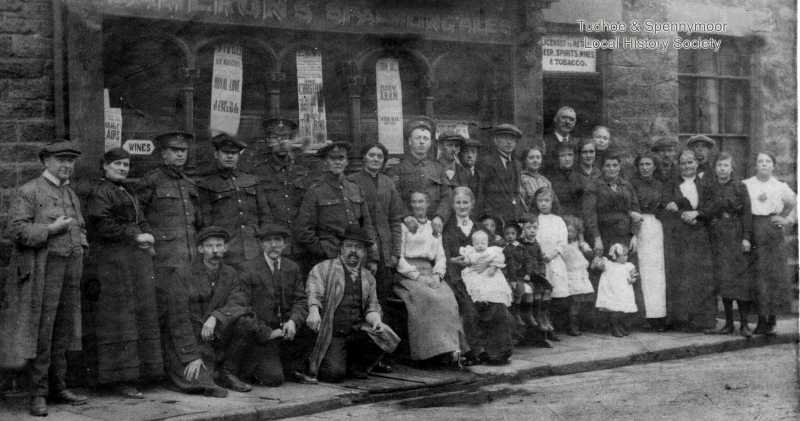 Spennymoor Publican’s Death
Thomas Sugden (58), innkeeper, residing at the Traveller’s Rest, died under somewhat singular circumstances yesterday morning. For some time past he had been subject to fits. Yesterday morning he got out of bed apparently in his usual state of health, about six o’clock, and after lighting a fire went back to bed again. About ten o’clock he was found dead by hs wife, deceased having fallen out of bed in a fit, on to the floor. In the fall his nose was broken, and when found he was suffocated in the blood.
(3rd November 1900 Northern Echo)
Thomas Sugden (b1843, Birtley), an ironworker, married Ada Minns (b1844, Murton) in March 1865. In 1871 they are living at Normanton, Yorkshire with sons George, age 4 born Spennymoor, and Isaac, age 1 born West Hartlepool. In 1881 Thomas is a boilerman and they are at 15 Pitt Street, Spennymoor with another four children, Ralph, age 8, Anthony, age 6 born in Normanton, Mary Ann, age 3 born at Tudhoe and Thomas 3 months born at Spennymoor.
In 1891 they are living at 30 South Street, Spennymoor with another son Robert, age 6. Thomas is now a miner. By 1900 they have taken over The Travellers Rest in Thomas Street, Spennymoor and after Thomas’ sudden death in 1900 Ada is the innkeeper in 1901 with her son Thomas as barman and son Robert is a chemist’s assistant. In 1911 Ada, Thomas and Robert are living at 46 South Street and it mentions that Thomas, now 30, was a “cripple through a stroke at 12 years” of age. In 1921 Thomas is living with a relative at 22 Craddock Street, Spennymoor.
A Shocking Burning Fatality
Yesterday afternoon, at the Durham County Hospital, Mr Coroner Graham held an inquiry into the circumstances of the death of Elizabeth Emma Perry (27), wife of Wm. Perry, ironworker, of Burnett-street, Merrington Lane, Low Spennymoor, who died in the institution on Thursday from the effects of burns sustained at her home on Sunday last.
The husband of the deceased said his wife had been subject to fits for four years. On Sunday while he was from home she was overtaken with a fit, and falling upon the fire was severely burned about the face and hands. Dr McGeary was called in, and ordered her removal to the hospital at Durham, where she died on Thursday.
Peter Rocks, living in the same house, went to Mrs Perry soon after the accident, and found her lying on the grate with her head on the fire. Her head was “all of a blaze”. Witness pulled deceased upon the hearthrug and went for a doctor.
Mary Bishop, wife of James Bishop, living next door to the deceased, heard screams in Perry’s room, and on going there she found deceased on the hearthrug terribly burned about the head. Witness knew deceased was subject to fits. She had four fits on the Sunday prior to the accident.
A verdict of death from shock and exhaustion consequent on the burns was returned.
(3rd November 1900 Northern Echo)
Death in the Street at Spennymoor
Mr John William Nock, 24, a wood turner, in the employ of Mr Blackett, contractor, &c., Bishop Auckland, was yesterday returning from the latter place to his home in Marmaduke-street, Spennymoor, when he took ill near the Spennymoor Co-operative Stores. Dr Anderson, who lives close by, was sent for, and with others assisted the man into a passing trap. On the way home through High-street, the poor man expired. He leaves a widow and small family.
(7th November 1900 Daily Gazette for Middlesbrough/ 7th November 1900 Northern Echo)
In 1891 John William Knox (b1857, Dudley, Worcestershire) was living at 20 South Terrace, Tudhoe Grange with his wife Alice Fisher (b 1858, Spennymoor) and son Percy, aged 1, born West Bromwich.
In 1901 after John’s death Alice is living at 24 Marmaduke Street, Tudhoe Grange running her own grocery business. She has four children, Percy, Frederick William, age 9, Walter Henry, age 6 and Edith Annie, age 2. Living with them is Alice’s sister Emma Hutchinson with her two sons.
In 1911 Alice, her four children and her mother are living at 4 Albert Terrace, Haverton Hill, Stockton-on-Tees, her sons are all working as roll makers at the iron foundry.
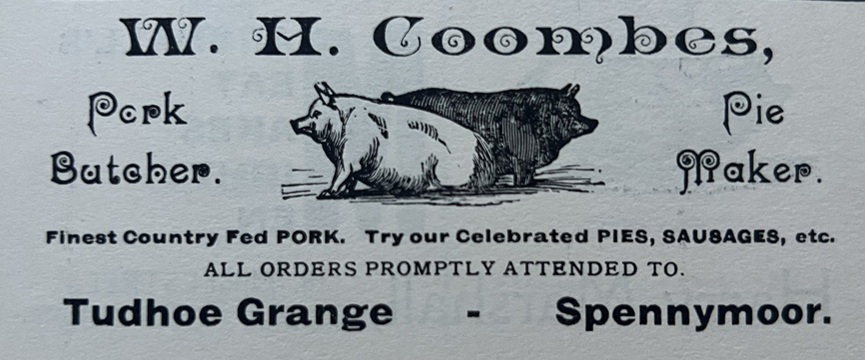
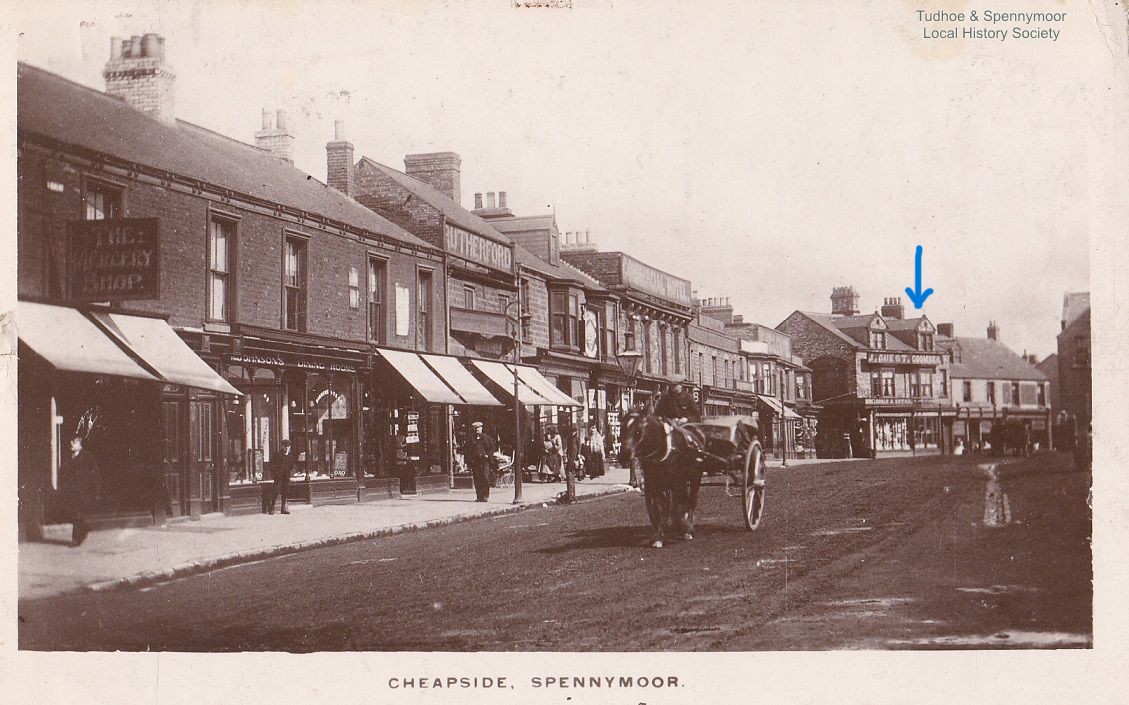
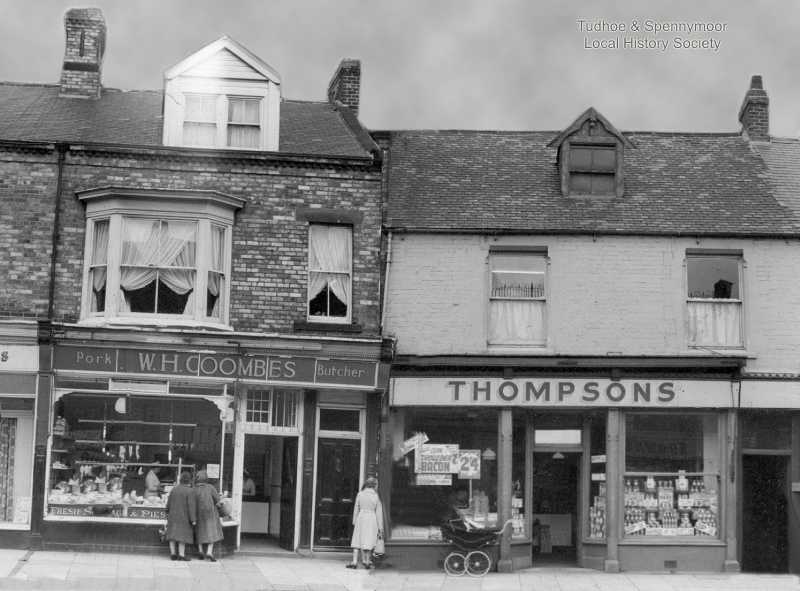
MAN (young) Wanted to Pork Butchering Business; live out; good references; must be well up in smalls.
W. H. Coombes, Pork Butcher, Tudhoe Grange, Spennymoor.
(2nd November 1900 Daily Gazette for Middlesbrough)
In 1901 William Henry Coombes (b1866, West Hartlepool) was living at 15 Cheapside with his wife Anne Weighell (b1873, Hunton, Yorkshire). His father Walter Angus Coombes was a shoe and leather dealer in West Hartlepool.
By 1911 William and Anne have two children, Vera Gwendoline (b1904) and Olga Amelia (b1906). In 1921 William’s nephew Joseph Alfred Askquith (b1902, Bedale Yorks.) is a butcher’s assistant. The shop was at 35 Cheapside in the 1930s, William Henry died in 1933, in 1939 Ann is proprietress at the pork butcher’s shop and Joseph Alfred Askquith is manager of the shop.
Bob Abley’s book The Archive Photographs – Spennymoor, 1997, mentions Coombes the pork butchers who, “used to make the best pork pies known to mankind. There are not many Spennymoor people of an age who haven’t queued for a Coombes’ pork pie, and cannot delight in the memory of warm jelly from the pie dribbling down their chin. A well known Spennymoor wit when taking his dog for a walk down the ‘street’, would say to the dog, ‘If you’re a good dog I’ll let you have a look in Coombes’ window’.”
GENERAL Servant Wanted. Apply Mrs Taylor, 1 Belle Vue-terrace, Spennymoor. (1st November 1900 Daily Gazette for Middlesbrough)
WANTED, re-engagement as BARMAID in good hotel; thoroughly experienced. Apply H., North-Eastern Hotel, Spennymoor. (1st November 1900 Yorkshire Post and Leeds Intelligencer)
LOST, on Wednesday, October 31st, Black and White Collie. Apply Presbyterian Manse, Mount Pleasant, Spennymoor. Reward. (3rd November 1900 Daily Gazette for Middlesbrough)
WANTED, at once, Strong GENERAL for Hotel in Spennymoor, must be an early riser; no cooking. Apply Box T., GAZETTE Office, South Shields. (12th November 1900 Shields Daily Gazette)
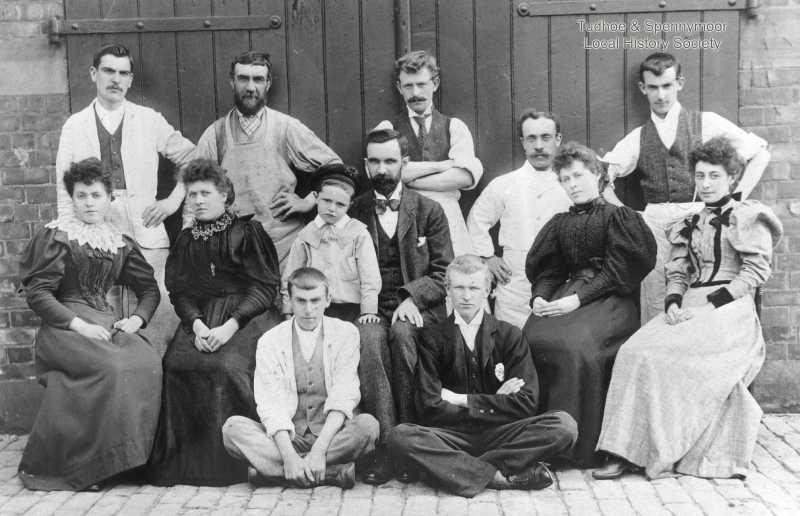 Tudhoe Colliery Co-operative and Industrial Society, Limited. Experienced Foreman Wanted for the Drapery Department; wages 28s 6d per week. Personal application, with references. To be made to the Committee on Wednesday evening, November 21, at 6.30. (15th November 1900 Daily Gazette for Middlesbrough)
GENERAL Servant Wanted; able to milk. Apply, with reference, to Dr Anderson, Spennymoor. (17th November 1900 Northern Echo)
MOTHER’S Help Wanted: state age, wage, if domesticated, copy of reference, and if can play or cut out. Apply to Mayfield House, Spennymoor. (23rd November 1900 Newcastle Daily Chronicle)
UPHOLSTERERS Wanted: also two Improvers to Cabinetmaking. Apply T Burt, Spennymoor.(28th November 1900 Daily Gazette for Middlesbrough)
HOUSEKEEPER (middle-aged) Wanted for Working Man; no family. Apply John Sowerby, Byers Green, near Spennymoor. (29th November 1900 Daily Gazette for Middlesbrough)
HOUSEKEEPER (between 30 and 40 years of age) Wanted. Mr Richard Nutter, Nutter’s Buildings, Binchester Moor, Spennymoor.
(29th November 1900 Daily Gazette for Middlesbrough)
WANTED, a YOUTH able to go with Horses. Apply to C. J. NESBITT, Coldstream, Croxdale, Durham (30th November 1900 Durham County Advertiser)
Tudhoe (UD) School Board
The Finance Committee reported that the month’s paybill was £289 13s 8d, leaving a balance of £799 0s 2d.
Four candidates for the office of caretaker for Tudhoe Grange Schools, Mrs Pedley, Weardale-street, was appointed.
Miss Hall was appointed head teacher at Tudhoe Colliery School.
The cookery mistress reported that out of 385 scholars attending the classes 343 had passed. (5th November 19001 Northern Echo)
TUDHOE (U.D.) School BOARD EX P.T.
Wanted immediately for Boy’s Department of the Spennymoor School; salary £60. Applications, on Forms to be obtained from me, must be sent to the Rev. D McKinley, 15, Beaumont-terrace, Spennymoor, not later than 5th December next.
Sam Adams, Clerk to the Board, School Board Office, Bishop Auckland, 28th November, 1900.
(30th November 1900 North Star Darlington)
To Joiners and Cabinetmakers.
Robert Cole, Auctioneer, Spennymoor, instructed by Mrs Rowe, will sell by Public Auction, in the Wesleyan School, on WEDNESDAY, November 28th, 1900, subject to the Conditions to be then read, at Six o’clock prompt, all that Freehold DWELLING-HOUSE, situate in Charles-street, Spennymoor, containing 3 Bedrooms, 2 Front Kitchens, Back Kitchen, and other Conveniences; also Large CABINETMAKER’S SHOP, and Large YARD, the whole containing 382 square yards and 5 square feet, or thereabouts, and bringing in a rental of £32 10s per annum.
The property is in first-class repair, and the Workshop a new one, capable of holding seven benches, and large Room below, used for polishing.
The tenants will allow inspection, and further information can be obtained from the Auctioneer; or from F BADCOCK, Solicitor, Spennymoor, Sale and Furnishing Rooms, 17 King-street.
Sale Conducted or Commissions Undertaken in town or country on the most reasonable terms. (24th November 1900 North Star Darlington)
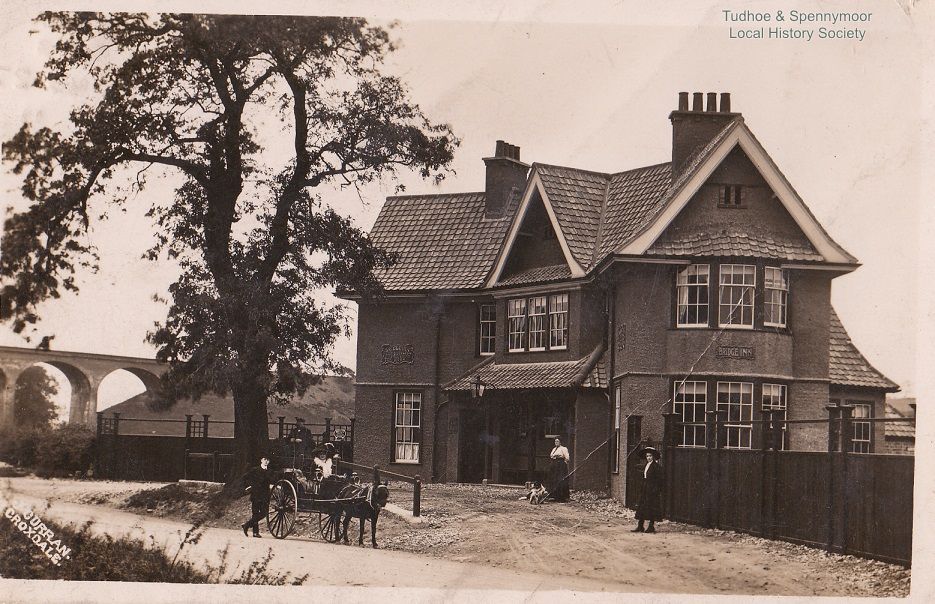 The Storm – Croxdale
The rainstorm in the Croxdale vicinity on Friday night last was very severe, rain and snow falling in alternate showered throughout the evening. Early on Saturday morning the men employed at Browney Colliery and the adjacent works experienced great difficulty in reaching their work; in fact several turned back rather than risk getting wet through before starting their manual labour.
The Storm – Croxdale
The rainstorm in the Croxdale vicinity on Friday night last was very severe, rain and snow falling in alternate showered throughout the evening. Early on Saturday morning the men employed at Browney Colliery and the adjacent works experienced great difficulty in reaching their work; in fact several turned back rather than risk getting wet through before starting their manual labour.
At Sunderland Bridge the roads were covered with water, and only by a few inches avoided flooding the Bridge Inn (Mr Mortimer’s), the bulk of the water seeming to come from the Browney. Had the Wear risen to the same extent the consequences would have been more serious. As it was, the various persons making for Durham Market had to turn back and wait, for the train in some cases, or until the flood subsided. A few venturesome people managed by pure good luck to get through safely. Viewed from the railway, the lower district embracing the Wear and Browney was an entire sheet of water.
At Burn Hall the head forester, Mr Jones, and his men had considerable difficulty with the stock under his charge, but eventually managed to get them in safely. This, however, was only done by the aid of carts and ropes, and not without the loss of two fat sheep.
Several people in avoiding the roads to get towards Croxdale Station and Spennymoor had to be almost literally fished out of the fields.
On the Railway the position for a while was bad. At the Browney Colliery a serious slip was reported, and before a thorough working could be established on the up line several waggons of ballast had to be “tipped” to fill up the gap made by the water.
At Croxdale there was also a “slip”, part of the embankment going down. There was no stopping train at Croxdale from Durham until 11.45, and consequently no morning papers were received up to that time. The flood subsided gradually, and by noon the main road was clear, but the Browney road was covered up till dark.
(2nd November 19001 Durham County Advertiser)
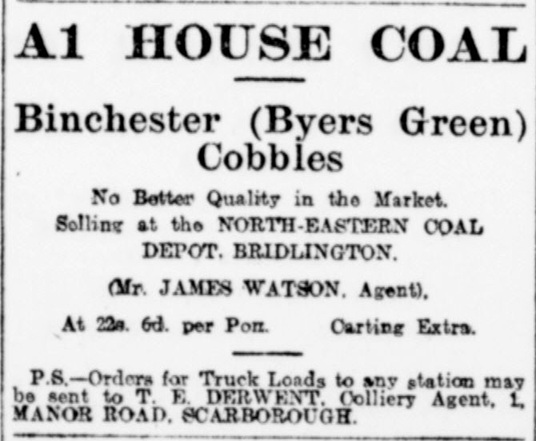 Coal Advertisement
16th November 1900 Bridlington Free Press
A1 HOUSE COAL
Binchester (Byers Green)
Cobbles
No Better Quality in the Market.
Selling at the NORTH-EASTERN COAL DEPOT. BRIDLINGTON
(Mr. JAMES WATSON, Agent)
At 23s 6d per Ton. Carting Extra.
P.S. Orders for Truck Loads to any station may be sent to T.E. DERWENT, Colliery Agent, 1 Manor Road, Scarborough.
(16th November 1900 Bridlington Free Press)
Talbot Continuous Steel Process, Ltd.
Under this title a company has been formed with a capital of £300,000 to acquire, work and otherwise deal with the Talbot patents for the production of steel by the open hearth continuous process as recently described in our columns. The company acquires all the patents for the United Kingdom and Colonies and all countries in which patents have been granted, with the exception of the United States (where the process is already in operation), and Canada.
The present issue is of 250,000 £1 shares at par. The directorate is a very strong one, every member being connected with steel making, and all but one hail from Sheffield and the North of England. The local directors include
Mr C. J. Bagley, managing director of the South Durham Steel and Iron Co., Stockton,
Mr H. W. Hollis, managing director of the Tudhoe Steel Works at Spennymoor,
Mr J. E. Rogerson, chairman of John Rogerson, Ltd., Wolsingham steel works, etc.
It is stated that licences have already been arranged for the Weardale, Steel, Coal and Coke Co., the South Durham Steel and Iron Co., the North-Eastern Steel Co., the Iron and Steel Co., the Moss Bay Hematite Iron and Steel Co. and negotiations are pending for many others.
The purchase price of the patents is stated at £225,000, of which one third is payable in fully paid shares, and the remainder in cash or partly in cash and partly in shares at the option of the directors.
The present production of steel ingots by the Bessemer and open hearth processes amounted to about five million tons per annum, and as the Talbot process claims a gain of ten to thirty tons per hundred tons of steel over the processes previously in use, with the additional advantage of producing steel from lower grades of pig iron, it will be seen that there is a wide field for its usefulness. The share list opens today, and will close on or before Friday.
(21st November 1900 Shields Daily Gazette)
St Paul's Church
A handsome stained glass window, consisting of two lights and tracery, has just been erected in St. Paul’s Church, Spennymoor, to commemorate the long and faithful service of the Rev. John Gaskill, who was curate and vicar of the parish for 38 years. (7th December 1900 Sunderland Daily Echo)
Sale of Work at Spennymoor
Yesterday afternoon, a sale of work, in connection with St. Paul’s Church, Spennymoor, was held in the National Schools, the object being to raise funds in order to supply heating apparatus for the church. The opening ceremony was presided by the Rev. J Short B.D., vicar, who explained to the large company present the object of the sale. He then called on Mrs Duncombe Shafto, of Whitworth Hall, to open the sale.
Mrs Shafto, who received a cordial greeting, referred to the pleasure it afforded her to declare the sale of work open.
A vote of thanks to Mrs Shafto was proposed by Mr Harrison, seconded by Mr Brown, and carried with acclamation.
Mrs Shafto replied, and the sale was then proceeded with.
The following ladies presided at the various stalls:-
Plain work-Mrs Archer, Mrs Awde, Mrs Sanderson, Mrs Hemming, and Mrs Turner.
Fancy Stall – Misses Watson, Wall, Rogers, Coldwell, Wilson and Hill.
Refreshment Stall – Mesdames Taylor, Errington, Smith, Brown, Plant, and Peacock.
Toy stall – Misses Chambers, Iley, and Botcherby.
There was also a rummage stall, which was attended by several assistants. There were numerous entertainments provided.
(20th December 1900 North Star Darlington)
Costly Birds
Yesterday at the Bishop Auckland Petty Sessions, Thos. Goundry and Henry Bradley, both of Byers Green, were charged with stealing two ducks, the property of Wm. Robson, and two chickens, the property of Joseph Craddock, both of Byers Green. Defendants pleaded guilty, and said they were drunk when they took the birds. They were fined £2 10s each in each case.
(11th December 1900 Northern Echo)
Juvenile Depravity at Spennymoor
John R Olley was charged by William John Maxley, draper,&c., with stealing a shawlette, valued at 2s 8d, at Spennymoor on the 1st inst.
John Thomas Craggs, residing at 14 Burk Street, Tudhoe Grange, said he was an assistant in the prosecutor’s drapery establishment at Spennymoor, and he missed a shawlette, valued at 2s 8d.
P C Bottomley gave evidence of arresting the accused, who acknowledged the offence. The accused’s mother was asked by the Chairman if her son was set at liberty would she look after him, and she promised to do so.
The accused was reprimanded and discharged.
(21st December 1900 Durham County Advertiser)
Trespassing at Byers Green
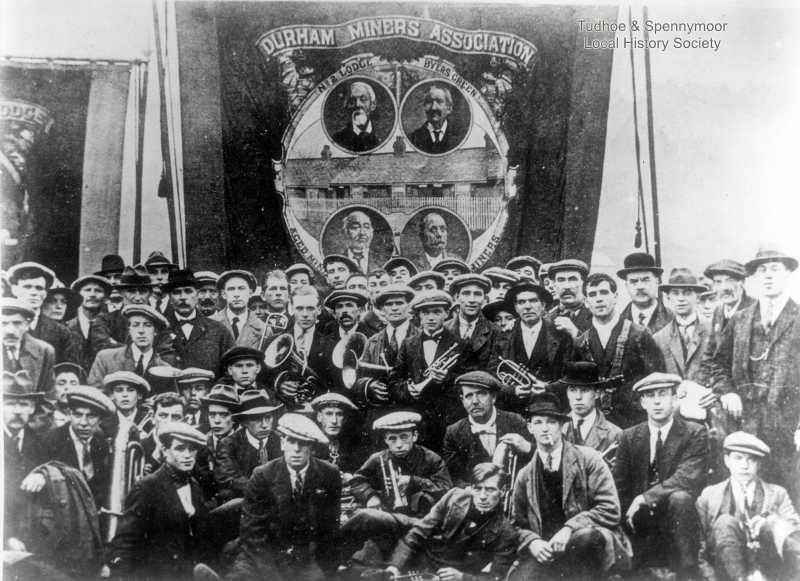 John Thomas Gray and Thomas Clark were charged, and pleaded guilty, to committing a trespass at Byers Green Colliery on the 14th inst.
Mr William Robson, the manager at Byers Green Colliery, said the defendants were employed at the colliery, and had been in the habit of trespassing by walking over some flues attached to the coke ovens, which was a breach of the rules.
John Thomas Gray and Thomas Clark were charged, and pleaded guilty, to committing a trespass at Byers Green Colliery on the 14th inst.
Mr William Robson, the manager at Byers Green Colliery, said the defendants were employed at the colliery, and had been in the habit of trespassing by walking over some flues attached to the coke ovens, which was a breach of the rules.
Defendants were fined 13s 6d each.
(28th December 1900 Durham County Advertiser)
Serious Assault on an Aged Man at Spennymoor
Joseph Christison was charged with assaulting Michael Judge at Spennymoor on the 11th inst.
Superintendent Snaith said the accused had previously been arrested on a charge of unlawfully wounding the complainant. It was considered a serious matter at the time, so serious that the complainant had been visited at his house whilst confined to bed, and his statement taken. Now the complainant had partially recovered, and did not wish for a heavy penalty, consequently the charge was reduced to one of ordinary assault. The complainant said he was 74 years of age, and was in his house when the accused entered. After using some threats defendant commenced to use bad language. He ordered him out of the house, and he refused to go. Witness got hold of the poker, and told the defendant to get out, or he would use the poker. Defendant then pushed him against the table, and he was very much injured. He had been attended by Dr Henderson.
Elizabeth, wife of Robt. Gill of Jackson Street, Spennymoor, gave evidence of the pushing against the table.
Sergeant Newton gave evidence of the arrest.
Supt. Snaith said there was a second charge of assaulting the police, but that would be withdrawn.
Defendant was fined £3, including costs.
(28th December 1900 Durham County Advertiser)
Order of Druids
On Saturday night the Pride of Chilton Lodge, in connection with the Bishop Auckland Equalised District of the Order of Druids, held their annual meeting and supper at the house of Mr Mills, Swan Hotel, Ferryhill Station. Nearly 100 members partook of a splendid repast served by the hostess, Mrs Mills, after which the business of the evening took place.
Bro Thomas Surtees, D.G.M., of Coundon, presided, and Bro. J J Hutchinson, D.G.M., occupied the vice-chair. There were also present Br. G Burlison, D.C.S.; Bro. J Pratt, D.T., Bishop Auckland; Bros J Wilson and M Burn, Eldon; Bros J and T Yare, East Howle; Bro J Lowery, Spennymoor, etc.
Bro. W Swales, lodge secretary, read his annual report, which showed an income of £138 2s 10 1/2d, and an expenditure of £136 4s 1d, which included £79 10s 4d paid for sickness; doctor’s salary £13 2s 6d; and £28 paid to district fund.
Bro Pratt congratulated the members on the efficient state of their lodge, and also spoke highly of their secretary. Bro. J Leeming accompanied the various singers on the piano.
(10th December 1900 Northern Echo 10th December 1900 North Star Darlington)
“Father of the Lodge”
A unique distinction belongs to Mr John Adamson, of Byers Green, in so far that he claims to be one of the oldest Oddfellows in the county. Now an octogenarian, hale and hearty, and able in point of health to equal many younger men, he has for 60 years been a member of the Byers Green Lodge of the Ancient Order of Oddfellows (M.U.)
For 33 years of that time he has discharged the duties pertaining to the treasurership, and in other spheres has always been an active and zealous worker in the cause of the Lodge. The value of the services he has rendered cannot be over-estimated, but to mark in part their appreciation thereof. The members of the Lodge on Saturday night presented him with a gold-mounted umbrella, a portrait of himself, and a purse of gold. The portrait was given back by Mr Adamson to the Lodge, by the members of which it will long be treasured.
(17th December 1900 Northern Echo)
WANTED good Under NURSE, about 20; needlewoman; references. Mrs Stewart, Croxdale Rectory, Durham.
(11th December 1900 Yorkshire Post and Leeds Intelligencer)
SPENNYMOOR For Sale, House and Shop, King-street; Five roomed House, Durham-road; several other Lots of Property. John W Fleming.
(13th December 1900 Daily Gazette for Middlesbrough)
BYERS GREEN PROPERTY SALE
At the Shafto Arms Hotel, Byers Green, Mr T Shadforth offered for sale two dwelling houses, which after bidding had commenced with £100 were sold to Mr Geo. Jolley, Byers Green, for £235, Mr W H Oliver, Durham, was the solicitor for the vendor.
(19th December 1900 Northern Echo)
CENTRAL Hall, Spennymoor. - For This Week only.
Mr F GOWLAND, instructed by J Robinson, the well-known LinenWarehouseman, will Sell by Auction, at Half-past Two and Half-past Six each day, a large consignment of High-class IRISH LINENS, LACE CURTAINS, WOOLLEN CLOTH, BLANKETS, etc., etc., direct from the manufacturers. Also a choice collection of FURS, from a manufacturing firm, including Real Sealskin Coats, Electric Seal Capes, Sable and Kolinski Necklets, etc., etc.
Note- Sale positively closed on FRIDAY, the 21st inst.
(20th December 1900 North Star Darlington)
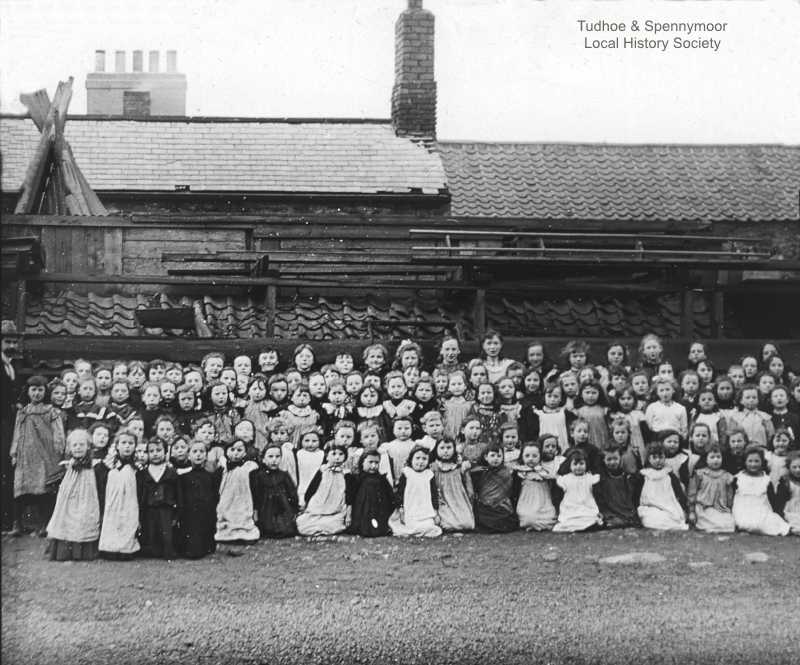 Children's Corner - FROM BRAZIL
Dear Daddy, This is the second letter I have written to you. It is two years since I came back from Brazil, South America. We were there four years, but we had to come home on account of mother’s health. Father is still there. It is a very beautiful country. It was very hot. We had a beautiful orange tree, and banana tree. The natives are so kind to the English people. I could speak Portuguese so well. We had a nice little Sunday School. I taught a little German girl to speak a little English. She was so sorry when I was leaving Brazil. I had a little parrot, but it spoke Portuguese. I loved it so much. We had a mule. It used to come up to the garden gate every morning for its corn. There was plenty of sugar-cane growing close by. Coconut trees were also plentiful. Hoping you will enjoy my little letter.
I remain your loving member, Margaret Lizzie Atherton (12), Front-street, Byers Green, Spennymoor.
(29th December 1900 Northern Weekly Gazette)
Margaret Elizabeth Atherton (b 1888/9, Byers Green) was the daughter of Thomas Atherton (b1860, Wigan) and Jane Ann Kell (b1865, Byers Green) who married in 1884. In 1891 she is living at Brick Row, Byers Green with her parents and older brother John George (b1886, Byers Green). In 1894 they have another child Alice (b Byers Green). On 31st May 1895 a T. Atherton with his wife and three children left Southampton on the ship "Thames", carrying 85 passengers, for Rio de Janeiro, Brazil. Could this have been the Atherton family?
In 1901 Jane Ann, John, Margaret Elizabeth and Alice are at High Steet, Byers Green. By 1911 Thomas Atherton has returned and the family are living in Manchester, in 1921 he has retired as a mining engineer and they have moved to Mile Road, Blackpool, both Margaret and Alice have married.
Stick to the Truth
To the Editor of the Durham County Advertiser.
SIR, While reading the columns of a local newspaper I was much surprised to see that at a meeting held by the temperance party protesting against the commencement of a Working-men’s Club and Institute at Spennymoor, reference was made by Mr Pattinson that the Ushaw Moor Workmen’s Club and Institute allowed its doors to be kept open all night.
This I distinctly deny. The Ushaw Moor Club has never been open after 11, and never will be. I might remark that when the club was commenced it closed at ten o’clock, but our rules allowing us, it was altered to eleven.
It would be much better and more honest if these temperance orators would stick to the truth and not spout accusations against clubs until they can prove them to be true.
In my opinion clubs are the first step towards real temperance, and if the temperance party would lend a helping hand in the management of the same, they would do more good than getting on a platform and accusing those responsible of doing something which would be a disgrace to any body of working men.
Clubs are doing good by drawing the working-men together and creating social intercourse amongst them. A man can go to the club and enjoy a game of billiards, dominoes, draughts, read papers, books &c., and never taste intoxicating liquor. I am pleased to say we have members who do so.
Also young members can attend the classes that are held at the clubs teaching mining, mathematics, &c. In the ordinary public-house they have the beer pumps and whisky kegs staring them in the face only. No recreation whatever to attract their attention from drinking. These are the places for the temperance party and Mr Pattinson to give their attention to, and not to clubs.
H Brookes, Secretary
Ushaw Moor Workmen’s Club and Institute, Ltd.
(7th December 1900 Durham County Advertiser)
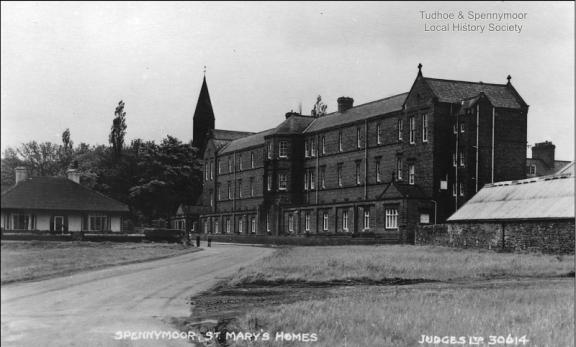 New Home for Destitute Children at Tudhoe.
At a cost of £10,000 a magnificent new home, the work of which has been in progress for two years, was completed yesterday. Tudhoe Home – the old Home- was instituted over 50 years ago, with the object of housing, clothing, feeding, and imparting instruction to homeless and destitute little girls. During the past seven years the number of inmates has increased considerably, and in the latter part of 1897, it was found necessary that something should be one in order to find additional shelter and accommodation for the children. It was then that the Catholics associated with the Diocese of Hexham and Newcastle showed their sympathy by promising the handsome sum of £10,000 for the erection of a new Home. The contractors were Messrs Johnson and Hanby, of Stockton, and the architects Messrs Dunn, Hansom and Fenwick, of Newcastle. The new building, which has a frontage of 266 feet, occupies a fine site immediately adjoining St Charles’s Church. At present there are 110 children on the book-roll, and now accommodation will be found for 160.
(21st December 1900 Daily Gazette for Middlesbrough)
Tudhoe
On Saturday night a smoking concert was held at Mr J Black’s, Ironworks Hotel, Tudhoe. Mr Robson presiding, and Mr T. Atkinson being vice.
The Chairman delivered an address on the “House of Lords: Its Rights and Uses”, and showed how the action of the House of Lords has been misrepresented.
Besides its full share of legislative work, it serves another purpose as the final court of appeal for all causes ecclesiastical and civil. Mr Robson also spoke of the character and composition of the House of Lords.
Councillor Dowdell, in wishing success to the association, hoped the members would not be down-hearted owing to defeat in the late election, but be up and doing and ready to try again.
Many new members were added.
Mr Griffiths and Mr Askew (secretary Spennymoor Club) also spoke.
There was singing at intervals by Messrs Gardiner, Jackson, Atkinson, and others.
Votes of thanks to the chairman and the host and hostess brought the gathering to a close.
(14th December 1900 Durham County Advertiser)
Spennymoor Musical Society
The 15th annual invitation concert of the Spennynoor Musical Society was held in the Town Hall, Spennymoor, on Tuesday night, before a very large audience.
The piece chosen was Cowen’s £St. John’s Eve”. The Spennymoor Musical Society during its existance has given some excellent performances, and Tuesday night’s performance was, taking all into consideration, a fairly good one. The principal soloists and characters represented were:
Soprano, Miss Janet Reed, North Shields, as “Nancy” (a village maiden);
Baritone, Mr W E Whitby, York Minster, as “Robert” (a young villager);
Contralto, Miss Mar Bowmaker, LRAM, Newcastle, as “Margaret” (an ancient dame);
tenor, Mr Austin Mahony, St Ann’s Cathedral, Leeds, as the young squire.
Canon Firth, who has given a great deal of time as conductor of the society, conducted the performance very creditably, showing much skill in marshalling his forces during some of the difficult and intricate choruses. The piece opened with a very fine chorus, describing how the villagers decorated theotr houses with flowers and foliage on “St. John’s Eve”. The choir were heard to the best advantage in the chorus “Ho! Good Saint John was a shining light.” Of the soloists, it may be said that they did exceedingly well, especially the contralto and soprano.
The orchestra was a great acquisition, and was ably led by Mr F Lonsdale. The piano accompaniments were performed by Miss Griffiths, and Mr G W Rippon was a very efficient organist. The concert concluded with a miscellaneous programme of solos, including a splendid violin solo by Mr F Lonsdale. Mr Whitby sang “A Soldier’s Song”; Miss Reed, “Love the Pedlar”; Mr Auston, “The Lord is my Light”; Miss Bowmaker, “Light in Darkness”; and Canon Firth also sang a solo.
(20th December 1900 North Star Darlington)
Spennymoor Live Stock Society
The first annual show of the Spennymoor Live Stock Society was held yesterday in the Covered Market, Spennymoor. The number of exhibits exceeded far beyond measure anything that was expected. There were over 1,200 entries. In fact the number of exhibits were so great that it began to be feared that the large market would be too small. However, the secretaries, Messrs Tom Maughan and George Anderson, were sufficient for the task, and by the help of a strong committee the problem was soon overcome. After the judges had given their awards, at one o’clock in the afternoon the President (Dr. Anderson), in a brief speech, opened the show. He was supported on the platform by the Rev. Joseph Short, B.D., Rev J Hope Scott, and others. He moved a vote of thanks to Dr Anderson, the president. The Rev J Hope Scott seconded the vote of thanks. One of the judges, Mr Mason, also briefly spoke.
Dr. Anderson said at the outset that he was pleased to be at the first show of the Spennymoor Live Stock Society. He thought that judging from the large number of exhibits the show would be a great success. He spoke greatly in favour of the value of these associations in the keeping and rearing of some of the finest breeds of poultry &c.
The Rev. J Short briefly addressed the assembly and spoke of the good work that these societies are doing. He thought that it was a good mental training for those who took deep interest in work of that sort. He spoke about the great hobby that men had in spending their spare time in doing this sort of work.
(20th December 1900 Northern Echo)
OUR COMMERCIAL SUPREMACY - IS IT TO BE MAINTAINED?
Sir Chris Furness’s Warning
The certificates awarded to the successful students attending the Spennymoor Technical Instruction Classes were presented in the Town Hall, Spennymoor, last evening, by Sir Christopher Furness, M.P. Mr T Black presided over a large attendance.
Sir Christopher Furness, in presenting the certificates, expressed his pleasure at being able to distribute the certificates. No one, he said, could realise more clearly than the employer the great need for and the value of a thoroughly efficient system of technical education. It was indeed, in a very large measure to technical education that we must look for the maintenance of our industrial and commercial supremacy, and as a large employer in that district he had been glad to note the good work that had been done by the Spennymoor Technical Classes. Similar work was at last being done throughout the length and breadth of the country, but those who were most conversant with the progress made in this direction of late years, those who were most in earnest, those who realised most clearly the
VITAL IMPORTANCE
of maintaining our industrial and commercial supremacy would be the first to admit that there was still much to be done before England took her proper place well in the van of this great movement. (Applause).
He was glad to have been afforded an opportunity of showing his appreciation of the great value of technical subjects. Most of the subjects taught at Spennymoor had, he saw, a direct bearing upon the great industry of the district, an industry upon which all others in a very large measure depend, and an industry, therefore, the well being of which was of vital importance if we would maintain our ascendancy in the markets of the world. The maintenance of our industrial supremacy was as important as the maintenance of our navel supremacy. And just as to maintain our navel supremacy it was essential that the training of the personnel of our navy shall be such as to make each man as efficient as possible, so in like manner, if we would maintain our industrial supremacy we must see to it that our systems of elementary, secondary, and technical education were thoroughly up to date, that we place at the command of the workers of this country all the advantages, and more than all the advantages, that are at the command of the workers in Germany, America, France, and other competing countries. It was with that object that these technical classes at Spennymoor and other centres were started. Our naval supremacy depended on our
INDUSTRIAL SUPREMACY.
National wealth enabled us to keep up a powerful navy. And upon what did that wealth depend? Upon that geographical position which made these islands the manufacturing commercial centre of the world, upon our great coal and ironstone deposits, and upon the inventive genius of our managers and workmen, and last, but by no means least, upon the carrying out of those free trade principles which gave England the start that enabled her to hold so long unchallenged the premier place in the world’s markets. (Applause.)
Many a time had he heard his father and mother recall the bitter hardships of the corn law period- the days of the small loaf and the dear loaf. The
FREE TRADE POLICY
had given us a big loaf and a cheap loaf, and had secured to us the carrying trade of the world and the command of the seas. As had well been said, continued Sir Christopher, Britain does not rule the markets of the world because she rules the waves; but Britain rules the waves because she rules the markets of the world. Other countries were now contesting our supremacy. They had not adopted our free trade principles, but in the matter of technical education they had most unquestionably gone far beyond us, with the result that it behoved us to look to our laurels. The exhibits at the in Paris Exhibition this year of labour-saving machinery invented and manufactured in other countries had been an eye-opener for many, not only for British employers, but also for British workmen.
Take the manufacture of steel- an article we have long prided ourselves upon being able to make and supply against all competition from other countries. We have the startling declaration from Mr Carnegie and other manufacturers in America that they can produce steel and send it to this country- delivering it to our shipyards and to other consumers- at a lower price than we can produce it at our works; indeed, as a result of keen competition many of our shipyards are now using American steel. We had to go to America for insight as regards improvements in the manufacture of steel. He, however, looked for great things from the new Talbot continuous process, which if it accomplishes what is predicted would enable us to use a greater quantity of local ores, and be more independent of the foreign ores, and by which the cost of manufacture will be materially reduced. (Applause.)
After the distribution of certificates by Sir Chris. Furness, Dr. Anderson moved, and Councillor Knox seconded, a vote of thanks to Sir Christopher for his able speech. Full list of students will appear in next week’s “Auckland Chronicle”.
(1st December 1900 Northern Echo)
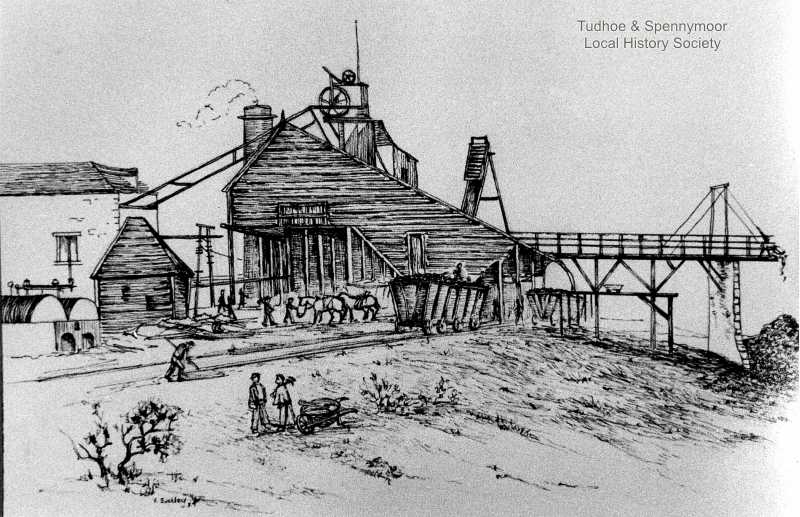 Colliery Fatality at Spennymoor - An Old Man Crushed to Death
About seven o’clock, this morning, William Nelson, 70 years of age, employed as a screenman, was crushed to death between the trucks at Whitworth Colliery. He leaves a grown up family, and has been lately residing with his daughter, Mrs. Blair, of Mount Pleasant, Spennymoor. He was well-known in the locality, and was, for a good number of years, employed on the North-Eastern Railway in the Goods Department.
On 15th December Coroner Proud held an inquiry at the Grand Hotel, Spennymoor, into the circumstances of his death, The jury came to the conclusion that deceased was accidentally killed.
(14th December 1900 Newcastle Evening Chronicle / 17th December 1900 Sunderland Daily Echo)
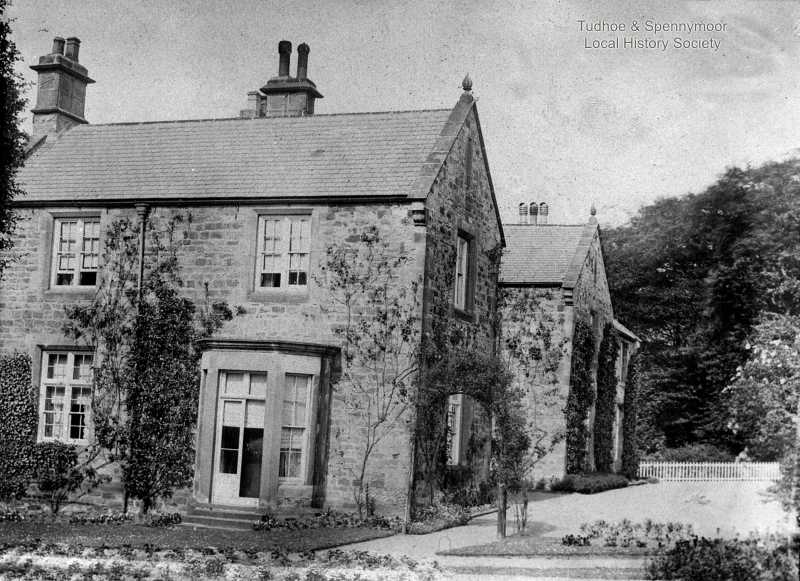 The Rev. E. A. Wilkinson, M.A. (1834-1900)
We sincerely regret to record the death at his residence, Whitworth Rectory, near Durham, on Sunday morning of the Rev. Edward Abercrombie Wilkinson, M.A., vicar of Whitworth and youngest brother of the Bishop of Hexham and Newcastle, and President of Ushaw College. The deceased gentleman had been lying seriously ill for more than a week past, and despite the best medical attention and advice, he passed quietly away in the presence of most of the members of his family. Mr Wilkinson belonged to a very old Durham family, whose name for years has been widely respected and honoured in the county with which the Wilkinsons have been actively and intimately associated, and his decease has been received with universal regret in many parts of the county, especially in the neighbourhood of Spennymoor and Whitworth, where for so long a period the deceased gentleman had resided.
Mr Wilkinson was a native of the Auckland district, He was born at Harperley Park, the family seat of the Wilkinsons. Mt Wilkinson graduated at Trinity College, Cambridge, where he took his B.A. in1857, and his M.A. three years later. He was ordained a deacon in 1859, and a priest in 1860. From 1859 to 1866 he was curate of Bamburgh, Northumberland. In the latter year he was presented to the living of Tudhoe, in the diocese of Durham, which he continued to hold until 1883, when he was presented by the Dean and Chapter of Durham to the living of Whitworth, which he held at the time of his death.
It was whilst at Tudhoe that the deceased gentleman married Miss Shaftoe, of Whitworth Hall, one of the descendants of “Bonny Bobby Shaftoe”. He brought his bride home to a large house facing the blacksmith’s shop, and at the entrance to the village a triumphal arch was erected. He was the first representative for Spennymoor on the County Council, but was not a regular attender, and finally retired. For 25 years he had been a county magistrate, but only occasionally attended the Auckland court. He never once attended after the death of his brother , the Rev. G. P. Wilkinson, the chairman of the bench. But up to the last in all educational, philanthropic, and religious movements he took a deep interest, and in his own immediate parish was greatly beloved and esteemed. As an illustration of the brotherly feeling he cultivated, it may be mentioned that he had been known to push his hand lawn-mower from his vicarage across the way to the Catholic Presbytery, take off his coat, and mow Provost Watson’s lawn.
The funeral took place on Wednesday morning . At an early hour the remains were conveyed from the vicarage to the church on a bier borne by eight police officers, under the superintendence of Inspector Elliott, after which Holy Sacrament was administered to the family and friends by the Rev. H Coney, curate of Binchester.
…..Details of the service and mourners followed.
(28th December 1900 Durham County Advertiser)